
Petrol pain is driving South Africans into Chinese hybrids
Written by: Press Release Save to Instapaper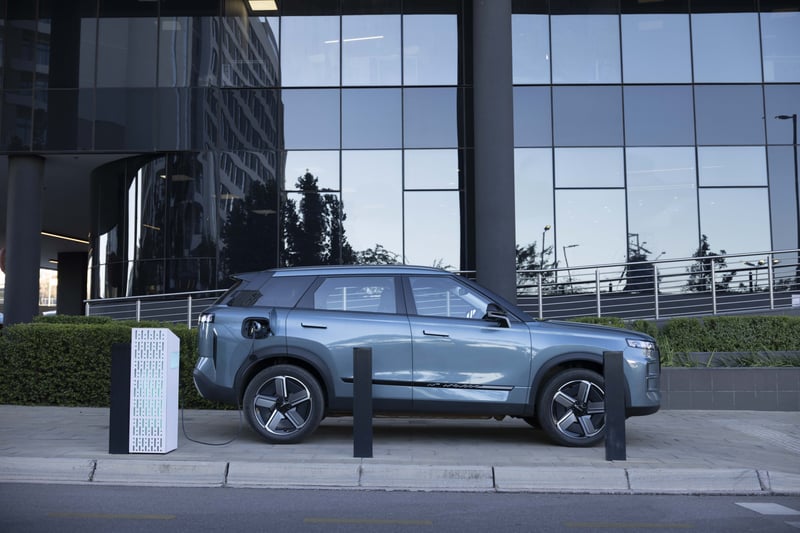
New data from Yazi’s March 2026 SA Fuel & Energy Sentiment Study shows that 75% of respondents say global conflict is already hitting their monthly budget, with fuel costs at the centre of that pressure.
Petrol pain is pushing South Africans to rethink what they drive.
Instead of moving directly to fully electric vehicles, many drivers are turning to Chinese-built hybrids — drawn by their ability to reduce fuel exposure without sacrificing range or reliability.
A Market Under Pressure Is Prioritising Flexibility
South Africans are not responding to rising fuel prices by moving neatly from petrol to fully electric vehicles (EVs). They are responding by looking for flexibility.
The data shows a market under pressure, highly alert to the link between global conflict and local fuel prices, and increasingly open to hybrid technology to reduce reliance on a single volatile energy source.
The headline figures are stark. 75% of respondents say global conflict is having a notable impact on their monthly budget, while 81% described their mood as “frustrated” or “anxious.”
24% say they are already considering switching to a more fuel-efficient vehicle at the current inland fuel price of R20.19/L.
84% also noted they are open or very open to considering a hybrid as their next car.
From Environmental Intent To Financial Resilience
That matters because it suggests the market is not asking for a pure EV future, but rather for reduced risk exposure.
The study’s framing is explicit: hybrid openness is being driven not by environmental identity, but by financial resilience.
Consumers want reduced exposure to oil-price volatility without having to make an all-or-nothing leap into full electrification.
The logic is practical. Hybrids (particularly plug-in hybrids) offer electric efficiency while retaining a petrol fallback. In the South African context, that fallback is not incidental. It functions as energy security.
A Solar Mindset Is Now Shaping Mobility Choices
At home, more South Africans have already adopted a solar-plus-grid mindset. The underlying principle here is not ideology, but rather resilience. Households want optionality when one system becomes expensive, unstable or unavailable.
The survey suggests that a similar mindset is emerging in mobility.
“We’ve already seen South Africans adopt a solar-plus-grid mindset at home, hedging against load-shedding by building in optionality. This data shows the same logic is now shaping how people think about their next car,” said Tim Treagus, CEO of Yazi. “Hybrids offer exactly that: energy flexibility without a single point of failure.”
The survey also identifies a distinctly South African barrier to a full EV case; load-shedding anxiety has fused with range anxiety.
Respondents repeatedly cite grid unreliability, not battery technology itself, as their primary concern.
The study conclusion is that hybrid technology directly addresses this concern because the petrol fallback reduces dependence on charging infrastructure and grid stability.
The point is reinforced by the geography of the concern. Anxiety about charging access outside major metros appears consistently in qualitative responses, especially from respondents in Limpopo, Mpumalanga, and KwaZulu-Natal.
For many drivers, particularly those outside dense urban corridors, this is a real infrastructure constraint.
Fuel Pressure Is Reshaping Everyday Behaviour
Furthermore, the behavioural data shows that this pressure is already reshaping daily life.
Respondents report consolidating trips, planning routes more carefully, and cutting discretionary driving.
Others describe reducing church attendance, visiting malls less often, shifting school transport to public buses, and using e-hailing as a coping mechanism.
Fuel is being experienced not as an isolated monthly expense, but as a trigger for broader inflation across food, transport, and household costs.
Nearly one in four respondents is already considering a switch at current fuel prices. A further 29% say they would act at R25/L, and 30% at R30/L.
In other words, the market is not waiting for a future catalyst. In fact, a meaningful portion has already crossed into active consideration.
That threshold data now looks especially significant as the US-Iran conflict pushes oil prices higher and raises the prospect of a sharp local fuel-price increase, with recent forecasts putting 95-octane petrol inland close to the R25-R26 per litre mark.
Affordability Remains The Key Barrier
The obstacle is not belief in the concept, but rather affordability.
Across the full sample, 38% say lower vehicle prices are the single biggest change needed before they would switch, ahead of charging infrastructure at 26% and proof of real cost savings at 18%.
Technology distrust ranks lower.
Chinese Brands Are Closing The Affordability Gap
However, the recent arrival of more affordable hybrids and plug-in hybrids from Chinese manufacturers has already alleviated that concern for many consumers.
This is also showing in the data, with 44% of respondents noting they would trust a Chinese-manufactured hybrid, while a further 32% say price would determine their willingness. Only 11% outright refuse.
That suggests a far more fluid competitive environment than many traditional assumptions would suggest, particularly if pricing is compelling.
It is worth noting that the four most affordable hybrids currently available in South Africa come from Chinese brands, and the same trend is evident in the battery-electric vehicle market, where the 15 cheapest EVs are all from Chinese manufacturers.
Plug-in hybrids such as the JAECOO J7 SHS, one of the country’s most popular new PHEVs, are leading the way with competitive pricing and impressive efficiency.
Priced at R689,900, it is one of the more accessibly priced options on the market, while also offering one of the strongest all-electric ranges in its segment at 90 km, along with a combined range of more than 1,200 km on a full tank.
Hans Greyling, General Manager of OMODA & JAECOO South Africa, says the findings reflect a structural shift in how consumers are evaluating vehicles.
“Consumers are increasingly looking beyond badge and performance to factors such as running costs, value for money and everyday usability. In the current South African context, that makes the flexibility of hybrid and plug-in hybrid vehicles especially appealing.”
Diesel Drivers Emerge As Key Switch Segment
Interestingly, diesel drivers are among the most commercially exposed and pragmatically motivated respondents in the study.
They show higher levels of very open hybrid intent than petrol drivers, 56.4% versus 47%, and 90% of diesel drivers sit on the open side of the spectrum overall.
Their openness is framed not as environmental idealism, but as a hedge against volatility and a practical response to long-distance, commercial and rural driving realities.
Infrastructure concerns are even more pronounced for diesel drivers.
Unlike the full sample, where purchase price leads clearly, diesel drivers split almost evenly between lower vehicle prices (30.9%) and charging infrastructure (29.7%) as their top barrier, reflecting the real-world range and access constraints this cohort faces.
They are also closer to the action threshold: 22% say they are already considering a switch at the current diesel price, while more than 80% identify a trigger point at or below R30/L.
For diesel drivers, hybrid vehicles resolve concerns that pure EVs cannot.
History Suggests A Shift In Power
There is a broader historical pattern here.
Fuel shocks not only change what people want from cars. They often change which brands are best placed to deliver it.
The 1973 oil crisis helped propel economical Japanese vehicles into the mainstream in markets that had previously favoured larger-engined models.
The same logic may now be re-emerging in a different form.
As the market shifts toward value, efficiency and energy flexibility, Chinese brands may be particularly well placed to benefit, not because of novelty, but because they are arriving with the kinds of products this moment appears to reward.
The data describes a population that understands the global oil-price mechanism, feels its effects intensely, and is already adapting behaviour in ways that are difficult to sustain.
The question is no longer whether South Africans are open to change; the data show they are.
The real issue is what kind of change best fits local conditions.
Right now, the evidence points to flexibility, not purity.
Submitted on behalf of
- Company: JAECOO
- Contact #: 0810415020
- Website
Press Release Submitted By
- Agency/PR Company: Have Your Say ZA
- Contact person: Nikki Chennells
- Contact #: 0810415020
- Website
Get new press articles by email
What makes us remarkable, is that we care. We care about stories, people, and results. We understand the responsibility of telling your stories online, in a world where every word, picture, film, lasts forever on servers around the world. We know that relationships are the core of our business – we are generous and we thrive on connecting people and ideas. Finally, we measure everything and... Read More
Latest from
- Lepas South Africa supports Black Coffee Foundation’s expanded Gift of Sight initiative
- Everything You Need to Know About the OMODA C9
- Demand for EVs continues its growth across Europe and South Africa with Chinese brands increasing market share, new OLX data shows
- Lepas South Africa builds momentum with growing dealer footprint and expanding product range
- Lepas Welcomes Chery Group’s Major Manufacturing Investment in South Africa
- AutoTrader data shows newcomers reshaping SA’s fastest-selling used car rankings
- Active safety systems move further into trucking as fleet risk comes under sharper focus
- Latest AutoTrader data shows used car market holding firm in June
- OMODA gears up for the Hollywoodbets Durban July 2026 with an electrifying entertainment lineup
- AutoTrader drives digital innovation in SA automotive as OLX Group reports strong FY2026 results
- From workhorse to weekend warrior - South Africans are making bakkies their own
- iCAUR V23 Earns International Design Recognition at Red Dot Awards
- Subaru’s safety record gives South African families more reason to look beyond the badge
- OMODA & JAECOO South Africa to expand J5 range with hybrid and fully electric models
- AutoTrader data shows monthly +4% rise in used car sales as value shapes buyer demand
The Pulse Latest Articles
- Women's Month Has Become Predictable. Here's How Brands Can Make A Real Difference. (August 17, 2026)
- Kevin Lerena Earns Sportsman Of The Year Nomination After Standout 2025 (August 17, 2026)
- India’s Tigers Call Wildlife Photographers For 2027 (August 14, 2026)
- The Mental Load No One Talks About: Why Convenience Is Becoming Self-care (August 14, 2026)
- Rebuilding Culture Through Leadership: Why Values Need More Than Words (August 14, 2026)