
PIE reform - a win for real housing access
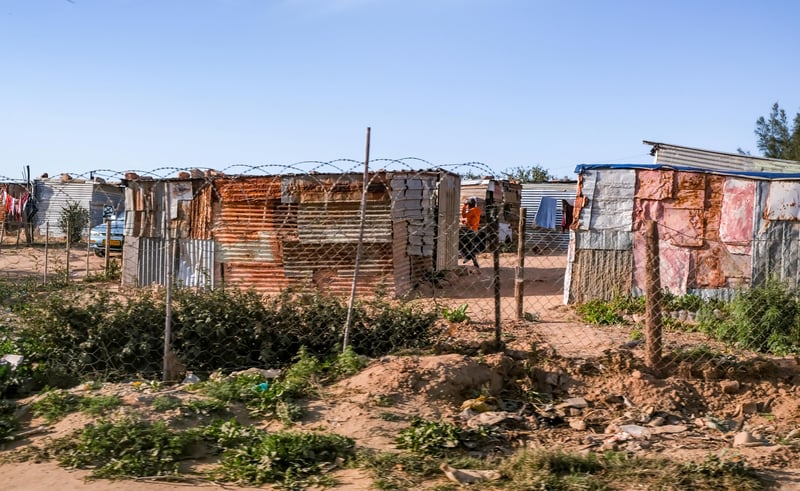
The proposed 2026 PIE Amendment Bill deserves to be challenged for at least one very important reason.
PIE was enacted to prevent arbitrary evictions and protect vulnerable unlawful occupiers, but it was aimed at squatters. Its moral purpose was clear: to replace the harsh apartheid-era approach to “illegal squatting” with a constitutional framework that respected dignity, housing need and judicial oversight.
But the text of PIE went further than its apparent purpose due to sloppy drafting.
Because “unlawful occupier” was defined broadly, and in the present tense, the courts held that PIE did not apply only to people who entered land unlawfully. It also applied to people who originally occupied lawfully - tenants, mortgagors and owners - but whose legal right to remain had ended.
That was the result in Ndlovu v Ngcobo; Bekker and Another v Jika. The Supreme Court of Appeal held that ex-tenants and similar “holders over” do fall within the ambit of PIE according to the plain language of the Act. The court’s interpretation was understandable as a matter of statutory language. But as housing policy, it was deeply problematic. The amendment corrects that problem.
2026 Amendment BillThe 2026 Amendment Bill, if passed in its current format, will make the situation worse.
However, there is a 2006 Amendment Bill which had language to make it clear that PIE does not apply to a person who occupied land as a tenant, under another agreement, or as owner, where that legal basis for occupation has ended.
Its memorandum expressly records that PIE was not originally intended to apply to tenants, mortgagors and owners who had occupied under prior agreements, and that the amendment is needed to clarify the Act’s scope after Ndlovu vNgcobo and Bekker v Jika.
South Africans need to fight to bring that language into the 2026 Amendment Bill.
This is not an attack on housing rights. It is a better understanding of them.
Section 26 of the Constitution protects access to adequate housing. But housing access is not served only by making eviction harder for people already inside the formal housing market, who are, on average, a relatively rich minority. It is also served by ensuring that landlords, lenders and investors are willing to make housing available in the first place.
Access to adequate housingWhen the law makes it too risky, slow or expensive to recover and reset property after a lease, mortgage or occupation right has ended, the consequences are predictable: stricter screening, higher deposits, higher rentals, less credit, more vacant units and less appetite to supply affordable rental housing.
And in the 23 years since Ndlovu and Bekker, we have seen the consequences manifest in a stifling affordability crisis and a severe lack of housing access in the market, especially at the lower end of the market, where risks associated with PIE were the highest.
The people most harmed by poor eviction legislation are not the occupiers already in possession. Often, they are the ordinary South Africans still trying to get access - the have-nots outside the system. That is the moral point.
Before clarification, the effect of the PIE Act being applied to holders over is that our legal system has been systematically favouring the haves over the have nots.
A tenant had access. A mortgagor had access. An owner had access. A person occupying under contract had access. Their rights must be respected, but they are not in the same position as people who never had lawful access to land or housing at all, or who are awaiting access but being crowded out by holders over.
Unfair evictionPIE should protect vulnerable squatters from arbitrary or procedurally unfair eviction.
It should not be used to give extraordinary procedural protection to holders over at the expense of future tenants, first-time buyers and low-income households trying to enter the formal housing market. And it should definitely not be used to restrict the housing market, because that is the opposite of the constitutional imperative in section 26.
The amendment should restore PIE to its proper purpose. As a statute designed to regulate the eviction of a vulnerable group, namely squatters.
And while the 2026 Amendment Bill is open for comment, a coalition of the rational should push for the corrective wording of the 2006 Amendment Bill to be returned and enacted into law.
Making this change additionally protects the have-nots, those who have inadequate housing access or may never have lived in formal housing, and not merely the haves who already got through the door of the formal housing markets.
It promotes housing access by reducing unnecessary regulatory risk, thereby increasing the available capital for housing supply expansion. And it brings the law closer to the real promise of section 26: more South Africans gaining access to adequate housing, not fewer.
ENDS
Media Contact
Rosa-Mari Le This email address is being protected from spambots. You need JavaScript enabled to view it. 995 6277
More Information
Website: https://www.sentinelhomes.co.za
Facebook: https://www.facebook.com/SentinelHomes
Release information
Issued on behalf of
Sentinel Homes
Media contact
Reklame
Rosa-Mari Le Roux