
Kagiso Trust Slams 2.44% Education Budget Hike
Written by: Kagiso Trust Save to Instapaper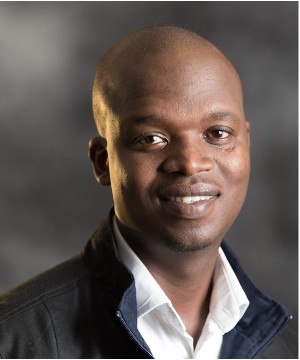
Leading development agency welcomes extra cash for ECD and TVET infrastructure but says the opportunity to ignite South Africa’s human potential is being squandered
Kagiso Trust is disappointed by the 2.44% increase in education funding announced in yesterday’s Budget, warning that far more is needed to address the systemic inequalities threatening South Africa’s economic future.
Finance Minister Enoch Godongwana’s allocation of R358.5 billion to basic education and R155.8 billion to higher education falls short of what’s required to transform an education system in crisis, says Kagiso Trust chief financial officer Mzomhle Nyenjana.
“We are grateful for government’s continued commitment to education, which is the largest budget item after the costs of servicing debt and remains the single most powerful lever for breaking the cycle of poverty,” says Nyenjana.
“However, the scale of the challenge demands far greater investment. Inequality within our education system is an economic threat that will limit our growth for generations to come.”
Early childhood development: Strengthening the foundation
President Cyril Ramaphosa’s state of the nation address (SONA) on 12 February announced expanded access to early childhood development (ECD), and Minister of Finance Enoch Godongwana said on Wednesday that ECD would receive an additional R12.8 billion over the next three years, expanding its capacity by 300,000 children.
“ECD is where inequality begins,” says Nyenjana. “Children who miss out on quality ECD are already behind when they start Grade 1, and most never catch up. This is a crisis that demands urgent attention and resources.”
Kagiso Trust, which invests extensively in education as one of South Africa’s leading development agencies, notes that while making Grade R compulsory is positive, the infrastructure, teacher training and nutrition programmes required to deliver quality ECD at scale have been critically underfunded.
“That’s why we are delighted to see estimated spending increases of 22.28% and 17.35% for ECD in the next two years,” says Nyenjana.
“But in light of the president’s ambitious and necessary commitment to end child stunting by 2030, it is disappointing that money has not been found to expand the reach of the National School Nutrition Programme beyond the existing 9.9 million learners in 19,800 schools. You cannot build an economy on a foundation of malnourished, under-stimulated children.”
TVET: The skills revolution needs fuel
Godongwana followed up Ramaphosa’s SONA commitment to a “skills revolution” by committing the government to reforming the national skills ecosystem. “We must improve how we equip individuals ready to enter the labour market,” he said.
“Beyond providing them a theoretical understanding, the government will explore ways to reorganise training by introducing a dual training skills acquisition system. We are also looking at how institutions with the capacity to train jobseekers and graduates can tool them with artisanal skills.”
And crucially, says Nyenjana, the minister backed his rhetoric with money. “We are delighted to note that the budget for technical and vocational education (TVET) infrastructure will increase by 60% in 2026/2027 and by no less than 177% the following year,” he says.
“This will go a long way to dealing with South Africa’s mismatch crisis: unemployed graduates on one hand and critical skills shortages on the other.
“Elevating technical and vocational education (TVET) as a respected, viable pathway requires substantial investment in infrastructure, equipment, lecturer training and workplace partnerships, and that is what this Budget sets out to deliver.”
Kagiso Trust particularly welcomes Ramaphosa’s directive to build more TVET colleges with specialised focus areas, and Nyenjana says the increase in the proportion of the skills development levy returned to employers (from 20% to 40%) should incentivise workplace-based learning, but only if the quality of training improves dramatically.
The missing middle: still falling through the cracks
The Budget estimates a 6.68% reduction in the National Student Financial Aid Scheme (NSFAS) allocation in 2026/2027, followed by increases of 4.16% and 2.43% in subsequent years. But Kagiso Trust warns that the “missing middle”, students whose families earn too much for NSFAS but too little to afford fees, remains underserved.
“These are often the children of teachers, nurses, police officers, working-class families who contribute to society but cannot afford R50,000 - R80,000 in annual university fees,” says Nyenjana. “A projected 5.9% reduction next year in the spending of sector education and training authorities and the National Skills Fund does not suggest that the government has any plans to adequately address this gap.”
Ramaphosa’s SONA directive to address the shortage of student accommodation is welcome, but Kagiso Trust notes that innovative financing partnerships with financial institutions must move quickly from directive to implementation.
Infrastructure: The foundation cannot wait
Kagiso Trust notes that thousands of schools still lack basic infrastructure, including reliable electricity, water and sanitation. Godongwana says an enforced merger of the school infrastructure backlogs grant and the education infrastructure grant aims to ensure unsafe school buildings and sanitation backlogs are prioritised.
Nyenjana says he is grateful for the provision of R1.2 billion in 2026/2027 for sanitation improvements in the Eastern Cape, KwaZulu-Natal and Limpopo, but reserves judgment on whether the long-promised eradication of pit latrines will be achieved in the next 12 months.
“You cannot deliver quality education in buildings that leak, classrooms without electricity, or schools where children use pit latrines,” says Nyenjana. “Infrastructure is not a luxury, it’s the foundation on which everything else is built, so it is disappointing that spending on school infrastructure is expected to increase by only 0.6% annually over the next three years.”
The bigger picture: Education as economic security
Nyenjana says Kagiso Trust acknowledges the fiscal constraints government faces. “We understand the trade-offs, but we cannot trade away our future. The education system is as much a threat to South Africa’s future as energy security or national debt,” he says.
“An 88% matric pass rate is commendable, but it masks the reality that only about half of the cohort that started school reaches matric.”
The high dropout rate, overcrowded classrooms, inadequate teacher training and infrastructure collapse represent systemic failures that perpetuate inequality and limit economic potential.
“Eradicating poverty and inequality requires acknowledging the severity of inequality within the education system itself, then budgeting accordingly,” says Nyenjana. “We see the government prioritising education as the investment that makes all other investments productive, but we are forced to ask whether South Africa is getting good value for money.”
Kagiso Trust commits to continuing its advocacy throughout 2026 for increased, targeted investment in ECD, TVET and comprehensive support for learners at every level.
“South Africa’s greatest asset isn’t underground, it’s in our classrooms, workshops and fields,” says Nyenjana. “Investing in human capacity isn’t charity. It’s how nations become competitive, innovative and prosperous. That’s the budget conversation we need to be having.”
Get new press articles by email
Fyfe PR is a publicity company which draws on many years of experience. Fyfe PR is small enough to offer an extremely personal approach to servicing clients and providing quality campaigns and events. With strong relationships with the media and suppliers on a national basis, Fyfe PR is able to offer clients a great network within which to operate, ensuring the best results for... Read More
Latest from
- Women are reshaping South Africa’s used-car market – is the automotive industry keeping up?
- Former Chairperson (2012–2014), education leader, governance practitioner, and community activist returns to lead the organisation's Board.
- G-Force Festival Set to Thrill Durban as the Virginia Airshow Returns
- South Africa’s mathematics crisis demands urgent focus on teacher development
- FirstRand Volunteers mobilised 2,500 employees nationwide to honour Mandela’s legacy through action
- South Africa's pork market swings from shortage to surplus as prices fall
- FirstRand Volunteers mobilise 2,500 employees nationwide to honour Mandela’s legacy through action
- FirstRand Foundation supports the transformation of Johannesburg’s inner city through solar lighting
- Corporate South Africa rallies around volunteering as a pathway to youth employability
- KFC opens its menu and reveals what’s really being served across South Africa
- Hollard Launches 2026 Daredevil Run Campaign After R1.2 Million Handover For Men’s Health
- Voter registration weekend is a key moment for active citizenship, says Kagiso Trust
- Weelee Supports Groundbreaking Liver Perfusion Technology at Wits Donald Gordon Medical Centre – First in Africa
- Addiction is threatening student success. How should social investment respond?
- FNB App Academy 2026 partners with University of Johannesburg Business School to unlock world-class education for the next generation of developers
The Pulse Latest Articles
- The Western Cape Government Partners With Finfind (August 7, 2026)
- Women Are Invited To Learn What No One Ever Taught Them (August 7, 2026)
- Gloot Partners With Rachel Kolisi's Falling Forward Roadshow (August 5, 2026)
- National Play Day Shines A Spotlight On South Africa's Childhood Play Crisis (August 5, 2026)
- Celebrating The Women Building Futures On Behalf Of Clive Robinson, Md Of Tutor Doctor Sa (August 5, 2026)