
The economic implications of the high rate of Stunting in Children on the economy of South Africa
Written by: Tshikululu Social Investements Save to Instapaper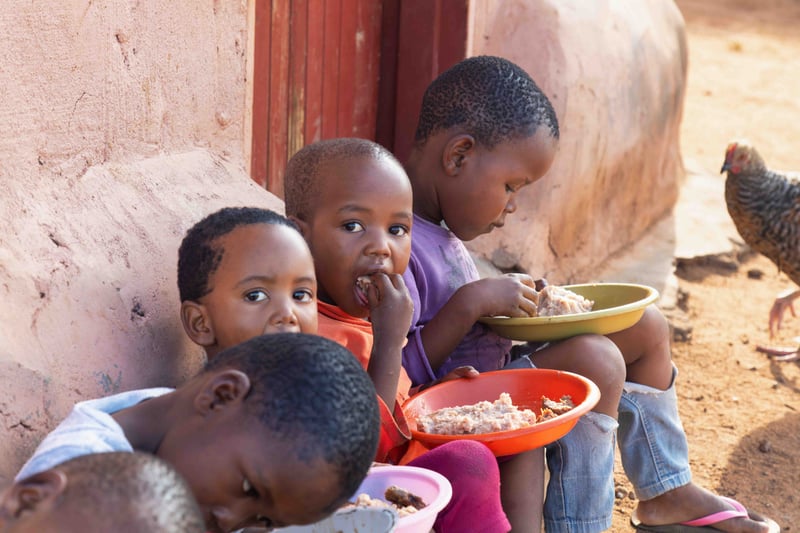
Growth stunting in children is one of the most significant public health and development challenges facing South Africa. Affecting an estimated one in four children under five (UNICEF, WHO & World Bank Group, 2025), stunting is a biological marker of chronic undernutrition with far-reaching consequences. It is not merely a health issue but a profound outcome of interconnected socio-economic inequities, including poverty, food insecurity, inadequate sanitation, and limited access to quality healthcare and education.
A key axiom to understanding the severe implications of the phenomenon is to examine its present and future implications for the South African economy. Childhood stunting constitutes not only a major public health challenge in South Africa but also a significant constraint on long-term economic growth and fiscal sustainability. Stunting levels remain high for an upper-middle-income economy. International evidence suggests that comparable prevalence rates are associated with GDP losses of up to 3% (WHO, 2014; World Bank, 2018), providing a relevant benchmark for estimating South Africa’s potential growth foregone as a result of undernutrition.
Within the South African context, these macroeconomic effects are rooted in long-term damage to human capital formation. Local cohort and longitudinal studies demonstrate that early-life nutritional deprivation is strongly associated with poorer cognitive development, weaker educational outcomes, and reduced labour market participation in adulthood (Richter et al., 2012; Tomlinson et al., 2016; Shisana et al., 2013). Although the immediate consequences of undernutrition are most visible within households and communities, their cumulative effects ultimately manifest in reduced productivity, diminished fiscal capacity, and sustained social expenditure. Stunting therefore operates as a systemic constraint on inclusive growth.
Impacts on Human Capital and Earnings
This erosion of human capital is reflected in long-term earnings outcomes. South African labour market research indicates that lower educational attainment and reduced cognitive skills are strongly associated with depressed lifetime earnings and employment instability (Spaull, 2013; Lam et al., 2011; Burger et al., 2020). While few local studies directly estimate stunting-related income penalties, international longitudinal evidence suggests an average earnings reduction of approximately 20% among adults who were stunted in childhood (Hoddinott et al., 2013). Given South Africa’s comparable nutritional profile to many middle-income countries, this estimate provides a conservative basis for domestic modelling.
Using National Treasury (2023) earnings data, average annual adult income is estimated at approximately R204 359. Applying the 20% earnings penalty implies an annual income loss of roughly R40 872 per affected individual. Assuming a conservative labour force participation rate of 60% among the current stunted cohort, this translates into approximately 0.9 million future workers facing reduced productivity. The resulting annual loss to the economy is estimated at R36.8 billion. At an average effective personal income tax rate of 20%, this corresponds to foregone fiscal revenue of approximately R7.3 billion per year. Over a standard 40-year working life, the present value of lost tax revenue exceeds R200 billion.
Health System Costs
Reduced earnings and productivity also translate into sustained pressure on public service systems, particularly the healthcare sector. South African epidemiological studies indicate that undernourished children face significantly elevated risks of infectious disease, impaired immune function, and later-life non-communicable conditions (Bradshaw et al., 2010; Shisana et al., 2013; National Department of Health, 2019). These vulnerabilities persist across the life course, generating long-term demand for public healthcare services.
Estimates from the South African Medical Research Council and the National Department of Health suggest that preventable childhood undernutrition contributes materially to avoidable hospital admissions and primary healthcare utilisation (SAMRC, 2018; NDoH, 2022). Adjusted burden-of-illness modelling indicates incremental healthcare costs of approximately R350 - R500 per affected child annually. Applied to the current stunted cohort, this implies additional public healthcare expenditure of between R525 million and R750 million per year. These costs disproportionately affect district hospitals and under-resourced primary healthcare facilities.
Education, Social Protection, and Intergenerational Poverty
Health-related vulnerabilities are compounded by educational and labour market disadvantages. National assessments consistently reveal learning deficits among children from nutritionally deprived households, particularly in reading and mathematics (Spaull & Pretorius, 2019; DBE, 2021). These deficits translate into weaker school completion rates, lower post-school participation, and diminished employability (Van der Berg et al., 2020). As a result, stunted children are more likely to experience prolonged labour market marginalisation and income insecurity, increasing long-term reliance on social assistance.
Drawing on South African poverty dynamics research (Leibbrandt et al., 2010; Patel et al., 2019), it is estimated that approximately 15% – 20% of affected individuals remain dependent on social transfers in adulthood. Using current grant values of R500 - R800 per month, this implies an annual fiscal burden of R1.2 - R1.7 billion. These dynamics also reinforce intergenerational poverty, as children of nutritionally deprived parents face heightened risks of deprivation.
Macroeconomic Growth Effects
When individual, fiscal, and service-level impacts are aggregated, they culminate in substantial macroeconomic losses. South African growth accounting studies emphasise the central role of human capital quality in long-term productivity and competitiveness (Fedderke et al., 2018; Bhorat et al., 2020). High stunting prevalence undermines this foundation by constraining skills accumulation and innovation capacity.
International evidence links stunting prevalence to GDP losses of approximately 2–3 per cent (World Bank, 2006; Shekar et al., 2017). Applied cautiously to South Africa’s economic structure and labour market conditions, this corresponds to potential annual output losses of between R130 billion and R195 billion. Even modest reductions in stunting prevalence would therefore yield substantial economic returns.
Aggregate Fiscal and Economic Burden
These losses are reinforced through intergenerational transmission mechanisms. South African household panel studies demonstrate strong links between parental education, income stability, child nutrition, and later-life outcomes (Ardington et al., 2009; Leibbrandt et al., 2010). As UNICEF South Africa (2020) observes, elevated healthcare costs, reduced earning capacity, and social protection dependence create a self-reinforcing cycle of deprivation.
Taken together, the cumulative annual economic burden of childhood stunting in South Africa is estimated to range between R136 billion and R202 billion. While much of this reflects foregone output, the direct fiscal burden—including lost tax revenue, increased healthcare expenditure, and expanded social protection—amounts to approximately R6 to R8 billion per year. These costs constrain public investment in infrastructure, education, and economic development.
By contrast, South African cost-effectiveness analyses indicate that scaling evidence-based interventions such as maternal nutrition programmes, strengthened infant feeding support, enhanced Child Support Grant access for infants, and quality improvements in early childhood development would require substantially lower annual investment (DSD et al., 2019; Richter et al., 2019; National Treasury, 2023). This underscores the conclusion that early childhood nutrition represents a high-return public investment.
Reducing childhood stunting is therefore central to strengthening South Africa’s human capital base, expanding fiscal space, and promoting inclusive growth. Framed in economic terms, nutrition investment constitutes one of the most effective levers available for addressing inequality, improving productivity, and securing long-term development.
Submitted on behalf of
Get new press articles by email
Fyfe PR is a publicity company which draws on many years of experience. Fyfe PR is small enough to offer an extremely personal approach to servicing clients and providing quality campaigns and events. With strong relationships with the media and suppliers on a national basis, Fyfe PR is able to offer clients a great network within which to operate, ensuring the best results for... Read More
Latest from
- Women are reshaping South Africa’s used-car market – is the automotive industry keeping up?
- Former Chairperson (2012–2014), education leader, governance practitioner, and community activist returns to lead the organisation's Board.
- G-Force Festival Set to Thrill Durban as the Virginia Airshow Returns
- South Africa’s mathematics crisis demands urgent focus on teacher development
- FirstRand Volunteers mobilised 2,500 employees nationwide to honour Mandela’s legacy through action
- South Africa's pork market swings from shortage to surplus as prices fall
- FirstRand Volunteers mobilise 2,500 employees nationwide to honour Mandela’s legacy through action
- FirstRand Foundation supports the transformation of Johannesburg’s inner city through solar lighting
- Corporate South Africa rallies around volunteering as a pathway to youth employability
- KFC opens its menu and reveals what’s really being served across South Africa
- Hollard Launches 2026 Daredevil Run Campaign After R1.2 Million Handover For Men’s Health
- Voter registration weekend is a key moment for active citizenship, says Kagiso Trust
- Weelee Supports Groundbreaking Liver Perfusion Technology at Wits Donald Gordon Medical Centre – First in Africa
- Addiction is threatening student success. How should social investment respond?
- FNB App Academy 2026 partners with University of Johannesburg Business School to unlock world-class education for the next generation of developers
The Pulse Latest Articles
- The Western Cape Government Partners With Finfind (August 7, 2026)
- Women Are Invited To Learn What No One Ever Taught Them (August 7, 2026)
- Gloot Partners With Rachel Kolisi's Falling Forward Roadshow (August 5, 2026)
- National Play Day Shines A Spotlight On South Africa's Childhood Play Crisis (August 5, 2026)
- Celebrating The Women Building Futures On Behalf Of Clive Robinson, Md Of Tutor Doctor Sa (August 5, 2026)