
SONA 2026 - A shift towards systemic reform By Motshegwa More - Tshikululu Social Investments
Written by: Motshegwa More - Tshikululu Social Investments Save to Instapaper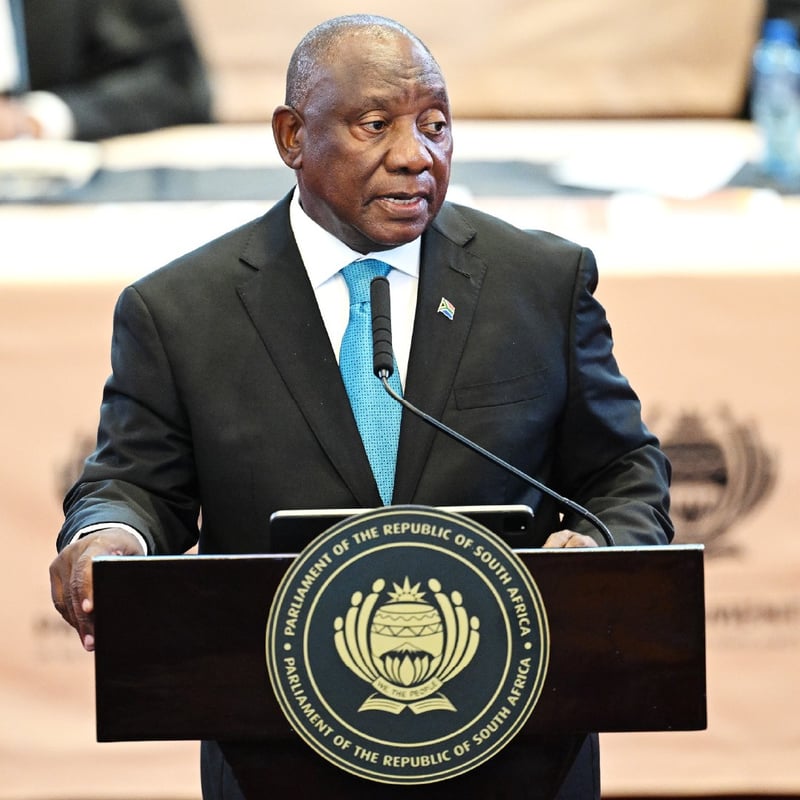
In the year following South Africa’s G20 Presidency, President Ramaphosa’s 2026 State of the Nation Address offered a sobering but optimistic reflection on the country’s trajectory. It highlighted meaningful economic progress while underscoring the scale of the journey still ahead. Most importantly, it reinforced a critical shift in how South Africa’s challenges are being understood. It is becoming more understood that South Africa’s failures are not isolated challenges, but challenges due to systemic design and systemic failure.
South Africa enters this moment with mixed but significant signals. Economically, the speech indicated that we are taking a turn for the better. The economy has recorded four consecutive quarters of GDP growth, two primary budget surpluses, improved credit ratings, and a removal from the Financial Action Task Force grey list. Yet the structural realities remain stark. Persistent unemployment, fragile municipal services and intensifying climate risks continue to shape the lived experience of millions.
Against this backdrop, the President’s three priorities were clear:
To drive inclusive growth and job creationTo reduce poverty and tackle the high cost of livingTo build a capable, ethical and developmental state. Various enablers were identified to tackle these priorities. What was particularly notable however in this year’s address was the recognition of how deeply interconnected South Africa’s challenges are. The intersection between safety and economic participation was explicitly acknowledged, highlighting how crime constrains livelihoods and opportunity.
The President also emphasised the urgency of addressing child stunting, reiterating the 2030 target to end stunting and focusing on the first 1,000 days of a child’s life. This signals a growing recognition that nutrition, education and long-term productivity are inextricably linked. Poor nutrition undermines learning outcomes, which in turn affects employability and economic mobility. These are not separate policy areas. They are parts of the same system.
Infrastructure emerged as another critical systemic lever. As the President stated, “Infrastructure is much more than an investment in brick, mortar, concrete and steel. It is an investment in jobs, productivity and growth.” This framing reinforces infrastructure not only as a driver of economic expansion, but as an enabler of participation. Investments in rail, water and locally manufactured trains are not merely technical interventions, they create pathways for communities and businesses to access markets, services and opportunities.
The growing use of innovative finance mechanisms further signals a shift in how development will be funded and how capital is shifting to meet the needs on the ground. The first infrastructure bond, oversubscribed more than twofold, reflects appetite for blended and catalytic finance approaches that can unlock large-scale transformation. Similarly, initiatives such as Operation Vulindlela aim to address structural bottlenecks in electricity, logistics and water systems, enhancing competitiveness and enabling private-sector participation. This highlights that interventions are increasingly being designed to reshape the economic architecture of the country.
A further signal of this systemic approach is reflected in the President’s emphasis on implementation through the Medium-Term Development Plan. As he noted, Cabinet has approved a comprehensive plan to drive growth and inclusion by creating the conditions for firms to invest, maintaining a stable macroeconomic framework, investing in infrastructure that works, enabling a regulatory environment that supports competition, and advancing a focused industrial policy. At the core of this plan is investment, particularly in public infrastructure and labour-intensive growth sectors with long-term potential, including the digital and green economy where young people are expected to find employment opportunities.
What is significant about this framing is that it recognises job creation not as a standalone policy outcome, but as the product of interconnected systems, being: infrastructure, industrial policy, regulatory reform, skills development and education. It signals a shift toward demand-led pathways to employment, where economic sectors drive labour absorption and the broader ecosystem must respond accordingly. This also places a clear responsibility on the education, skills development and social investment ecosystem. If South Africa is to realise the job creation potential of the digital and green economy, investment in skills and education must align deliberately with these emerging growth sectors.
Therefore, the implications of this shift extend beyond government. The ambitions outlined in SONA 2026 require far broader collaboration across society. Corporate South Africa already plays a significant role. The latest edition of the Trialogue Handbook estimates total CSI expenditure reached approximately R13.1 billion in 2025, up from R12.7 billion in 2024. This continued investment comes against a backdrop of persistent unemployment, pressure on public service delivery and constrained fiscal capacity, increasing the importance of private-sector funding in social development.
Yet the next phase of social investment cannot be defined by spend alone. More funding, on its own, will not solve systemic challenges. What is required is a shift in how capital is deployed. The future of private sector social investment and impact investment lies in collaboration, systems mapping and catalytic funding that strengthens institutions, enables infrastructure and supports cross-sector solutions.
This is where the role of intermediaries and convenors becomes critical. Organisations like Tshikululu sit at the intersection of corporates, government, civil society and funders, uniquely positioned to translate policy ambition into coordinated action. Convening stakeholders, aligning capital to systemic priorities, strengthening implementation ecosystems and supporting blended finance solutions are no longer optional functions. They are essential to delivering on national reform agendas.
South Africa does not lack funding, programmes or intent. What it needs now is alignment between growth strategies and human capital development. SONA 2026 makes one message clear, the next chapter of development will not be built through fragmented projects, but through coordinated systems change. The call to action for corporates, funders and development partners is therefore equally clear. It is more critical now to move from funding programmes to funding systems and to invest in collaboration, in enabling infrastructure and in institutional strengthening.
Submitted on behalf of
Get new press articles by email
Fyfe PR is a publicity company which draws on many years of experience. Fyfe PR is small enough to offer an extremely personal approach to servicing clients and providing quality campaigns and events. With strong relationships with the media and suppliers on a national basis, Fyfe PR is able to offer clients a great network within which to operate, ensuring the best results for... Read More
Latest from
- South Africa's pork market swings from shortage to surplus as prices fall
- FirstRand Volunteers mobilise 2,500 employees nationwide to honour Mandela’s legacy through action
- FirstRand Foundation supports the transformation of Johannesburg’s inner city through solar lighting
- Corporate South Africa rallies around volunteering as a pathway to youth employability
- KFC opens its menu and reveals what’s really being served across South Africa
- Hollard Launches 2026 Daredevil Run Campaign After R1.2 Million Handover For Men’s Health
- Voter registration weekend is a key moment for active citizenship, says Kagiso Trust
- Weelee Supports Groundbreaking Liver Perfusion Technology at Wits Donald Gordon Medical Centre – First in Africa
- Addiction is threatening student success. How should social investment respond?
- FNB App Academy 2026 partners with University of Johannesburg Business School to unlock world-class education for the next generation of developers
- KFC launches high-performance training camp for South Africa’s smallest cricketers to serve as the nation's backup team
- Atlantic Aerodrome Opens as Cape Town’s New Premium Aviation Hub
- FirstRand Foundation Announced as Laureus Sport for Good Foundation SA Country Patron
- When your people beat you to the launch
- SAMED calls for urgent action as Gauteng Health supplier debt crisis reaches critical point
The Pulse Latest Articles
- The Growth Of Trading Card Games (July 21, 2026)
- Why Supplier Verification Is No Longer Enough To Stop Fraud (July 20, 2026)
- Why Empathy, Not Algorithms, Is The Key To Unlocking South Africa’s Billion-rand Digital Economy (July 20, 2026)
- Thousands In Cape Town Gave Ladles Of Love A Hand (July 19, 2026)
- Hisense South Africa Takes Young Khayelitsha Footballers To New Heights On Inspiring Table Mountain Journey (July 19, 2026)