
Emotional Wellbeing Is Emerging As A Defining Measure Of Preschool Quality
Written by: Dibber International Preschools Save to Instapaper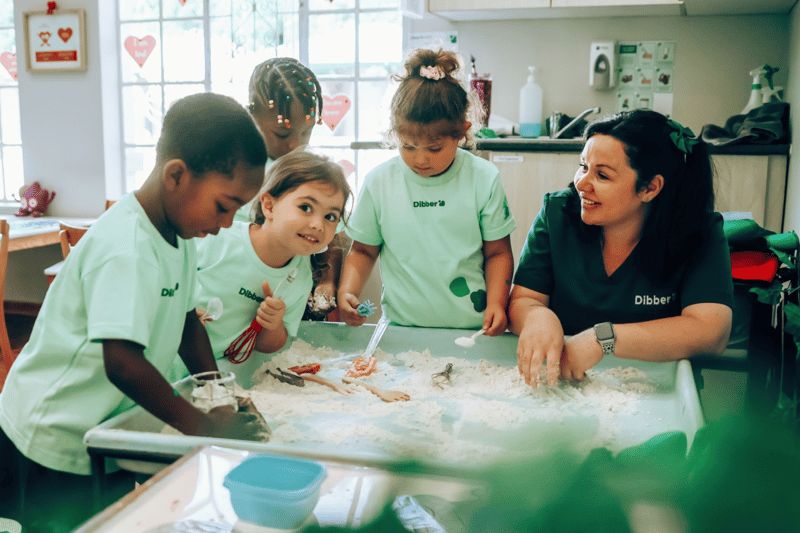
By Ursula Assis, Country Director of Dibber International Preschools, South Africa
“There is a particular kind of anxiety in our homes when it comes to childhood education. It rarely looks dramatic. More often, it looks like diligence. Parents research schools early, compare academic and extracurricular programmes, areas and school properties and ask what will give their child an advantage.
“This instinct makes sense. There is real competition for good schools, and the pressure can feel intense from the beginning. But this pressure can limit how we judge quality. It can make early childhood education seem like a market where the best choice is simply the most expensive, the most impressive, or the most academic.
“We need to question that assumption.
“The main question in early childhood education is not how impressive a preschool looks to adults. What matters is the daily experience it gives the child. Does the school create a calm environment or push constant performance? Is there time for play, movement, conversation, and rest? Does it help children build trust in themselves and the adults around them?
“These questions are more important than many parents think, and research is backing this up. The Department of Basic Education’s 2030 strategy does not define quality early learning by fast-tracked academics. Instead, it highlights caring relationships, conversation, guided play, storytelling, and physical activity. Our public discussions about preschool are often much narrower than what our own policies say children need.
“This matters even more in South Africa, where childhood is affected by stress in ways that cut across all sectors of society, even if the burden is not carried equally. One of the starkest findings in recent research comes from the Drakenstein Child Health Study*, which found that 83% of preschool children in that group had experienced some form of violence exposure by age 4.5, while 45% had experienced at least two forms. The study underlines a national truth: young children in South Africa are developing in a stressed society, and emotional development cannot be treated as secondary.
“For middle-income to affluent families, the relevance is not that their lives mirror the harshest forms of national hardship. It is that no family raises children outside the emotional environment of the country. Stress simply enters differently. It may arrive through long workdays, packed schedules, rushed transitions, high expectations, overstimulation and too little margin. In these settings, a child can have every material advantage and still feel overwhelmed.
“This is why emotional safety deserves to be treated as a serious marker of preschool quality.
“Sometimes, parents only start looking for it when something begins to unravel. A child resists drop-off. They become rigid, anxious or quick to collapse when frustrated. They struggle to settle in a group or to recover when things do not go their way. Parents are then left wondering how this can be happening when they have chosen well, spent well and tried hard.
“But children are not steadied by inputs alone. They are steadied by relationships, rhythm and emotionally perceptive environments.
“That does not mean ambition is misplaced. It means ambition needs to be defined more carefully. The child who can tolerate frustration, participate in a group, communicate clearly, wait, recover and persist is not behind. That child may be better prepared for school than the child who has simply been moved too quickly into formal learning. Self-regulation is not a soft skill sitting somewhere off to the side of achievement. It is one of the conditions that makes later achievement more likely.
“There is also a tendency in the fee-paying market to equate visible sophistication with developmental quality. Beautiful campuses, premium branding and long activity lists are easy to read as reassurance. What is harder to assess, but far more important, is what happens in the ordinary texture of the day: whether children are spoken to with warmth, whether there is enough time for free play, whether adults guide rather than merely manage, and whether emotional upset is treated as information rather than inconvenience.
“That distinction matters. Research synthesised in the supporting source pack notes that Thrive by Five* lower-fee settings going beyond expectations, partly because they prioritised warm routines, targeted praise, guided play, and opportunities for cooperation and emotional communication. That is a useful corrective for any parent inclined to assume that quality is mainly bought through infrastructure or status. Relational practice is not a bonus feature. It is part of the developmental core.
“None of this should turn into parent-blaming. Parents are not foolish for wanting the best. Nor are they wrong to feel the pressure of making the right educational choice early. The problem is not parental care. The problem is a market and a culture that often make the wrong indicators feel like the safest ones to trust.
“So perhaps the better question is not simply, “Is this preschool excellent?” It is, “Excellent at what?”
Excellent at producing compliance? Excellent at signalling status? Excellent at giving adults a sense of certainty? Or excellent at creating the conditions in which a young child can become secure, curious, articulate, adaptable, emotionally grounded and emotionally and academically ready for ‘big school’?
Schools that deserve serious attention are the ones that understand that care and learning are not separate categories. They are the ones that take play seriously, build calm and belonging into the rhythm of the day, and recognise emotional safety as part of quality rather than an optional extra. Whole-child models, including Nordic-inspired approaches such as Dibber’s, are compelling not because they are ‘fashionable’, but because they are better aligned with what the evidence says children actually need to thrive.”
Links:
Submitted on behalf of
Get new press articles by email
221 Press Release Articles
Latest from
- The White House Collection - Final Artists Announced
- CFI Appoints Federico Cirulli as Chairman as Group Enters Next Phase of Growth
- Women’s Month Focus Shifts From Financial Inclusion To Building Confidence In Money Decisions
- Plett ARTS Festival 2026 Presents White House Collection And Community Canvas
- Dibber International Urges Parents To Distinguish Shyness From Social Anxiety In Toddlers
- Ladles of Love to Honour Preschool Principals at Heroes of Hope Excellence Awards
- Traders Urged To Focus On Process Over Predictions After Inflation And SARB Rate Decision
- AHF Launches Freedom From Debt Campaign to Reform Global Debt Rules and Protect Health and Services
- Trusting Play How Child Led Exploration Builds Confidence And Learning
- CFI Reports Strongest Quarter and First Half on Record, USD 3.03 Trillion in Q2 and USD 5.34 Trillion in H1 2026
- Broadening School Readiness Beyond Academics To Social and Emotional Foundations
- Why Play Is Not What We Think It Is!
- Engel & Völkers Chilli Festival Ends With Grand Finale At Barrington’s Estate
- Plettenberg Bay Arts Association presents two exhibitions at Plett Arts Festival 2026
- 67 Minutes Can Change 20,000 Lives Through One Powerful Act Of Giving