
Building the foundation before the uniform
Written by: Dibber International Pre-Schools Save to Instapaper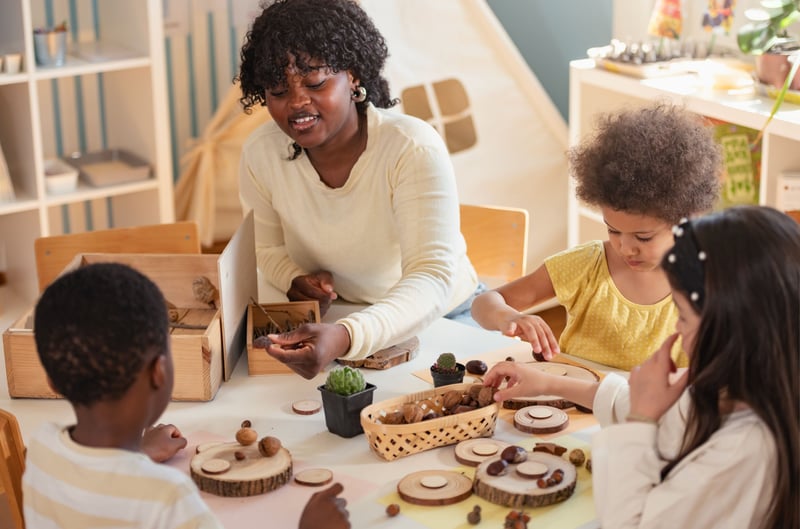
By: Ursula Assis, Dibber International Preschools Country Director
“As parents, we spend a lot of time thinking about the 'big' milestones: first steps, first words, first day of school. But the truth I’ve come to appreciate most is that the biggest foundations are laid long before the first school uniform is ironed.
Early childhood development and early learning may look like play, stories, messy art and snack-time routines, but they are doing something profound: shaping how a child learns, relates, copes, and grows for years to come.
“That’s why the lead-up to Grade R matters so much. Grade R is often seen as a simple bridge into “real school”, but it is more accurately the start of the Foundation Phase journey - the stage where children begin to apply early skills in more structured ways.
Grade R lays down readiness for formal learning: the ability to follow instructions, listen and respond, recognise patterns, communicate clearly, manage emotions, and participate confidently in a group. When those building blocks are in place, children don’t just cope in Grade R and Grade 1; they settle and engage.
“Before children reach Grade R, they are already building their learning identity. In the early years, a child’s brain develops at an extraordinary pace. In fact, in the first five years, a child’s brain forms more than a million neural connections every second.
“Their environment, relationships and daily experiences influence everything from attention and memory to emotional regulation and confidence.
At Dibber International Preschools, we often remind families that early learning is not about rushing academics - it’s about nurturing the whole child so they arrive at Grade R ready in every sense: cognitively, socially, physically, and emotionally.
“This resonates because children don’t learn in compartments. A child’s school readiness isn’t only about knowing letters or numbers. It’s being able to wait a turn, express frustration without melting down, ask for help, try again after a mistake, and feel safe in a classroom environment.
These are life skills, and they start early.
“One of the most powerful gifts we can give children in the years leading up to Grade R is a positive relationship with learning. When learning is playful, child-centred and encouraging, curiosity becomes a habit. Children begin to associate discovery with joy rather than pressure.
This is crucial because the Foundation Phase demands sustained engagement: listening to stories, exploring early literacy, developing number sense, and gradually building stamina for classroom routines.
“At Dibber, this is supported through a balanced rhythm of structured activities and meaningful free play. Children are guided gently, but they are also given space to try, experiment, negotiate, and explore.
We don’t just teach children to learn - we teach them to love learning. Our educators nurture curiosity, confidence, and emotional resilience through a blend of structured rhythm, free play, and heart-led care.
“In practical terms, what does that mean for the child heading towards Grade R?
“It means language is built through rich conversations, storytelling, singing, and active listening - the foundations of reading and writing later.
It means early numeracy develops through everyday play: sorting, building, comparing, counting, pattern-making, and problem-solving.
It means fine motor skills are strengthened through cutting, drawing, threading and painting - the muscles needed for handwriting and classroom tasks.
It also means gross motor development is prioritised through movement, climbing, balancing, and outdoor play, supporting physical confidence, coordination, and attention.
“Perhaps most importantly, it means social and emotional development is intentionally nurtured. In the years before Grade R, children are learning how to be with others: how to share, cooperate, resolve conflict, and build friendships.
These experiences shape their sense of belonging. When children feel emotionally secure, they are more able to focus, participate and take healthy risks in learning.”
Submitted on behalf of
Get new press articles by email
221 Press Release Articles
Latest from
- The White House Collection - Final Artists Announced
- CFI Appoints Federico Cirulli as Chairman as Group Enters Next Phase of Growth
- Women’s Month Focus Shifts From Financial Inclusion To Building Confidence In Money Decisions
- Plett ARTS Festival 2026 Presents White House Collection And Community Canvas
- Dibber International Urges Parents To Distinguish Shyness From Social Anxiety In Toddlers
- Ladles of Love to Honour Preschool Principals at Heroes of Hope Excellence Awards
- Traders Urged To Focus On Process Over Predictions After Inflation And SARB Rate Decision
- AHF Launches Freedom From Debt Campaign to Reform Global Debt Rules and Protect Health and Services
- Trusting Play How Child Led Exploration Builds Confidence And Learning
- CFI Reports Strongest Quarter and First Half on Record, USD 3.03 Trillion in Q2 and USD 5.34 Trillion in H1 2026
- Broadening School Readiness Beyond Academics To Social and Emotional Foundations
- Why Play Is Not What We Think It Is!
- Engel & Völkers Chilli Festival Ends With Grand Finale At Barrington’s Estate
- Plettenberg Bay Arts Association presents two exhibitions at Plett Arts Festival 2026
- 67 Minutes Can Change 20,000 Lives Through One Powerful Act Of Giving