
Plastics SA Addresses Global Polymer Price Volatility And Ongoing Supply Constraints
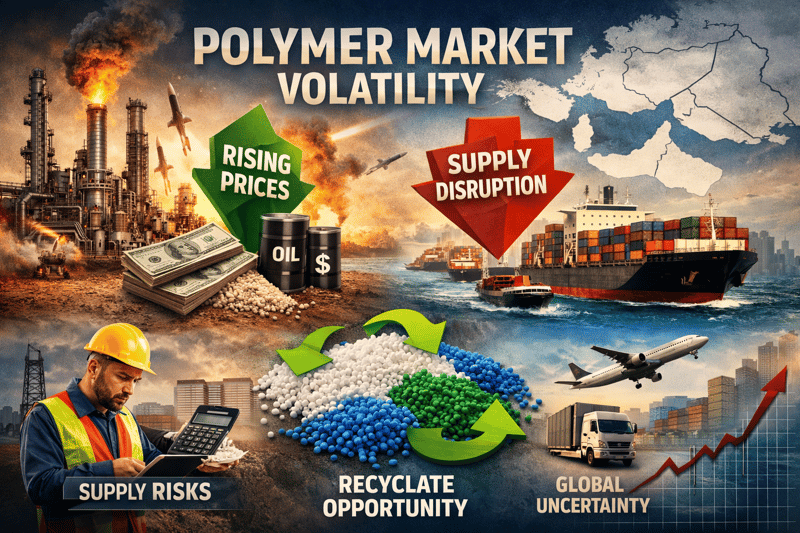
The global polymer market is currently undergoing significant disruption, driven by ongoing geopolitical tensions in the Middle East and their impact on energy markets, trade routes and supply chains.
These developments have resulted in sharp increases in feedstock costs and unprecedented volatility in polymer pricing worldwide. As polymers are derived primarily from petroleum-based products such as natural gas and naphtha, any instability in these upstream markets has a direct and immediate effect on the plastics industry.
Reported increases between March and April 2026 range from 30% and continue to increase as time progresses. When combined with substantial increases in freight costs, the total impact on landed prices in South Africa has been significantly higher.
Supply Constraints Intensify Market Pressure
Compounding this situation are global supply constraints. Production slowdowns in key regions, particularly Southeast Asia, where manufacturers rely heavily on Middle Eastern feedstocks, have intensified shortages. Local production is constrained by ageing infrastructure and operational challenges, which are now exacerbated by limited feedstock availability.
“The pace and scale of these increases are unlike anything the industry has experienced in recent years. What we are seeing is not simply a pricing cycle, but a convergence of global risks that is placing sustained pressure across the entire plastics value chain,” says Anton Hanekom, Executive Director of Plastics SA.
Rising Uncertainty Across The Value Chain
This environment is creating heightened levels of uncertainty and risk. Traders are exposed to fluctuating prices with limited guarantees from international suppliers, while converters are increasingly cautious in committing to forward orders.
At the same time, increased purchasing activity, now often exceeding normal demand levels, is placing additional strain on already constrained supply.
Opportunities In Recycling And Local Resilience
Despite these challenges, Plastics SA believes there are opportunities for the local industry to respond proactively. South Africa’s well-established recycling sector provides an important alternative source of material, with available stocks of recycled polymers such as PE-HD, PE-LD and PET offering potential to supplement supply and improve resilience.
“We encourage manufacturers to actively explore the use of recycled materials where feasible. Not only does this support supply continuity, but it also advances our broader sustainability objectives as an industry,” Hanekom adds.
Outlook For The Months Ahead
Looking ahead, Plastics SA expects continued volatility in the short to medium term. Supply constraints are likely to persist, with availability potentially tightening further in the coming months as global trade flows remain disrupted.
The current increases in fuel, gas, fertiliser and logistics costs are all interconnected, reflecting the systemic nature of the disruption. As a globally traded commodity, polymer pricing is influenced by these factors regardless of whether materials are sourced locally or internationally.
Plastics SA remains committed to supporting the industry through this period by providing informed market insights, promoting sustainable practices and advocating for a resilient and adaptive plastics sector.