
South Africa Aims For 100% Post‑Consumer Recyclate In Carrier Bags From 2027, Plastics SA Urges Reuse Over Ban
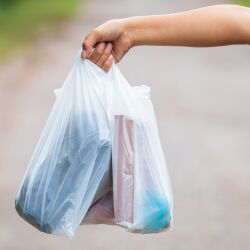
Recent calls to ban plastic carrier bags or replace them with paper overlook an important reality: South Africa is less than five months away from a significant circular-economy milestone that will require compliant plastic carrier and flat bags to contain 100% post-consumer recyclate from 1 January 2027.
According to Anton Hanekom, Executive Director of Plastics SA, abandoning plastic carrier bags now would undermine years of investment in recycling and market development at precisely the point when South Africa is positioned to close the loop. “The 2027 deadline should be recognised as an environmental opportunity, not a reason to abandon plastic carrier bags. Our recycling industry is geared and prepared for this transition. Moving to 100% post-consumer recycled content creates a significant and sustainable end-market for locally recovered plastic. This is exactly what a sustainable, functioning circular economy needs,” Hanekom says.
Plastics SA also questions claims made in recent media reports about the scale of plastic carrier bag consumption in South Africa and suggestions that the regulations introduced more than two decades ago have failed. Hanekom says such arguments overlook an important consequence of those regulations: the South African carrier bag has evolved from a lightweight, disposable product into a stronger, regulated bag specifically designed to encourage reuse and recycling.
Since the inception of the bag levy, production of carrier bags have reduced substantially to around 2,184 billion bags sold per annum. This generates an estimated R900 million in revenue for the fiscus each year. “South Africa prohibits plastic carrier bags below the prescribed minimum thickness of 24 microns. This is an important distinction because these are not the ultra-thin bags commonly associated with single-use consumption internationally. A compliant South African carrier bag is strong enough to be reused numerous times: first for carrying groceries and then for a myriad of other purposes and uses before ultimately entering the recycling stream.”
Recycled-content requirements and market demand
Importantly, the recycled-content requirement has increased from 50% post-consumer recyclate in 2023 to 75% in 2025 and will reach 100% in 2027. This creates an essential market for post-consumer plastic waste and gives collected material economic value.
“Recycling cannot survive on collection alone. There must be demand for the recyclate produced. Carrier bags provide an important end-market for recycled polyethylene. Removing that market will risk weakening the economics of collection and recycling,” Hanekom explains.
Science and socio-economic realities must guide material choices
Claims that paper or other materials automatically offer a more environmentally responsible alternative are also not supported by life-cycle research. The CSIR's South African Life Cycle Sustainability Assessment compared 16 grocery carrier-bag alternatives across 21 environmental and socio-economic indicators. It concluded that reusable plastic bags performed best overall in the South African context when reused appropriately.
Plastics SA has previously highlighted the CSIR findings showing that plastic carrier bags compare favourably with alternatives on factors including water and land use, carbon emissions and overall environmental footprint. International life-cycle studies have reached similar conclusions, demonstrating that heavier alternatives such as paper and cotton require considerably more resources during manufacture and must be reused sufficiently to offset those impacts.
“A material should not be considered environmentally superior simply because it looks or feels greener. The responsible comparison is its impact across its entire life cycle. The evidence continues to show that a durable, reusable and recycled plastic carrier bag has a remarkably low environmental footprint,” Hanekom emphasises.
He also cautions against assuming paper bags are equally practical for every local consumer. “Many consumers rely on taxis, trains or walking to transport groceries home. They need a carrier bag that is strong, affordable, moisture-resistant and capable of being reused. Environmental policy must take South African socio-economic realities into account.”
Addressing the real problem: collection and enforcement
Plastics SA stresses that plastic litter remains unacceptable. However, banning carrier bags will not repair inadequate municipal waste collection or prevent other waste from entering the environment. The priority should instead be keeping valuable materials in circulation through separation at source, effective collection and recycling.
“Plastics SA has consistently advocated for reliable waste services to every household and better systems for getting clean recyclables into the recycling stream. Stronger enforcement is also needed against non-compliant, ultra-thin bags, including imported products that do not meet South Africa’s regulatory requirements. These products undermine responsible local manufacturers and the investments being made to meet recycling and circularity targets,” Hanekom advocates.
Hanekom says effective regulation must, however, be matched by effective investment in the systems needed to support it. In this regard, South Africa should learn from the history of the plastic bag levy and Buyisa-e-Bag. The levy was intended to support waste minimisation, collection, job creation and recycling capacity, yet the recycling industry did not receive the sustained investment originally envisaged.
“Our collection and recycling infrastructure could have been much stronger today if the revenues generated over the past two decades had been consistently reinvested into these systems. However, we believe that the answer is not to replace one material with another and hope that litter disappears. It is using resources responsibly, reusing them for as long as possible, collecting them effectively and recycling them into new products. From 2027, South Africa has the opportunity to demonstrate exactly that with a carrier bag made from 100% post-consumer recycled plastic,” Hanekom concludes.