
Plastics SA leads recycling initiative to unlock the value of waste in bushbuckridge
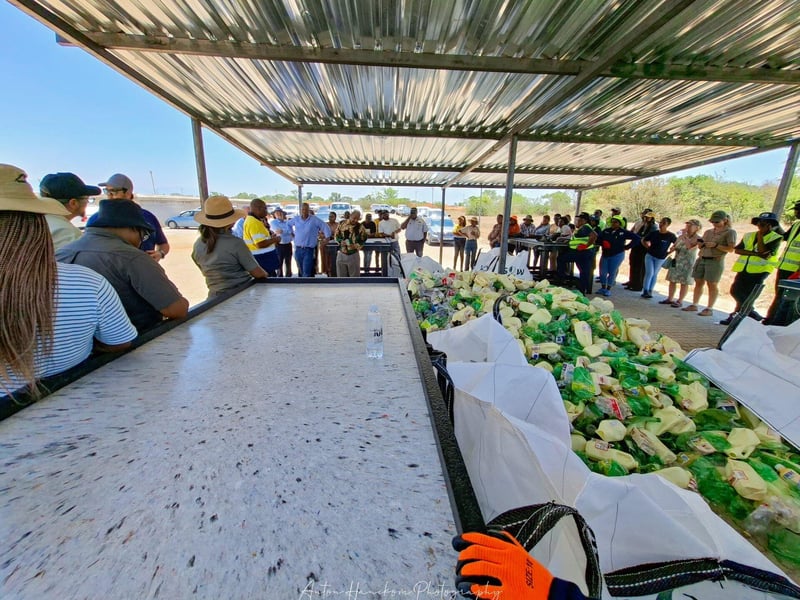
Plastics SA, the umbrella body representing the entire local plastics industry, is helping turn waste into economic opportunity through its Innovative Solutions for Waste (ISOW) project and a newly launched Waste Beneficiation Centre in Thulamahashe, Mpumalanga.
Located in Section B, within Bushbuckridge Local Municipality, the centre brings together government, industry, traditional leadership and residents to strengthen recycling, divert materials from landfill and support local enterprise development.
Led by Plastics SA, with support from the Promoting Women’s Employment for Africa’s Green Transformation (WE4D) programme, ISOW combines infrastructure, accredited training, household education and business mentorship. Its initial programme targets 1 049 households, supported by schools and local waste reclaimers.
“Recycling works when the different parts of the value chain work together. Households need practical collection arrangements, reclaimers need skills and access to materials, and operators need equipment, business support and markets. ISOW is helping bring these elements together,” says Anton Hanekom, Executive Director of Plastics SA.
Building a practical partnership
The centre follows baseline and feasibility studies by Moss Group, site visits and stakeholder consultations. It stands on land belonging to the Amashangane Traditional Council, whose involvement, alongside the municipality, has been central to its establishment. Kruger to Canyons Biosphere Region (K2C) helped connect stakeholders.
A memorandum of understanding between Plastics SA and Bushbuckridge Local Municipality formalises the collaboration and provides a foundation for implementation and further funding.
“For municipalities, the challenge extends beyond collecting waste. It includes recovering materials, supporting livelihoods and sustaining community participation. Industry brings resources and expertise, while municipalities and traditional leaders contribute essential local knowledge,” Hanekom explains.
Coordinating industry support
The memorandum is endorsed by participating Producer Responsibility Organisations (PROs), including the Petco, Polyco, Metpac, Fibre Circle, eWASA and The Glass Recycling Co. (TGRC). Industry commitments, together with assets valued at approximately R2 million, will support operations, with equipment and collection distances considered during planning.
MetPac-SA has reaffirmed its support for recycling value chains and reclaimers. Petco has worked with Plastics SA to engage educators at four community schools, while Polyco has sponsored school recycling bins and pledged continued support.
Fibre Circle has announced sponsorship of a forklift and operator training. EWASA has expressed interest in exploring electronic waste opportunities as these arise.
Connecting households, skills and livelihoods
Plastics SA has provided accredited training to 15 waste reclaimers and key stakeholders. Local Waste Ambassadors are conducting door-to-door education to encourage separation at source, with recyclables collected on a different day from regular municipal waste.
A local operator will manage the centre, collect separated materials, distribute ISOW-branded bags and coordinate recyclable sales. Buy-back centre mentorship will support this local small, medium and micro enterprise (SMME), while local staff appointments bring community knowledge into the project.
“Waste reclaimers and small businesses are essential partners. Infrastructure must be supported by training, mentorship and reliable collection arrangements if it is to create lasting value,” says Hanekom.
The municipality has welcomed the initiative’s potential to complement services, ease collection challenges and support livelihoods. Waste Ambassadors are also taking recycling education into schools, with early feedback from Eric Nxumalo High School indicating a cleaner environment and positive involvement from learners and the school community.
“When learners understand that recyclables have value, they can influence habits at home. Education helps make responsible waste management part of everyday life,” Hanekom adds.
Sustaining progress
Hanekom acknowledges all partners, including Deutsche Gesellschaft für Internationale Zusammenarbeit (GIZ), which implements ISOW through WE4D on behalf of the European Union and Germany’s Federal Ministry for Economic Cooperation and Development (BMZ).
“The launch is an important milestone. Our shared task now is to sustain participation and build an operation that serves the community over time,” he said.
The recycling component has launched, with further landfill-site activities to follow. Long-term success will depend on effective management, household participation and viable markets for recovered materials.
Through ISOW, Plastics SA is connecting cleaner surroundings with greater material recovery and opportunities for local people to earn a living from recycling.
Release information
Issued on behalf of
Plastics SA
Media contact
Aim Marketing & Communications Consultants
Keaoleboha Sefako