
Why AI Outputs Still Require Human Accountability in South African Workplaces
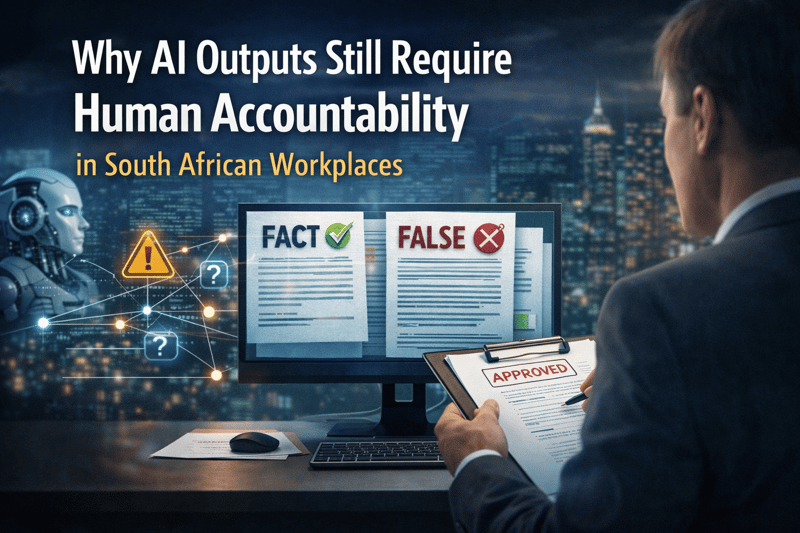
Johannesburg, January, 05, 2026 - Artificial intelligence tools like ChatGPT are now part of daily work for many South African employees.
From drafting emails to summarising reports, AI is helping teams work faster than ever before.
But experts warn that speed should not be confused with responsibility.
According to College Africa Group (CAG), AI does not make decisions or take accountability for outcomes. It simply generates content based on patterns and probabilities.
“AI can sound confident and authoritative, even when it’s wrong,” says College Africa Group. “That’s why human judgment remains essential.”
Helpful Assistant, Not a Decision-Maker in HR, finance, and operations, AI is often used as a starting point to draft, summarise, or organise information.
Used this way, it can be a powerful productivity tool.
Problems arise when AI output is accepted without review.
AI does not understand organisational risk, legal context, or business consequences. It produces language, not responsibility.
Why Accountability Still Matters In regulated environments, unchecked AI use can lead to mistakes that are difficult to trace.
When something goes wrong, the question is never what the AI said — it is who approved it.
This is where many organisations are now adjusting their approach.
Rather than banning AI, leading South African businesses are putting simple safeguards in place: clear use guidelines, human sign-off, and training that focuses on critical thinking, not blind trust.
Keeping Humans in the Loop.
The most effective AI users understand one key principle: AI supports decisions, but people remain accountable for them.
“AI doesn’t carry legal, ethical, or reputational risk,” College Africa Group explains. “People do, and that won’t change.”
About College Africa Group
College Africa Group (CAG) is a South African corporate training provider helping organisations improve productivity through practical training in Excel, AI in the workplace, and professional skills — with a strong focus on responsible, governed use of technology.
Media & Corporate Enquiries:
📞 +27 (0) 83 778 4903
🌐 https://collegeafricagroup.com/ai-chatgpt-consultancy-south-africa/