
Investing in Community media to uphold democracy Cebisa Zondo, SI Analyst - Fund Management & Specialist Services, Tshikululu Social Investments
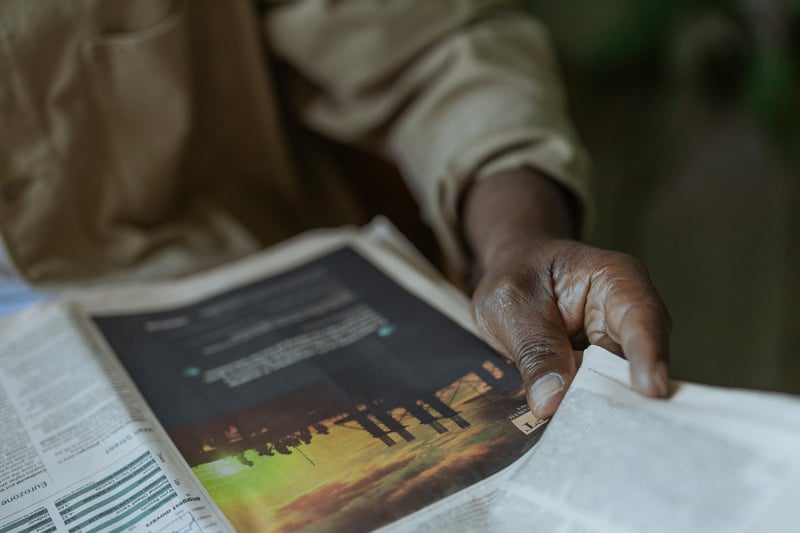
According to UNESCO, press freedom has been on a steady decline since 2012. Despite this, South Africa continues to fair well, ranking 27th out of 180 countries in the World Press Freedom Index. This signals a continued commitment to respecting the role and independence of mainstream and independent community media.
Maintaining this is not without its challenges and one of the most significant threats to our press freedom is financial. This is acutely felt at a community level as dwindling revenue and financial support pushes independent community newspapers toward closure.
Community media plays an important role in fostering democratic participation at a grassroots level. Strategic social investment has the power and the responsibility to protect it.
The Financial Reality Of Community Media
Community newspapers have long been platforms for spotlighting local issues and encouraging civic participation – which democracy depends on - in communities that are often overlooked by mainstream media. They are a trusted sources of reliable news at a time when disinformation and misinformation are on the rise. They’re a source of truth and a means of keeping history alive. With independent publications dating back to the 1880s, their archives contain detailed accounts which are crucial to preserving community heritage.
To keep their doors open, these newspapers depend on advertising as a source of revenue. The companies that advertise in community newspapers are often small local businesses operating in a constrained economic environment, making them an unreliable revenue source. Additionally, the rise of social media marketing has given local businesses a cheaper, more targeted alternative, pulling advertising spend and placing further pressure on an already constrained revenue base.
This reality is further exacerbated by the monopolisation of the print media industry prioritising commercial interests over diverse voices and perspectives. A report published by the Media Development & Diversity Agency (MDDA) showed that only 7% of the respondents interviewed from the community and small commercial media sector believe their entities are sustainable.
The top three challenges affecting these organisations are a lack of funding from the government, the private sector, and donor agencies; low revenue diversification; and the need for greater non-financial support, including skills development and technical support, from key industry stakeholders.
Community newspapers are attempting to digitise to diversify revenue, but this is a costly exercise. With expenses ranging from equipment and cybersecurity to upskilling staff, the financial demands of going digital often outpace what smaller publications can realistically afford.
Social Investment As An Enabler Of Press Freedom
Between 2016 and 2022, less than 1% of international donor aid went to media and information globally. According to Trialogue, only eight (17%) of the surveyed companies allocated corporate social investment spend towards social justice and advocacy in South Africa. Of those eight companies, only 6% of their spend went towards supporting press freedom.
Social investors are prioritising sectors like education and healthcare, for example, but community media can play a significant role in advancing systemic change. Community media forms part of the infrastructure through which social investment communicates, amplifies and sustains itself. Most importantly, it empowers communities to demand better service delivery, and advocate for the maintenance of resources and services provided through social investment and partnerships. This makes it a valuable sector for social investment.
Several corporates and stakeholders in the media industry are starting to realise this value. Since 2025, Tshikululu has managed the Digital News Transformation Fund (DNTF), an initiative funded by Google and established in partnership with the Association of Independent Publishers (AIP).
Recognising the challenges faced by independent publishers, the fund provides targeted, project-based funding for the sustainability and digital transformation of small and independent South African news publishers. As the fund manager, Tshikululu has overseen the approval and fund disbursement of R10.5 million to 21 independent news publishers across the country during the first phase of funding in 2025, with phase 2 already underway.
In addition, the Fund offers training and capacity building to the publishers on digital journalism and other digital skills. This has created a credible, transparent foundation for supporting the survival of public-interest journalism in South Africa and provides a template for other social investors to follow.
As community newspapers find new ways to remain profitable, funds such as the DNTF offer much-needed support to finance platform upgrades and improve digital capabilities. Digitisation helps to expand readership beyond communities and work towards monetising platforms.
While digitisation is an important goal, community newspapers are unlikely to completely abandon print given accessibility constraints. With this in mind, social investment should not solely focus on digitisation, but on embedding sustainable solutions that work within different community media ecosystems. This might look like helping newspapers own their means of production, such as printing machines, to reduce costs.
Safeguarding Democracy Through Community Media
As we commemorate World Press Freedom Day, it is an opportune time to rethink how social investment capital can contribute to safeguarding our democracy. While press freedom continues to be protected in South Africa, having a concentrated media industry poses a risk to the ability to uphold independent and unbiased media coverage.
Thriving independent community newspapers mitigate this risk. They provide a platform for civic engagement in a language that community members understand on issues that directly affect them. They play a critical role in service delivery and enable development in the same areas that social investors target.
If we are serious about systems-level change, it is in the interest of social investors and their beneficiaries to keep the lights on for community newspapers and support their growth.
Release information
Issued on behalf of
Tshikululu Social Investments
Media contact
Fyfe PR
Alison Fyfe-Turck