
That’s a wrap - Three-year eco-classroom programme draws to an end
Written by: Khanya Mavata Save to Instapaper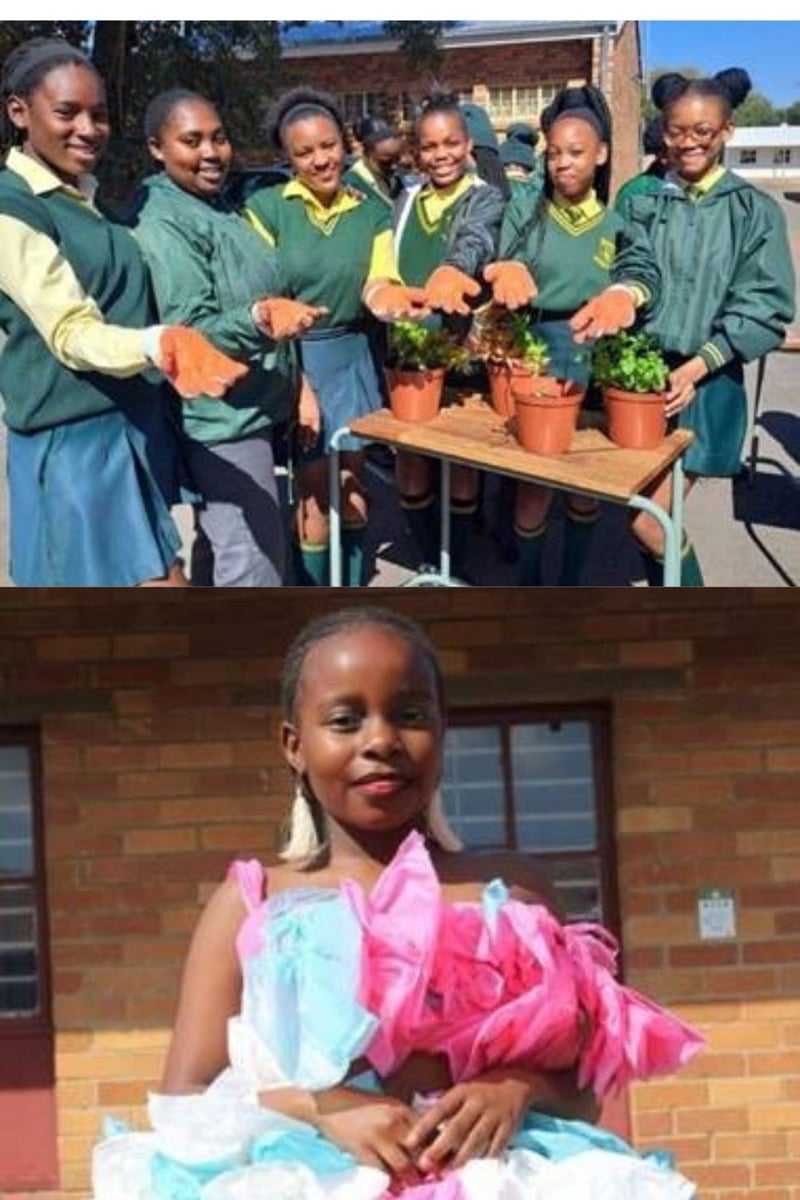
Sun International and WESSA partnership reached 19 schools, 5 300 learners and 190 teachers to help build environmental resilience
Sun International’s three-year partnership with WESSA (Wildlife and Environment Society of South Africa), for which learners at schools around the country have been supported as they created eco-classrooms to build environmental resilience in schools and their communities, is coming to a successful end. Developed by the Foundation for Environmental Education (FEE) to promote environmental learning globally, WESSA, has been the national operator of the Eco-Schools programme in South Africa for more than 21 years.
Sun International donated more than R2.6 million to support the programme in schools in areas surrounding their properties. The project included more than 5300 learners ranging from Grade 1 to 12, and culminated with three World Environment Week events, with learners thoroughly enjoying both their showcases and the engaging educational programme.
“Over the past three years, our Sun International Eco-Schools project has successfully supported schools create eco-classrooms where learners, teachers and school leadership used the eco-schools seven-step framework to chart a way to build resilience in their schools and communities,” said Sun International’s SED Manager, Heidi Edson.
The Sun International Eco-Schools project helped 19 schools learn about taking care of the environment and engaged with a broad reach of more than 25 900 learners and 600 teachers.
Through thirty teacher workshops, 260 environmental education sessions and hands-on activities like waste collection, the project fostered environmental stewardship and behavioural change. A successful cleanup event further reinforced community engagement and sustainability practices, aligning with Sun International’s commitment to social responsibility and environmental impact.”
Central Office, Johannesburg
The Sun International Central Office Eco-Schools project made meaningful progress in advancing environmental education across four Gauteng schools: Moduopo Primary, Ipontshe Primary, Ekukhanyisweni Primary, and Tembisa School of Specialisation. Now in its second year, the initiative transformed school environments through the establishment of four biodiversity gardens and vertical greening projects. These efforts included the planting of over 150 indigenous species and fostered a deeper connection to nature by integrating ecological themes into classroom learning through the use of technology, creativity, and hands-on activities.
Learners participated in biodiversity audits using citizen science apps, celebrated International Biodiversity Day with eco-walks and recycled bird feeders, and deepened their understanding of South Africa’s unique flora through plant propagation activities.
Teachers were equipped with innovative teaching tools at two themed workshops, aligning biodiversity education with the national curriculum. Recognition of excellence culminated at the WESSA Schools Awards, where Moduopo and Ipontshe Primary schools achieved the International Green Flag, and Christina Lephalala of Moduopo Primary was honoured as the FEE Teacher of the Year for her exemplary leadership and commitment.
Carnival City, Johannesburg East
The Carnival City Eco-Schools project made a notable impact at two Gauteng schools – Tsimong Primary and Buhlebemfundo Secondary – by transforming them into vibrant hubs of environmental education and action. Learners and teachers actively participated in biodiversity workshops, citizen science surveys, and the creation of two indigenous biodiversity gardens featuring over 110 trees, shrubs, and succulents. These initiatives helped embed sustainability into the schools’ culture and fostered a deeper appreciation for local ecosystems.
Learners celebrated Arbor Week by planting trees and presenting species research, while teachers took part in interactive workshops that integrated biodiversity, technology, and curriculum-based environmental learning.
In its third year, the project shifted its focus to sustainable waste management, launching school-based recycling programmes, joining the Sweethearts Foundation bread tag initiative, and preparing for a Waste Fashion and Art Show to showcase upcycling. Both schools achieved Silver Awards in 2024 and received the prestigious Eco-Schools Green Flag in March 2025, a testament to their commitment to sustainability, climate action, and empowering youth as environmental stewards.
Time Square, Pretoria
The Time Square Eco-Schools project supported two schools in Gauteng – Mamelodi Prevocational School and Soshanguve Secondary School – engaging students and teachers through immersive environmental education and biodiversity-focused activities.
The programme cultivated a deep understanding of ecological issues through citizen science surveys, biodiversity index calculations, and field-based learning using apps like iNaturalist and PlantNet. Learners documented 269 species across birds, insects, and trees, establishing a baseline for future restoration efforts.
Key highlights include the creation of two biodiversity gardens featuring over 148 indigenous plants, including trees, shrubs, succulents, and medicinal species, now serving as living classrooms. Students took part in hands-on activities such as spekboom propagation, bottle irrigation systems, and recycled bottle planters, while teachers attended two dynamic workshops on integrating technology, creativity, and (Curriculum and Assessment Policy Statements) linked biodiversity education. Both schools earned Green Flag award at the WESSA Schools Awards underscoring their commitment to sustainability.
Sibaya Casino & Entertainment Kingdom, Durban
The Sibaya Eco-Schools project supported five schools in KwaZulu-Natal – Sterngrove Primary, Phoenix Secondary, Glenhaven Secondary, Waterloo Secondary and Palmview Secondary – empowering learners and teachers to lead action-orientated projects that addressed urgent health and well-being challenges. Throughout the programme, grade 8 and 9 learners participated in practical workshops and planning sessions to identify and tackle issues such as cyberbullying, substance abuse, poor hygiene, and waste mismanagement.
Each school initiated a unique, learner-driven action project.
- Sterngrove and Palmview Secondary established wellness gardens, promoting mental well-being and offering safe, green spaces for reflection.
- Phoenix Secondary launched a vegetable garden, a drug awareness campaign, and a mental health and hygiene club, integrating nutrition, advocacy, and care.
- Glenhaven Secondary implemented a vertical garden using recycled 2L bottles and created upcycled mats to support their mental health initiatives.
- Waterloo Secondary focused on physical fitness as a form of rehabilitation, combined with a recycling initiative to build eco-brick benches around the sports field.
These projects reflect a strong commitment to addressing the social determinants of health within the school communities, using environmental education as a tool for empowerment
GrandWest, Cape Town
The GrandWest Eco-Schools Project empowered three schools in the Western Cape – Bellville South High School, Riverton Primary School, and Elswood Secondary School – to transform their learning environments through biodiversity restoration, waste reduction, and holistic environmental education. The project fostered a culture of environmental stewardship and sustainability by engaging learners and teachers directly, while also inspiring broader participation across the wider school communities.
Key highlights include:
- Two biodiversity gardens were established, featuring 80 indigenous plants from the Fynbos Biome, now serving as living outdoor classrooms.
- Recycling and waste management systems were launched, including training sessions, clean-ups, and the donation of colour-coded bins, with Elswood High School recycling over 700kg of waste through its partnership with Godfrey Recycling.
- Creative initiatives such as the Trashion Show, insect hotel construction for Earth Day, and bird feeder crafting on Mandela Day brought awareness to biodiversity and sustainability through art and action.
- Teachers participated in two impactful workshops on biodiversity, curriculum integration, and Education for Sustainable Development (ESD), equipping them with tools to link environmental learning to CAPS.
- Learners developed leadership and project planning skills through project-based learning models focused on waste, biodiversity, and health and well-being.
- At the 2024 WESSA Western Cape Schools Awards, Bellville South High and Riverton Primary earned Green flag, while Elswood High received its first Silver, marking a strong trajectory for continued growth in 2025.
Learners who understand the science, impacts, and solutions are better prepared to deal with the climate crisis and advocate for mitigation and adaptation policies at a local and national level,” said WESSA senior project manager Nomfundo Ndlovu.
“Education gives people the skills and knowledge to be better prepared for, and better able to recover from, natural hazards. With knowledge and skills, they can adapt more flexibly. With our educational programmes, WESSA hopes to inspire the next generation to advocate and act for a healthy planet they are proud of,” Ndlovu said.
Golden Valley, Worcester
A hands-on vermicomposting initiative was launched Bo -Doorn Rivier Primary School using upcycled materials, supporting both environmental education and food security.
The compost initiative supports improved vegetable yields for the nutrition programme, while a climate education session empowered learners with practical knowledge.
The project received local media coverage, boosting visibility for environmental education in the region.
Golden Valley participated for a short period under the three year period.
Wild Coast Sun, Bizana, Eastern Cape – ended sooner than three year period
Notes to editor
These are the schools supported by each hotel and casino property over the 3 years:
UNIT NAME
DONATION AMOUNT
NAME OF SCHOOLS
GrandWest
R579 796
- Bellville South Secondary School
- Riverton Primary School
- Elswood Secondary School
Central office
R586 298
- Ekukhanyisweni Primary School
- Tembisa School of Specialization
- Moduopo Primary School
- Ipontshe Primary School
Windmill
R116 657
- Lereko Secondary School
Carnival
R404 330
- Buhlebemfundo Secondary
- Tsimong Primary School
Time Square
R393 667
- Mamelodi East Pre-Vocational School
- Soshanguve Secondary School
Sibaya
R446 854
- Sterngrove Primary School
- Glenhaven Secondary School
- Waterloo Secondary School
- Phoenix Secondary School
- Palmview Secondary School
Golden Valley
R 22 279
- Bo -Doorn Rivier Primary School
Wild Coast Sun
R112 820
- Plangeni Junior Primanry School
About WESSA
WESSA (The Wildlife and Environment Society of South Africa) is a leading non-profit organisation dedicated to advocating for sustainable solutions, conservation, championing policy initiatives and promoting environmental awareness that lead to a healthier planet. Through its diverse range of programmes and initiatives, WESSA has been instrumental in fostering a culture of environmental responsibility across South Africa.
Media note: In all communications, please write as WESSA (The Wildlife and Environment Society of South Africa). Read more https://www.wessa.org.za/about-us/.
Media queries contact, This email address is being protected from spambots. You need JavaScript enabled to view it. - Ronell Swartbooi.
Follow Sun International for news updates:
Facebook: Sun International
Instagram: suninternationalza
Get new press articles by email
Latest from
- WHAT’S ON? Kimberley, brace yourself, Virgil Prins returns to make you laugh until you cry
- Pick n Pay Wine & Food Festival returns to Cape Town I Saturday 25 and Sunday 26 April 2026 at Claremont Cricket Club
- FOOD ENTREPRENEURS - Nine township entrepreneurs grow their businesses beyond the kota stand
- WHAT’S ON? Magic on ice arrives in Pretoria as Disney On Ice presents Mickey’s Search Party
- WHAT’S ON? No need to ‘Dream About You’ anymore as second night of Lloyiso becomes reality
- WHAT’S ON? Fast breaks and fierce rivalries as Basketball Africa League storms Sunbet Arena
- End of summer fun at Meropa over school and long weekend holidays
- Wild Coast Sun Unveils Packed March And April Entertainment Line Up For Easter And School Holidays
- A woman at the helm of Flamingo’s security
- Three Wise Chefs proving that when women lead, kitchens rise
- New year, new car - Nombeko Mary Sonyana wins first family car
- Wild Coast Sun Introduces Bubz The Buzz To Delight Families And Holidaymakers This Easter
- Star Studded March Line Up Brings Bash With Tash Bollywood Hits And Merv The Swerv To Sibaya
- Everything clicks into place as Iindaba Zethu and Izindaba Zethu celebrates three years on DStv Channel 163
- Major Slot Machine Payout Marks Milestone Moment For Meropa Casino In Limpopo
The Pulse Latest Articles
- The Truck Driver Who Turns Overnight Stops Into A Living Archive Of Namibia (March 18, 2026)
- “hisense Celebrates 30 Years In Sa, Highlighting Local Manufacturing At Buy Local Summit & Expo (March 18, 2026)
- Steinmüller Africa Opens Registration For 2026 Boiler Technology Course (March 17, 2026)
- Smart Mobility, Smarter Growth: Reimagining African Supply Chains For A Digital Decade (March 17, 2026)
- Press Release: Introducing Glow Mists By Gloot (March 16, 2026)