
Premium Plant Milk Defies Expectations As South Africa Market Matures
Written by: BizCommunity Editor Save to Instapaper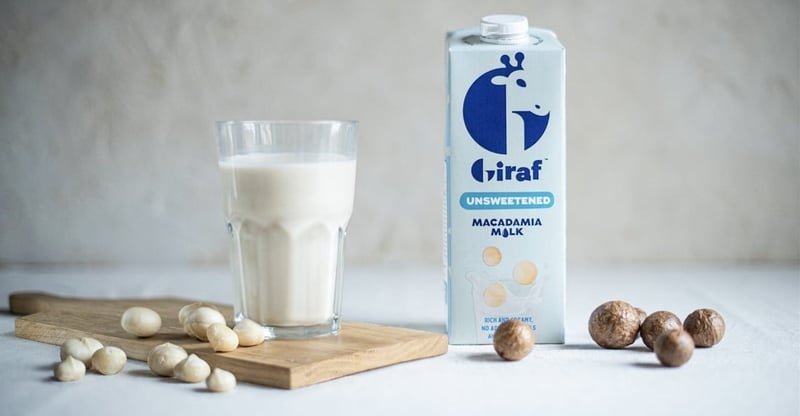
Against this backdrop, the rise of premium-positioned plant milk brands presents an interesting contradiction in the local FMCG sector.
On paper, premium plant milk should be struggling. Yet globally and locally, the category continues to grow. South Africa’s plant-based milk market is projected to reach more than $232m by 2030, with continued annual growth expected over the next five years.
But the more important shift may not be the growth of plant milk itself. It is the maturation of the category.
The early years of plant-based products were largely driven by novelty, lifestyle positioning and rapid product expansion.
Today, consumers appear to be becoming more selective, with ingredient lists, sourcing practices, processing methods and product quality increasingly influencing purchasing decisions.
This evolution is beginning to create space for a different type of food brand, one focused less on trend acceleration and more on refinement.
At Giraf Macadamia, this shift reflects a growing consumer appetite for fewer and better choices.
Premium cannot only mean expensive. Consumers eventually see through that. If a product is positioned as premium, the product itself has to justify it through sourcing, consistency, ingredient quality and trust.
Consumers are redefining value
That distinction matters in a market where consumers remain deeply price-conscious.
According to recent reporting from Reuters, South African retailers continue to experience strong pressure to maintain low food inflation and pass savings onto consumers.
Shoprite alone said it discounted more than 14,000 products during its recent reporting period as shoppers remained highly value-driven.
In that environment, premium food brands face a difficult balancing act. Consumers may still aspire towards better-quality products, but they are becoming increasingly sceptical of brands that rely on marketing language without delivering meaningful product differentiation.
That challenge is especially relevant in the plant-based category, where the category has become increasingly crowded. Supermarket shelves now carry multiple oats, almond, soy, macadamia and other blended alternatives competing across price points and wellness positioning.
But as categories mature, more SKUs do not necessarily build stronger brand loyalty.
Globally, research into premium food and beverage consumption increasingly points toward “intentional purchasing” behaviour. Consumers are buying less impulsively but placing higher value on products they perceive as trustworthy, well-made and ingredient-conscious.
This may be one reason macadamia milk is gaining attention internationally as a premium segment within plant-based dairy alternatives. Market researchers cite its naturally creamy texture, monounsaturated fat profile and positioning within cleaner-label formulations as drivers of category growth.
From premium pricing to purposeful sourcing
South Africa also holds a unique advantage in this conversation. The country remains the world’s leading producer of macadamia nuts, with the sector continuing to expand despite export market pressures.
For local brands, this creates an opportunity to build premium food products rooted in agricultural credibility rather than imported trend culture.
Giraf sources its macadamias through AmberMacs from growers near its White River facility in Mpumalanga and returns 20% of profits to growers. This supply-chain model is increasingly aligned with consumer demand for ethical sourcing transparency.
View this post on Instagram
Importantly, premium is not positioned purely around exclusivity or wellness signalling. Premium increasingly means recognising the farmer, rewarding good agricultural practices, conscientious use of natural resources, and giving more care and purpose to quality, even if this means slower brand building.
That may prove particularly relevant as consumers become more aware of the impact their decisions have on supply chains and those farmers who historically may have been under the most price pressure to perform.
Sustainability and conscientious farming are increasingly influencing how consumers evaluate plant-based products.
Trust will shape the future of plant-based food
For FMCG brands, the implication is significant.
The next phase of growth in plant-based food may not belong to the brands shouting the loudest or launching the widest ranges. It may belong to brands capable of building long-term trust in categories that have become crowded with choice.
Because in a price-sensitive economy, consumers do not stop paying for quality. They simply become far more selective about what quality actually means.
Get new press articles by email
We submit and automate press releases distribution for a range of clients. Our platform brings in automation to 5 social media platforms with engaging hashtags. Our new platform The Pulse, allows premium PR Agencies to have access to our newsletter subscribers.
Latest from
- Constitutional Court Issues Guidance on Copyright Amendment Bill But Does Not Bring It Into Force
- Absa CIB Provides Bespoke Real Estate Finance To Unlock Newlyn Group Growth
- Banks Must Treat Branches and ATMs as Commercial Assets Not Cost Centres
- Long Term Car Rental Brings Predictable Monthly Costs for Drivers
- Dalin Oliver Launches Nationwide Stuck In Dubai Tour After Third National Arts Festival Ovation Award
- Avoid Common CV Errors That Cost You Interviews
- Ugandan Farmers Launch UK High Court Challenge Against EACOP Ltd Over Constitutional and Environmental Claims
- NSBC Africa Launches Access to Finance Initiative To Streamline SME Funding Journeys
- Bradly Howland To Lead Rollout Of Africa Declaration After Completing PRISA Term
- London Wine Competition 2027 Expands Buyer Feedback and Market Intelligence for Entrants
- 97% of Teachers Report Practical Gains from Oxford National Workshop Programme
- Organisations Must Move Beyond Event-Based Change Management Says Keren-Amy Laughton
- Limpopo Hosts Three‑Day Africa Connects Forum Featuring MICE Masterclass and Leadership Awards
- WGN Africa MD Says Trust Not Storytelling Drives ESG Success
- Oreo And BTS Launch Limited Edition Cookies With Brown Sugar Pancake Flavour Crème
The Pulse Latest Articles
- What We Miss When We Focus Only On Behaviour (July 6, 2026)
- Bundox Moves Beyond Safari Packages With “experience Our Wild Africa” (July 3, 2026)
- Tutor Doctor South Africa Celebrates Double Award Wins (June 30, 2026)
- Rethinking Performance: Part 5 Aligning Judgement In Performance Evaluation (June 30, 2026)
- Axor: Redefining The Architecture Of Luxury Living (June 29, 2026)