
117-year-old private college takes next step towards university status
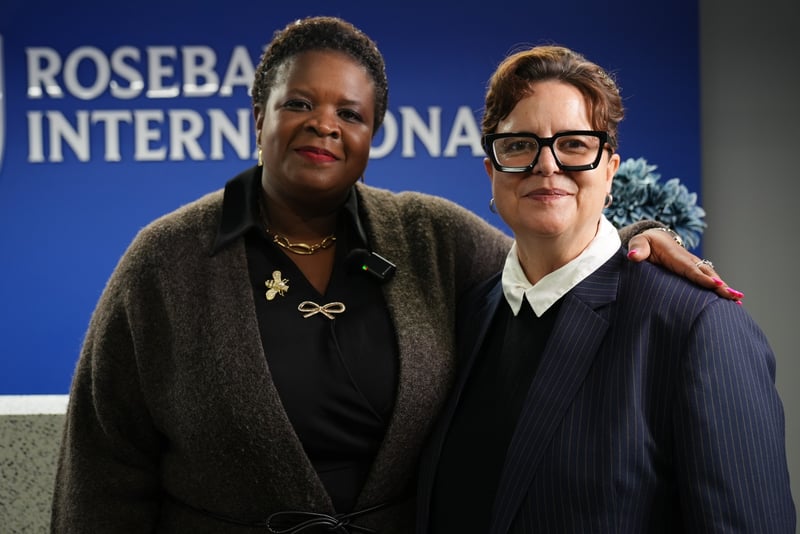
Launch of Rosebank International puts spotlight on accredited private higher education as demand grows for equitable recognition of university status
IIE Rosebank College has announced its transformation to Rosebank International.
The development marks the next stage in the institution’s move towards full university status and places renewed focus on the role accredited private higher education can play in widening access to recognised higher education opportunities.
The rebranding of Rosebank College to Rosebank International reflects the institution’s growing higher education footprint outside South Africa, including its provision of education in Ghana, while paving the way for Rosebank International to transition to full university status in South Africa.
This move is supported through the expansion of its postgraduate offering, including its first Master’s degree programmes in 2026 and upcoming PhD programmes in 2027.
Rosebank International builds on a history dating back to 1909 and now serves more than 43,000 students across South Africa.
Prof Linda Meyer, MD at Rosebank International and President of Rosebank International University College Ghana, said the move is ultimately about preparing students for meaningful participation in the world of work.
“Education is about expanding pathways into the workplace for students, ensuring graduates are work-ready and able to contribute both locally and globally,” said Prof Meyer.
Widening Access Through University Status
The distinction between “university” and “private higher education institution” has created a status gap that does not accurately reflect the quality, accreditation or academic rigour of the education being offered.
The Department of Higher Education and Training has taken a step towards addressing this gap through a policy shift allowing qualifying private higher education institutions to apply to use the title “university”.
With public universities unable to absorb almost three-quarters of qualifying applicants, accredited private institutions are playing an increasingly essential role in South Africa’s wider higher education ecosystem.
They are helping to expand access for eligible students who may otherwise be restricted by capacity constraints, while also offering flexible study options such as stackable Higher Certificates, part-time and online learning, and distance education.
Standards Should Matter More Than Labels
At a time when demand for higher education continues to grow in South Africa, private institutions that meet the required standards can help broaden the range of higher education options available to students.
Importantly, university status is not simply a matter of branding.
It depends on academic depth, governance, programme accreditation, research development, institutional capacity and sustained student outcomes.
This is a matter of equity.
Students at accredited private higher education institutions earn degrees that meet the same academic and quality standards as those offered by public universities and are assessed through the same quality-assurance system.
Yet they are not currently afforded the equivalent status they have earned.
A Shared Responsibility For Expanding Access
Dr Gondwe welcomed the launch as an important development in South Africa’s higher education landscape.
“This development reflects the kind of bold private sector innovation South Africa needs. Together, the public and private sectors can work towards realising our shared goal of expanding access to quality higher education, while producing skilled graduates empowered to drive our economy and the African continent forward,” said Dr Gondwe.
A Pan-African Academic Agenda
The institution’s development also reflects a broader pan-African agenda.
Rosebank International opened Rosebank International University College (RIUC) in Accra, Ghana, last year, creating a platform for academic collaboration, cross-border exchange and global engagement.
The Ghana development also highlights the different recognition pathways available to private higher education institutions across the continent, with RIUC operating as a university college while Rosebank International continues its journey towards university status in South Africa.
“Through Rosebank International, we are creating opportunities for international academic collaboration while developing graduates prepared for African contexts and global relevance,” said Prof Meyer.
Building Africa’s Intellectual Capital
Professor Linda Meyer, Managing Director and President of Rosebank International and RIUC Ghana, said the institution’s expansion is rooted in a broader ambition to build African academic capacity and produce graduates able to respond to the continent’s social and economic challenges.
“For too long, African students have been told that world-class education exists somewhere else. We believe Africa must build institutions that can stand confidently in the global knowledge economy while remaining deeply connected to the realities, needs and aspirations of our continent,” said Prof Meyer.
She said the move towards university status is also about strengthening African intellectual capital.
“Education is one of the most powerful tools for empowerment. As we expand our academic offering, our aim is to contribute to African scholarship, research and innovation in ways that are relevant to the continent and globally respected.”
For Rosebank International, the move towards university status marks an important institutional milestone.
It also forms part of a wider effort to expand access to accredited higher education and ensure that students’ qualifications are recognised in line with the academic standards they have met.
Release information
Issued on behalf of
Rosebank International
Media contact
Angelfish Pr and Events
Annie Hodes
1