
Across the world, the back-to-school ritual begins the same way: a small backpack on a big bed, unzipped and waiting. In Tokyo, Helsinki, Lagos, New York, and Cape Town, parents lean over that open bag, slipping in lunchboxes, crayons, spare socks, and sometimes a comfort toy that smells like home. It looks ordinary, almost forgettable. But in Early Childhood Development (ECD), that backpack is carrying far more than supplies; it is quietly being packed with a child’s future.
What goes into that bag in the early years is rarely visible. It is not measured in notebooks or labelled with names. Instead, it is filled with language, confidence, curiosity, and the sense that the world is a place worth exploring. Globally, scientists agree that the most valuable items a child can carry are formed long before formal schooling begins. The early years shape how children learn, how they relate to others, and how they respond to challenge; long after the crayons have worn down and the zips have broken.
In South Africa, this metaphor carries particular weight. Many children arrive at their first day of ECD with backpacks that look the same on the outside but are very different on the inside. Some are already heavy with stories read aloud, conversations at the dinner table, and safe spaces to play. Others arrive lighter; not because of a lack of potential, but because opportunity has been unevenly distributed. Around the world, countries are recognising that the only fair moment to equalise the load is right at the beginning.
Post-pandemic global conversations about education have become less about catching up and more about packing better. Nations are questioning whether early learning should focus on speed or on strength; on ticking boxes or building foundations. The most progressive systems are choosing play over pressure, emotional literacy over early testing, and connection over compliance. In many South African ECD centres, these ideas are already alive; not because they are trendy, but because they are necessary.
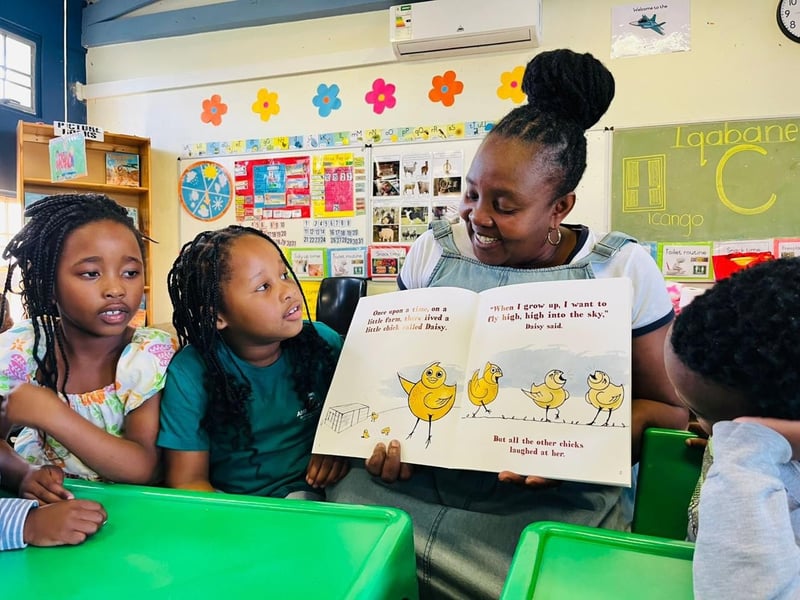
Every day, ECD practitioners add invisible essentials to children’s backpacks. A story told in more than one language makes room for inclusion. A game that requires turn-taking packs in patience. A classroom routine that offers safety and predictability strengthens resilience. These are the skills global employers now say they need, and the qualities societies everywhere depend on when uncertainty becomes the norm.
The greatest risk, both locally and globally, is assuming that these early bags will pack themselves. When ECD is under-resourced or undervalued, children are sent forward without the tools they need, and the cost is paid years later in classrooms, workplaces, and communities. International evidence is clear: investing early is not charity; it is one of the highest-return investments any country can make.
Theresa Michael, CEO – Afrika Tikkun Bambanani comments:“Backpacks for the Future captures a truth we see every day on the ground. In the communities where Afrika Tikkun Bambanani works, children arrive at ECD centres with very little in their physical bags, yet with immense potential waiting to be unlocked. Our responsibility as educators, practitioners, parents, and policymakers is to ensure that what we place inside those early ‘backpacks’ goes far beyond stationery and uniforms.
As South Africa heads back to school, the image of that open backpack deserves a second look. Because in ECD, we are not just preparing children for the day ahead. We are packing for the long journey; one that stretches across schooling, adulthood, and into the kind of society we are collectively building. When we choose what goes into those early backpacks, we are making a statement about what; and who; we value, not just for now, but for the future.
Get new press articles by email
Latest from
- International Tango Masters Bring a Week of World-Class Dance to Johannesburg This May
- Celebrate Freedom Day weekend in true rock-and-roll style - powerhouse Lineup Set to Ignite The Hangout Fest 3
- Good Food, No Room Key Required - at Sandton Hotel’s Weekend Dining Experiences
- Property Investment in Uncertain Times - How to Maximise Returns in a Shifting Economy
- at Sandton Hotel marks four years of redefining luxury hospitality in South Africa
- Why Human Rights Matter in the Modern Workplace
- Shell Yeah - Clearwater Mall is Doing Easter Differently This Year
- Three good reasons to head to Clearwater Mall this weekend
- Pre-loved gets its moment - CapeGate’s CG Thrift Fest returns this Autumn
- Regent Business School powers Soweto school’s remarkable rise with new iLeadLAB
- Something You’ve Never Tried. But You’ll Love
- Live to work…nah, I don’t think so. Work where life happens
- Bluey and Bingo are coming to CapeGate Shopping Centre
- Ten Evidence-Backed Pillars of Men’s Health That Stand the Test of Time
- Canal Walk hosts third Eid Expo - A celebration of local craft and festive spirit
The Pulse Latest Articles
- Interpol Warns Of Global Crime Networks, Sa Businesses Urged To Rethink Detection (April 10, 2026)
- Adaptive Leadership In Motion: Why Logistics Needs A Different Kind Of Strength (April 9, 2026)
- Ai Isn’t Shrinking Marketing Jobs - It’s Exposing A Bigger Talent Crisis (April 8, 2026)
- Stones Safaris Unveils A New Approach To Safari Through Experience-led Activities (April 8, 2026)
- Bright Beginnings Preschool Celebrates Linden Campus (April 2, 2026)