
Africa’s growth problem isn’t capital. It’s Leadership without Collaboration
Written by: Ray Langa Save to Instapaper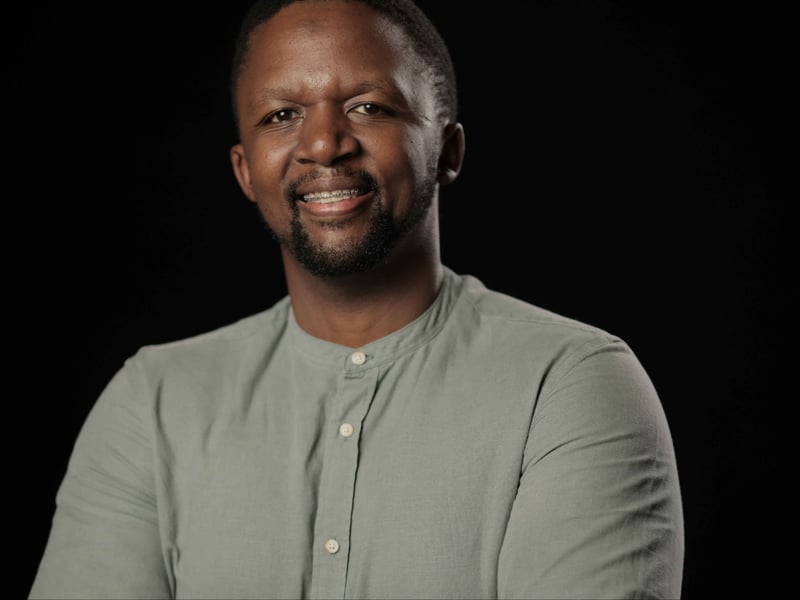
Africa doesn’t have a capital problem: it has a collaboration problem. For decades, we’ve convinced ourselves that more investment is the answer, but Ray Langa, Group Chief Executive of Leagas Delaney South Africa, argues we’ve been asking the wrong question. The continent’s real constraint isn’t money but the leadership discipline we’ve yet to master: building together across borders. In this opinion piece, Langa challenges business leaders to confront why continental scale remains elusive despite abundant capital, talent and ambition.
For many years, Africa’s growth conversation has centred on capital, how much of it we lack, how little of it flows into the continent, and how dependent our future is on attracting more of it.
Capital matters. We all know that.
But perhaps we’ve also leaned on capital as an easier explanation than the one that asks more of us.
Because when we look honestly at where growth stalls across the continent, it increasingly feels as though Africa’s most binding constraint is not money, but how we lead together.
Across our markets, we see talent, ambition, creativity and resilience in abundance. Africa today holds significant domestic capital across pension funds, insurance pools and sovereign institutions. Yet true scale, regional, durable and repeatable remains rare.
That tension is worth sitting with. Not to assign blame, but to ask a harder question: what are we not doing collectively that no amount of capital can solve on its own?
When capital fragments, leadership is usually the reason
Capital tends to follow confidence, coordination and clarity. When those conditions exist, money accelerates progress. When they don’t, capital fragments, funding isolated successes instead of shared systems. Many of us have seen this first-hand.
Despite growing investment and ambition, intra-African trade still represents a small portion of our total trade compared to other regions. A continent with extraordinary proximity in challenges and opportunity continues to trade outward more than inward.
It’s tempting to blame infrastructure, regulation or history and undoubtedly all of these matter. But over time, it becomes harder to ignore the role leadership plays in maintaining fragmentation long after the reasons for it should have expired.
Not because Africa cannot collaborate but because collaboration has rarely been treated as a core leadership discipline.
Leadership that stops at borders limits scale
If we’re honest, many of us were taught to lead within boundaries: company lines, sector lines, national borders. Growth was framed outward to Europe, the UK or the US rather than across the continent.
And yet, paradoxically Africa’s most compelling opportunity is continental.
Shared demographics. Adjacent markets. Familiar consumer pressures. Complementary strengths. These conditions should make collaboration almost inevitable. Instead, they are often complicated by ego, fear, and a sense of scarcity that quietly shapes decision-making.
Strong leadership in Africa today may be less about control, and more about coordination. The ability to align interests, share risk and build ecosystems rather than empires.
Without that, scale remains fragile, no matter how much capital enters the system.
What listening at scale has taught me
I work in advertising, an industry often mistaken for being about messaging, when in reality it is about listening.
I’ve had the privilege of working with brands that speak to millions of people across African markets, cultures and income groups. That role creates a kind of proximity to everyday realities that is difficult to gain elsewhere. How people make choices, where trust breaks down, what they aspire to, and what they worry about.
Over time, patterns begin to emerge.
When brands succeed across markets, it’s rarely because of creativity alone. It’s because teams align around shared insight, collaborate across borders and execute with consistency and discipline. When brands fail, it’s almost always fragmentation, disconnected thinking, siloed leadership and competing priorities.
Working at that scale has challenged many of my own assumptions about leadership. It has made one thing clear, people across Africa are often more connected in their realities than the leaders and systems built to serve them.
That gap between lived experience and leadership behaviour is where collaboration quietly breaks down.
Collaboration isn’t soft, it’s something we’re still learning
We often talk about collaboration in Africa as a value, something cultural, aspirational even intuitive. But lived experience suggests it may be one of the hardest leadership disciplines we’ve yet to master.
Many partnerships struggle not because collaboration is impossible, but because accountability feels uncomfortable. Roles blur. Standards drift. Underperformance is tolerated in the name of harmony. Trust erodes quietly.
When collaboration works, it’s usually because leadership is clear, expectations are shared, and responsibility is taken seriously. Conditions we don’t always sustain consistently.
This tension is visible even in our most ambitious continental initiatives. Agreements are signed. Intent is declared. But execution often lags behind aspiration, not for lack of capability, but for lack of sustained, collective leadership attention.
Why collaboration often matters more than competition, for now
Competition has its place. In mature, integrated markets, it sharpens performance and drives innovation.
But in fragmented environments like many of ours, uncoordinated competition can dilute impact, splitting scarce talent, duplicating effort and slowing category development.
Collaboration, when done well, does something different. It pools capability, accelerates entry into new markets, builds resilience and strengthens credibility.
This isn’t an argument against competition. It’s an argument for sequence.
Collaboration helps build the market.
Competition then helps sharpen it.
At this stage of Africa’s development, collaboration may not be idealism at all, it may simply be pragmatic leadership.
Belief comes before scale
Underlying many of these challenges is belief. Not belief in individuals, but belief in collective African capability.
Too often, we look outward for validation before fully backing one another inwardly. Cross-border partnerships within Africa are treated as harder than partnerships across oceans. That mindset subtly reinforces dependency and delays confidence.
Belief changes behaviour. It shapes how willing we are to share, to trust, to take risks together.
Without it, collaboration remains rhetorical.
Choosing a different leadership posture
Africa doesn’t need more declarations about unity. Many of us already agree on the destination.
What may be required now is a shift in posture, a willingness to lead in ways that prioritise coordination over control, shared outcomes over individual wins, and long-term ecosystem building over short-term advantage.
The next phase of African growth is likely to be led by those willing to:
Think continent before countryBuild coalitions rather than empiresHold one another accountable within collaborationSee scale as something created together, not claimed aloneCapital will follow that kind of leadership. It always does.
Africa’s future won’t be determined by how much money arrives, but by how deliberately we choose to work together with what we already have.
Africa’s growth problem isn’t capital.
It’s leadership without collaboration and that’s something we can choose to change, together.
ABOUT THE AUTHOR: Ray Langa, Group Chief Executive of Leagas Delaney South Africa and Dark Arts Studio, is a dynamic leader with over 15 years of experience across creative, experiential, and sponsorship agencies. His expertise in marketing, automation, and strategic innovation has positioned him at the forefront of industry transformation. Passionate about creating real impact, Ray is dedicated to driving business excellence while fostering an inclusive and growth-oriented leadership culture.
For more information about Leagas Delaney Group South Africa, enquiries can be directed to This email address is being protected from spambots. You need JavaScript enabled to view it.
Get Social:
Follow us on our social media platforms to be the first to know what happening at Leagas Delaney Group South Africa:
Website: https://www.leagasdelaney.co. za/
Instagram: @leagasdelaneysa
LinkedIn: Leagas Delaney South Africa
For more information about Dark Arts Studio visit:
Website - https://www.darkarts-studio.com/
LinkedIn - https://www.linkedin.com/company/dark-arts-studio/?original Subdomain
Get new press articles by email
Latest from
- International Tango Masters Bring a Week of World-Class Dance to Johannesburg This May
- Celebrate Freedom Day weekend in true rock-and-roll style - powerhouse Lineup Set to Ignite The Hangout Fest 3
- Good Food, No Room Key Required - at Sandton Hotel’s Weekend Dining Experiences
- Property Investment in Uncertain Times - How to Maximise Returns in a Shifting Economy
- at Sandton Hotel marks four years of redefining luxury hospitality in South Africa
- Why Human Rights Matter in the Modern Workplace
- Shell Yeah - Clearwater Mall is Doing Easter Differently This Year
- Three good reasons to head to Clearwater Mall this weekend
- Pre-loved gets its moment - CapeGate’s CG Thrift Fest returns this Autumn
- Regent Business School powers Soweto school’s remarkable rise with new iLeadLAB
- Something You’ve Never Tried. But You’ll Love
- Live to work…nah, I don’t think so. Work where life happens
- Bluey and Bingo are coming to CapeGate Shopping Centre
- Ten Evidence-Backed Pillars of Men’s Health That Stand the Test of Time
- Canal Walk hosts third Eid Expo - A celebration of local craft and festive spirit
The Pulse Latest Articles
- Interpol Warns Of Global Crime Networks, Sa Businesses Urged To Rethink Detection (April 10, 2026)
- Adaptive Leadership In Motion: Why Logistics Needs A Different Kind Of Strength (April 9, 2026)
- Ai Isn’t Shrinking Marketing Jobs - It’s Exposing A Bigger Talent Crisis (April 8, 2026)
- Stones Safaris Unveils A New Approach To Safari Through Experience-led Activities (April 8, 2026)
- Bright Beginnings Preschool Celebrates Linden Campus (April 2, 2026)