
SA’s essential workers can no longer afford to live in the communities they serve
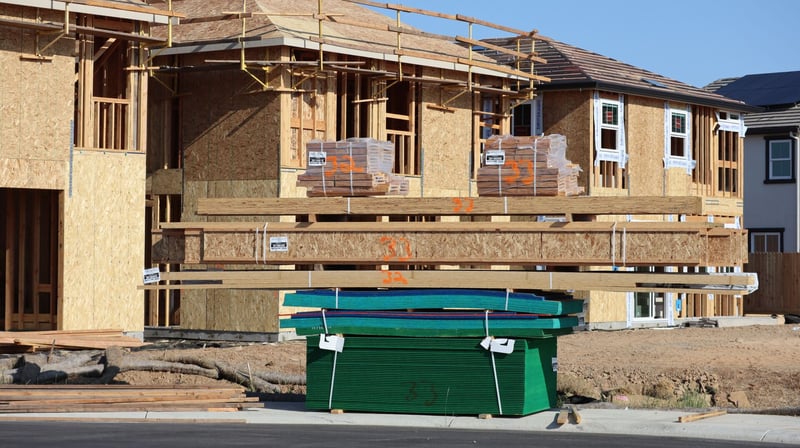
South Africa's housing shortage remains one of the country's most pressing challenges.
Speaking at the Sustainable Human Settlements Summit in February 2026, President Cyril Ramaphosa said that more than 5.5 million families remain on housing waiting lists across the country, underscoring the scale of the demand for affordable homes.
He noted that closing the housing gap would require between 2.5 million and 3 million additional homes, with the shortage particularly acute in the affordable housing, or gap market, segment.
The missing middle
“The housing shortage is particularly acute in the so-called "missing middle", households that earn too much to qualify for government-subsidised housing but too little to afford homes available on the open market,” says Renier Kriek, Managing director at innovative home loan provider, Sentinel Homes.
In the Western Cape, industry experts estimate that virtually no new housing is being built below the R900,000 price point, leaving workers earning between R25,000 and R30,000 a month with few realistic options to buy a home close to where they work.
The affordability gap has become so pronounced that many essential workers can no longer afford to live in the very communities they serve. As housing becomes increasingly disconnected from what ordinary working South Africans can afford, the challenge extends well beyond the property market. When ordinary working South Africans, like nurses, members of the police force, and teachers cannot afford a decent home, that is not only a housing problem, that is an economic problem and a political crisis waiting to happen.
The issue has also come into sharp focus during the dispute about the so-called Tafelberg-site in Sea Point in Cape Town, where the future use of the state-owned Tafelberg site has once again highlighted the shortage of affordable housing in well-located urban areas. The dispute between the City and housing activists became the subject of a much publicised Constitutional Court decision, which compelled the City to consider its obligation to further the availbability of affordable housing when making decisions about land it owns.
The proceedings have reinforced a broader question facing South Africa's cities: how to ensure that teachers, nurses, police officers and other essential workers can afford to live closer to the communities they serve, rather than being pushed further from economic opportunities by the lack of affordable housing.
It becomes an economic issue, affecting labour mobility, productivity, household finances and ultimately the ability of cities to attract and retain the workforce they depend on. And ultimately, this issue will likely weigh heavily on the minds of South Africans when they head to the polls to elect local government in November.
Supply and regulation
Supply expansion in the housing market remains chronically low, and is below the rate of population growth and of household formation. This problem is exacerbated by semigration, which increases demand in some areas more in a situation where supply is already tight across the board.
“The time has come to judge our elected municipal officials on the rate of housing supply expansion,” says Kriek. “If there is too little of something, the price goes up, and the only solution is to make more of the thing so that supply matches demand. That is where our municipalities especially are failing us – the time from starting the planning process to people eventually moving in routinely takes more than a decade. And most of that is taken by disjunct, tedious, and ever-expanding regulation and bureaucracy.”
Massive demand
The gap market is the middle 30% of consumers where the supply of housing stock is extremely low and even declining despite massive demand. Kriek argues that a market design error is to blame for this high demand going unmet. Adverse incentives arising from poor market design leads to the the holders of capital to invest in almost anything aside from affordable housing. Capital has choices, and to the extent that it is not flowing to the market for affordable housing, we must assume there is something chasing it away from this chronically underserved market.
The biggest hurdle relates to the unnecessary prolix, cumbersome, and expensive processes that are associated with evictions and foreclosures. The cost of resetting the transaction (evict or foreclose) is prohibitive in South Africa and does not match market circumstances.
South Africa should adjust their regulatory environment to entice private sector investment and the expansion of supply.
“We need to reduce the transaction cost for the holders of capital to take their chances on consumers who are not acceptable risks in the unduly high tenure security environment. In this way, some people will move into the formal housing market and fall out again, and perhaps more than once in their lifetime. If we go through enough of these cycles eventually everyone will be housed.”
Kriek admits that this solution may sound slightly callous and counterintuitive to the casual listener.
“The alternative, retaining our restrictive policy environment, is even more callous and is currently barring people from ever getting the opportunity to enter the formal housing market. What use is being born free if you will never realise that constitutionally mandated right of access to adequate housing?”
Unintended consequences
Another prevalent and reasonably fixable market design problem relates to government subsidies. The Department of Human Settlements has been offering the First Home Finance (FHF) subsidy, previously called FliSP to households in the gap housing market.
It aims to subsidize affordable first-time home-ownership opportunities for households with income from R3 501 up to R22 000 per month. It is an inverse means-tested subsidy, meaning that the cash grant is lower the higher the household income becomes.
“Millions of rands earmarked for this subsidy have remained unclaimed in the past and continue to remain unclaimed. This is not because people do not know about the incentive or do not desire it. The first challenge is the relative scarcity of gap housing stock, which is driven by poor demand due to incentives that are adverse to the deployment of capital in this segment, whether by landlords or home loan providers.”
Kriek argues that the subsidy design has unintended consequences resulting in market participants, such as estate agents, being unwilling to sell to subsidy recipients. Each property transfer involving an FHFsubsidy is inordinately complex, and everyone involved prefers doing the same transaction with a consumer who does not rely on a subsidy. Usually, it’s the estate agent waiting for the subsidy payment to receive their commission, and that is simply an unacceptable adverse incentive if government’s intention is to have the subsidy reach its intended recipients.”
Though recent developments seem to favour fixing the market design shortcomings of FHF, the administration of the subsidy remains positively byzantine.
It will take significant political capital to implement market design solutions that can solve the problems facing the housing market and causing the affordability problem.
If we do nothing, which is the current posture of government, it may even get worse, says Kriek, who fears that the current government may not have the ability to adequately diagnose the problem, and much less the political will to affect the necessary policy and regulatory changes.
However, if it could succeed, the job creation that could follow finding solutions to the problem of housing supply could go a long way toward achieving the job creation efforts of government.
ENDS
Release information
Issued on behalf of
Sentienl Homes
Media contact
Reklame
Rosa-Mari Le Roux