
How to Write Copy That Demands Action (and it also Looks Damn Good)
By Francois Pistorius
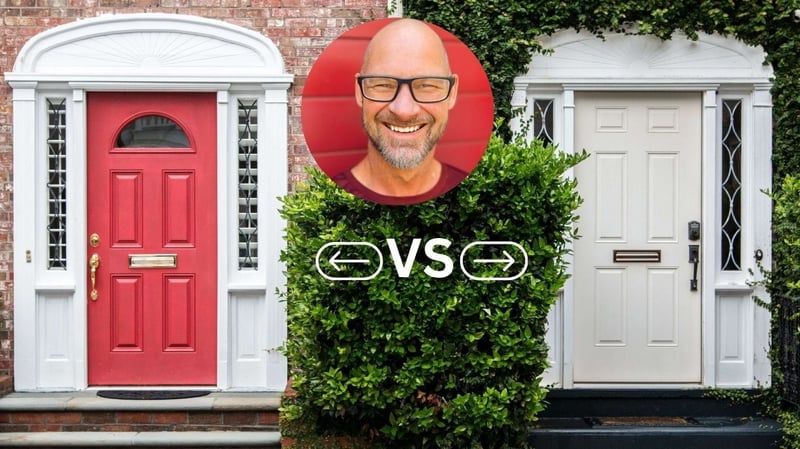
As a conceptual-minded creative, I always notice details especially within the architectural space. The story behind my new profile picture is the red door. A quiet Saturday afternoon working on my rebranding. While every other door faded into the exterior, this one pulsed. It made me stop. Wonder. What’s behind it?
That’s when I realised that the best direct-response copywriting works exactly like a red door.
Why Red Doors Captivate (And Why Your Copy Should Too)
Red doors have symbolised boldness for centuries. In early America, they signalled a safe haven for travellers. In marketing terms, a door is the perfect (“Call to Action”) CTA.
Here’s why they work:
- They Command Attention
- Our eyes are hardwired to notice red first (it has the longest visible wavelength).
- ( https://colors.dopely.top/inside-colors/the-most-visible-colors-for-human-eyes/)
- Copywriting parallel: Your headline is your door. Make it unignorable.
- They Create Urgency
- Red increases heart rate and creates subconscious urgency (think: clearance sale signs).
- Copywriting parallel: Scarcity + red = 34% higher conversions (NN Group).
- ( https://cxl.com/blog/which-color-converts-the-best/ )
- They Promise Value
- A red door implies something worth protecting - or discovering.
- Copywriting parallel: Your lead magnet must whisper (or shout) “This changes everything.”
The Psychology Behind the Punch of Red
As a direct response writer with a visual edge, I see everything through this lens. Take these examples:
- Apple’s Product Red Campaign: Uses red to tie exclusivity to urgency (while benefiting charity).( https://www.apple.com/za/newsroom/2023/12/apple-marks-world-aids-day-with-red/ )
- Netflix’s “Play” Button: Red = instant dopamine hit. It’s not a button - it’s a permission slip to indulge in binge watching.( https://blog.boon.so/netflix-logo/#:~:text=Red, often associated with passion,content available on the platform. )
- Mention something about the red thread?
This isn’t by accident.
It’s applied psychology.
How to Psychologically Paint Your Copy Red
Most doors (and most copywriting ) are brown and beige. Safe. Forgettable.
Here’s how to stand out:
1. Lead With Contrast
- A red door pops against any wall.
- Your move: Pair a bold claim with a bland industry norm.
- Your move: : “Not all AI copywriting works. Here’s why our copy hits differently.”
2. Prime for Action
- Red doors appear closer than they are (science says so). (https://link.springer.com/referenceworkentry/10.1007/978-3-642-27851-8_210-1 )
- Your move: Use spatial language like “step inside” or “let’s begin” to reduce psychological distance.
3. Reward Curiosity
- No one paints a red door without reason.
- Your move: Tease transformation upfront: “This isn’t another marketing guide. It’s a profit loophole.”
Your Brand as a Red Door
That photo of me by the red door? It’s my reminder that great copy isn’t just read - it’s experienced.
In a world of noise, you have two choices:
- Blend in (and hope).
- Kick the door open.
Because here’s the truth: Buyers don’t remember beige. They remember what made them feel.
Why "Beige" Content Fails—And How to Make Your Message Unforgettable
Here’s the hard truth:
Buyers don’t always remember facts - they remember feelings.
Think about the last ad, email, or social post that stuck with you. Was it a bland list of features? A dry explanation of how something works? Or was it a story - vivid, emotional, and impossible to ignore?
The Science of Attention: Why Colour & Storytelling Win
Our brains ignore the ordinary and react to the extraordinary.
- Red commands attentionbecause it triggers a primal response—danger, passion, urgency. (That’s why "SALE" signs are never pastel blue.)
- Stories activate 7x more neural activitythan raw data (Harvard Business Review). Facts inform, but stories transform.
- ( https://www.harvardbusiness.org/what-makes-storytelling-so-effective-for-learning/)
- Beige messaging blends in. Light colours, weak verbs, and emotionless copy don’t just fade - theyfail to register at all.
The Cost of Playing It Safe
Imagine:
- A fitness brand saying, "Our protein powder has 25g of protein per serving."(Zzz.)
- VS."The secret weapon pro athletes use after crushing leg day - even when their legs feel like jelly."
One is forgettable. The second option makes you feel and experience.
How to Fix It: The "Red & Riveting" Rule
1. Lead with Emotion
o ❌ "Our course teaches Instagram growth."
o ✅ "She went from 3K to 70K followers—while her ‘perfect’ Reels flopped. Here’s the loophole she exploited."
2. Use High-Contrast Colours (Literally & Figuratively)
o Red = urgency. Black/white = bold clarity.
o Example: "LAST CHANCE: The ‘Instagram Bible’ hack disappears at midnight."
3. Tell a Mini-Story in Every Hook
o ❌ "We help coaches get clients."
o ✅ "He wasted $12K on ads—until one DM strategy booked him 17 clients in 14 days. (No followers required.)"
Here’s how the "red thread" concept ties to a red door and direct response copywriting.
1. The Red Thread (Narrative Continuity)
- Represents a clear, compelling storyline that guides the audience.
- In marketing, it’s the core message that ties everything together.
- Ensures consistency and emotional engagement.
2. The Red Door (Attention & Action)
- A red door is bold, noticeable, and symbolic—it stands out.
- In marketing, it’s the irresistible offer or call-to-action that grabs attention.
- Acts as a psychological trigger (red = urgency and importance).
3. Direct Response Copywriting (The Connector)
- Uses the red thread (story) to lead the reader to the red door (conversion point).
- Every word builds toward a single, measurable action (click, buy, subscribe).
- Combines emotional hooks (red thread) with clear directives (red door).
Final Connection:
- Red Thread (Story) → Builds trust and desire.
- Red Door (CTA) → Tells the reader exactly what to do next.
- Direct Response Copywriting → Weaves them together for maximum conversions.
Example:
How This Instagram Coach Went from 3K to 70K in 90 Days (And How You Can Too)
(A Direct Response Copy Example Using the Red Thread & Red Door Framework)
The Red Thread (The Story Hook)
- "3 months ago, I was stuck at 3K followers posting daily but getting no traction."
- "Then I discovered the one mistake killing my growth…" (Curiosity Gap)
- "I fixed it—and my next reel hit 500K views. 90 days later? 70K followers." (Social Proof + Transformation)
The Red Door (The Irresistible Offer)
- "Now I’m sharing the exact 5-step system I used—free for 24 hours." (Scarcity + Benefit)
- "Want it? Comment ‘GROWTH’ below, and I’ll DM you the guide." (Clear, Low-Effort CTA)
Why This Works (Direct Response Breakdown)
- Red Thread = Relatable struggle → Quick win → Proof it works. (Builds trust & desire.)
- Red Door = Time-sensitive freebie + easy action. (Triggers FOMO & immediate response.)
- Direct Response = Every line pushes toward the "Comment ‘GROWTH’" conversion.
Real-World Tip: Test pairing a strong hook with a red door visual story.
The Bottom Line
Safe = invisible. Bold = unforgettable.
So give people red. In colour, in contrast and in emotion. Make them feel something and they’ll remember you.
Want your next campaign to hit like a lightning bolt? Start with a story that burns into memory, not another fact that fades to beige.
So - what colour is your door?
If your messaging is blending in, let’s paint it red.
More About Francois Pistorius:
Francois is a South African based RMBC Direct Response Copywriter (by Stefan Georgi) qualified writer of punchy words that sell with a conceptual visual edge. He is also a Gourmand Award winning photographer dedicated to creating compelling, natural visual stories.
Release information
Issued on behalf of
Francois Pistorius
Media contact
VocalCord Reputation Management
Marilize Jacobs