
23 July 2026 5 min
Why Dermatologists Say Your Moisturiser Could Be Making Your Acne Worse
Written by: Easy Slimming (Pty) Ltd Save to Instapaper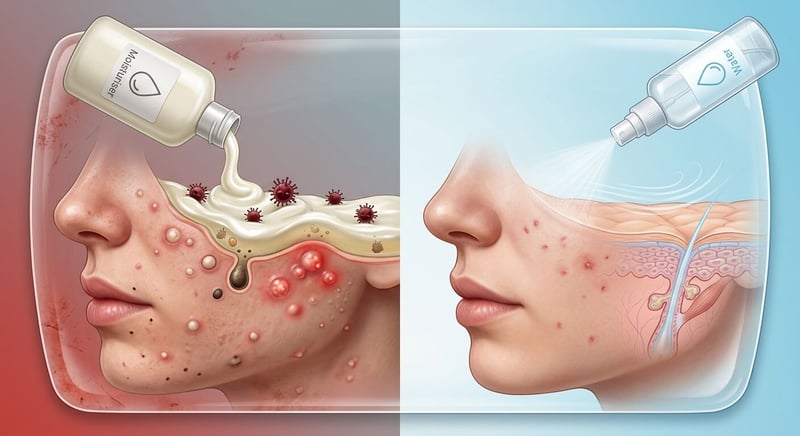
New dermatological evidence suggests the problem may not be moisturising your skin—but choosing ingredients that work against your skin type.
JOHANNESBURG, South Africa — Moisturiser has long been promoted as one of the foundations of healthy skin.
Yet according to dermatologists, one of the most common mistakes people make when treating acne is assuming that every moisturiser works the same way.
It doesn't.
Modern dermatological research shows that two people can use the exact same product and experience completely different results.
One person's skin becomes calmer, healthier and more hydrated.
Another develops blocked pores, worsening breakouts and persistent inflammation.
The difference often lies not in the brand—but in the ingredients.
Moisturiser Is No Longer Just About Hydration
For years, skincare advice focused on replacing lost moisture.
Today, dermatologists are paying closer attention to something far more important: the skin barrier.
The skin barrier acts as the body's natural defence system.
When healthy, it locks in moisture, protects against bacteria and reduces unnecessary inflammation.
When damaged, it allows irritants to penetrate more easily, increasing redness, sensitivity and acne flare-ups.
This change in understanding has transformed how dermatologists recommend moisturisers, particularly for people with acne-prone or sensitive skin.
The Science Behind Oils Is More Complex Than Most Consumers Realise
Natural oils have become increasingly popular as consumers move towards cleaner, plant-based skincare.
However, research shows that not all botanical oils behave the same way once applied to human skin.
Some support barrier repair.
Others can contribute to blocked follicles in susceptible individuals.
Peer-reviewed dermatological studies show that an oil's fatty acid composition plays a significant role in how it performs on different skin types.
Rather than asking whether an ingredient is "natural," dermatologists now ask whether it is biologically appropriate for a particular skin condition.
Why Coconut Oil Divides Dermatologists
Few natural ingredients generate as much debate as coconut oil.
Its antimicrobial properties are well documented.
Rich in lauric acid, coconut oil demonstrates activity against several bacteria commonly found on the skin.
For dry body skin, this can be highly beneficial.
For acne-prone facial skin, however, the picture changes.
Dermatological research consistently classifies coconut oil as highly comedogenic, meaning it has a greater tendency to block pores in susceptible individuals.
For someone already experiencing hormonal or inflammatory acne, using coconut oil as a facial moisturiser may increase congestion rather than improve it.
Shea Butter Tells A Different Story
Unlike coconut oil, unrefined shea butter has earned widespread recognition for its ability to support the skin barrier.
Rich in stearic and oleic fatty acids, shea butter functions primarily as an occlusive moisturiser, helping reduce Trans-Epidermal Water Loss (TEWL).
Clinical studies have shown that barrier-supportive moisturisers containing shea butter can significantly improve dry, compromised skin while reducing irritation associated with inflammatory skin conditions.
For individuals living with eczema or chronically dry skin, dermatologists frequently recommend formulations containing shea butter because of their protective properties.
Rosehip Oil Is Quietly Becoming A Dermatology Favourite
Another ingredient receiving increasing scientific attention is rosehip oil.
Unlike heavier botanical oils, rosehip oil contains high levels of linoleic acid together with naturally occurring antioxidants and carotenoids.
Dermatologists value these characteristics because they allow the oil to absorb quickly while supporting barrier repair without leaving a heavy, pore-clogging residue.
For patients managing post-inflammatory hyperpigmentation following acne, rosehip oil is frequently included in barrier-supportive skincare routines designed to calm inflammation while supporting natural skin recovery.
South African Skin Faces Unique Environmental Challenges
Choosing the right moisturiser becomes even more important when considering South Africa's climate.
Highveld winters create exceptionally dry conditions that increase moisture loss through the skin.
Coastal humidity, by contrast, encourages increased oil production and perspiration.
This means a moisturiser that performs exceptionally well in Johannesburg during winter may feel heavy and unsuitable in Durban during summer.
Dermatologists increasingly recommend selecting skincare based not only on skin type but also on environmental conditions.
Marketing Claims Can Oversimplify Skincare
Walk into almost any beauty retailer and moisturisers promise remarkably similar results.
Hydrating.
Repairing.
Anti-ageing.
Brightening.
Dermatologists caution that these claims often reveal very little about how a formulation may behave on an individual's skin.
Instead, professionals encourage consumers to understand ingredient lists rather than relying solely on front-label marketing.
Knowing the difference between lightweight barrier-supportive oils and highly comedogenic ingredients can often make a greater difference than changing brands altogether.
Healthy Skin Begins With Barrier Repair
Increasingly, dermatologists are moving away from aggressive skincare routines.
Rather than stripping the skin with harsh cleansers or repeatedly applying drying acne treatments, many treatment plans now focus on preserving barrier integrity while reducing inflammation.
This often includes:
Gentle cleansing
Appropriate moisturisation
Daily sun protection
Avoiding unnecessary irritation
When the skin barrier remains healthy, it is better able to regulate inflammation, retain hydration and recover following acne breakouts.
Investigating South Africa's Shift Towards Ingredient-Led Skincare
As South African consumers become more informed about ingredient transparency, skincare education is increasingly replacing marketing hype.
Resources exploring barrier repair, botanical oils and traditional skincare ingredients are helping consumers better understand why skincare should be matched to individual skin needs rather than trends.
Consumers interested in learning more can explore educational resources covering barrier repair together with products developed around botanical skincare ingredients suited to South African conditions.
Total Words: 884
Published in Health and Medicine
Get new press articles by email
Subscribe to receive our latest press releases and news directly to your inbox.
Easy Slimming (Pty) Ltd is a South African health, wellness and white label supplement company committed to making quality wellness products accessible to both consumers and entrepreneurs. We offer a growing range of natural health, beauty, weight management and lifestyle products, alongside custom white label solutions that enable businesses to launch their own wellness brands with low minimum or... Read More
Latest from
- The Entrepreneurship Trap - Why Most South African Startups Fail Before They Make Their First Sale
- The Bloating Mystery - Why Your Stomach Can Look Fat Even When You Aren’t Gaining Fat
- Why Does Your Face Look Older Even When You’re Losing Weight?
- Cellulite Is Not What You Think - The Science Behind the Dimples Nobody Talks About
- When Stress Stops Feeling Like Stress - The Physical Warning Signs Nobody Talks About
- The Silent Epidemic - Why Adult Acne and Eczema Rates Are Surging Across South Africa, and the Hidden Cost of Corticosteroid Abuse
- The Unregulated Formulation Crisis - Why Transparency is the Ultimate Line of Defence in South Africa’s Natural Weight Loss Supplements Industry
- The Blueprint for Sustainable Change - An Investigative Look at Constructing a Healthy Slimming Routine for Beginners in South Africa
- The Transparency Equation - An Investigative Audit into South Africa’s Weight Management Industry and the Hidden Science of Product Labeling
- Ozempic Side Effects South Africa - The Weight Loss Crisis Nobody Is Talking About
- How to Fix Cracked Heels - What South African Foot Specialists Want You to Know Before Buying Another Foot Cream
- Could Cracked Heels Be Warning You About More Than Dry Skin?
- Why Dermatologists Say Daily SPF Is One of the Most Powerful Anti-Ageing Products You Can Own
- Why South Africans With Darker Skin Are More Likely to Experience Post-Acne Marks Than Permanent Scars
- Why More Dermatologists Are Talking About Skin Barrier Repair Instead of Miracle Skincare Products
The Pulse Latest Articles
- The 1% Problem: Are We Misjudging Cryptocurrency? (September 7, 2026)
- N3yh Moves Beyond Sleepwear With Its First Leisurewear Collection (September 3, 2026)
- N3yh Moves Beyond Sleepwear With Its First Leisurewear Collection (September 2, 2026)
- Safari Travelers Are Asking What Happens Beyond The Game Drive (September 2, 2026)
- Kruger National Park Is Waking Up For Spring (September 2, 2026)