
23 July 2026 5 min
Why South Africans With Darker Skin Are More Likely to Experience Post-Acne Marks Than Permanent Scars
Written by: Easy Slimming (Pty) Ltd Save to Instapaper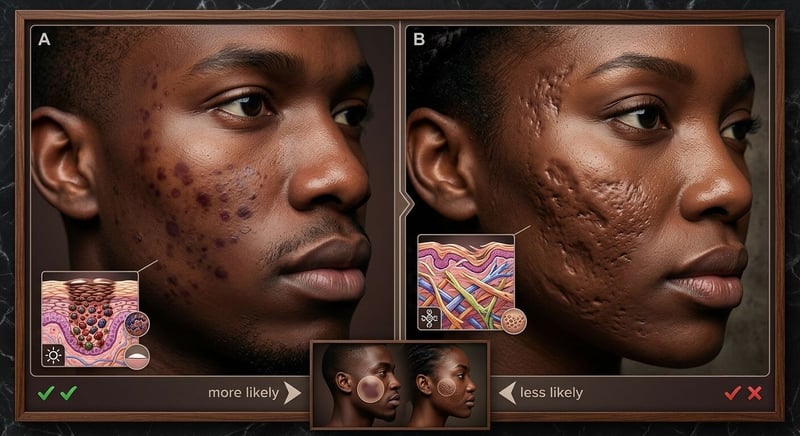
New dermatological research is changing the conversation from treating acne to preventing the long-term skin damage it leaves behind.
JOHANNESBURG, South Africa — For many South Africans living with acne, the biggest concern is no longer the breakout itself.
Instead, dermatologists are increasingly seeing patients whose greatest frustration begins after the inflammation has disappeared.
The acne heals.
The marks remain.
Across South Africa, clinicians treating patients with richly pigmented skin are reporting exceptionally high rates of Post-Inflammatory Hyperpigmentation (PIH)—the dark patches that remain after pimples, cystic acne and inflamed skin lesions have healed.
Recent South African clinical research found that more than 92% of acne patients developed post-acne complications, while approximately 87% experienced Post-Inflammatory Hyperpigmentation, making it one of the country's most common long-term skin concerns among people with skin of colour.
Acne Often Lasts Weeks. Pigmentation Can Last Months.
Many people assume acne ends once a blemish disappears.
Dermatologists know differently.
Inflammation stimulates specialised pigment-producing cells called melanocytes.
When skin becomes inflamed—whether through hormonal acne, cystic lesions or repeated picking—the melanocytes respond by producing excess melanin.
That protective response can leave visible pigmentation long after the original blemish has healed.
Unlike acne itself, these marks are not active infections.
They are evidence that the skin is still repairing itself.
For people with darker skin tones, this natural repair mechanism is significantly more active, making PIH considerably more common than permanent scarring.
South African Dermatologists Are Seeing a Different Pattern
Historically, acne has been viewed as a teenage condition.
South African research now paints a different picture.
Recent clinical audits have found a growing number of adults seeking treatment, particularly women experiencing hormonally driven acne well into their twenties and thirties.
The studies also highlight another striking trend.
While permanent acne scars remain relatively uncommon, pigmentary changes affect the overwhelming majority of patients.
For many people, these lingering dark marks become the most emotionally distressing part of the condition.
Why Skin of Colour Requires Different Skincare Advice
Many international skincare recommendations were originally developed using predominantly lighter skin populations.
South African dermatologists increasingly recognise that these approaches are not always appropriate for African skin.
Aggressive exfoliation.
Harsh alcohol-based cleansers.
Frequent chemical irritation.
Overuse of strong acne products.
All of these may successfully reduce breakouts while simultaneously increasing inflammation—ultimately worsening pigmentation.
Instead, modern dermatology places greater emphasis on reducing inflammation as early as possible.
The healthier the skin barrier remains during an acne flare, the lower the likelihood of long-lasting pigment changes.
The Skin Barrier Has Become the New Priority
Over the past decade, skincare science has undergone a significant shift.
Rather than aggressively stripping oils from the skin, dermatologists increasingly recommend protecting the skin barrier throughout treatment.
The outermost layer of skin acts as the body's first line of defence.
When repeatedly damaged through harsh cleansers or excessive exfoliation, inflammation becomes easier to trigger.
For acne sufferers, that often means:
Increased redness
Longer healing times
Greater pigment production
Higher risk of recurring breakouts
Maintaining a healthy skin barrier has therefore become just as important as treating acne itself.
Traditional Ingredients Are Receiving Renewed Scientific Interest
As consumer demand shifts toward gentler skincare, researchers have renewed interest in traditional botanical ingredients.
Authentic African Black Soap, produced using cocoa pod ash, natural plant oils and unrefined shea butter, has attracted growing scientific attention because of its natural cleansing properties and naturally occurring antioxidants.
Laboratory studies have demonstrated antimicrobial activity against several bacteria commonly associated with skin irritation, while its traditional formulation retains naturally occurring glycerin that commercial detergent-based cleansers often remove during manufacturing.
Dermatologists nevertheless caution that authentic black soap should always be used appropriately and followed with adequate moisturisation, particularly for individuals with compromised skin barriers.
No cleanser alone can eliminate hormonal acne or prevent pigmentation.
Healthy skin depends upon consistent daily care.
Prevention May Be More Important Than Correction
Many consumers spend considerable money attempting to remove pigmentation after it appears.
Dermatologists argue that prevention remains considerably more effective.
Early intervention.
Reduced inflammation.
Daily sun protection.
Barrier-supportive skincare.
Avoiding unnecessary trauma to active breakouts.
These remain the strongest evidence-based strategies for reducing Post-Inflammatory Hyperpigmentation.
What South African Consumers Should Look For
Rather than searching for miracle products, dermatologists recommend choosing skincare that prioritises:
Gentle cleansing
Barrier repair
Consistent moisturisation
Daily UV protection
Ingredients supported by published dermatological research
Consumers should also be cautious of products promising instant skin lightening or overnight pigmentation removal, particularly those containing undeclared corticosteroids or unregulated bleaching agents.
South African clinicians continue to warn that inappropriate topical steroid use remains one of the country's most preventable causes of steroid-induced acne and permanent skin damage.
Investigating South Africa's Growing Interest in Traditional Skincare
As more South Africans seek natural skincare solutions, educational resources exploring acne, pigmentation and barrier repair have become increasingly valuable.
Readers interested in learning more about the science behind African Black Soap and skin barrier health can explore:
Authentic African Black Soap
Managing Cystic Acne With African Black Soapck Soap
Raw African Black Soap
Total Words: 846
Published in Health and Medicine
Get new press articles by email
Subscribe to receive our latest press releases and news directly to your inbox.
Easy Slimming (Pty) Ltd is a South African health, wellness and white label supplement company committed to making quality wellness products accessible to both consumers and entrepreneurs. We offer a growing range of natural health, beauty, weight management and lifestyle products, alongside custom white label solutions that enable businesses to launch their own wellness brands with low minimum or... Read More
Latest from
- The Entrepreneurship Trap - Why Most South African Startups Fail Before They Make Their First Sale
- The Bloating Mystery - Why Your Stomach Can Look Fat Even When You Aren’t Gaining Fat
- Why Does Your Face Look Older Even When You’re Losing Weight?
- Cellulite Is Not What You Think - The Science Behind the Dimples Nobody Talks About
- When Stress Stops Feeling Like Stress - The Physical Warning Signs Nobody Talks About
- The Silent Epidemic - Why Adult Acne and Eczema Rates Are Surging Across South Africa, and the Hidden Cost of Corticosteroid Abuse
- The Unregulated Formulation Crisis - Why Transparency is the Ultimate Line of Defence in South Africa’s Natural Weight Loss Supplements Industry
- The Blueprint for Sustainable Change - An Investigative Look at Constructing a Healthy Slimming Routine for Beginners in South Africa
- The Transparency Equation - An Investigative Audit into South Africa’s Weight Management Industry and the Hidden Science of Product Labeling
- Ozempic Side Effects South Africa - The Weight Loss Crisis Nobody Is Talking About
- How to Fix Cracked Heels - What South African Foot Specialists Want You to Know Before Buying Another Foot Cream
- Could Cracked Heels Be Warning You About More Than Dry Skin?
- Why Dermatologists Say Your Moisturiser Could Be Making Your Acne Worse
- Why Dermatologists Say Daily SPF Is One of the Most Powerful Anti-Ageing Products You Can Own
- Why More Dermatologists Are Talking About Skin Barrier Repair Instead of Miracle Skincare Products
The Pulse Latest Articles
- The 1% Problem: Are We Misjudging Cryptocurrency? (September 7, 2026)
- N3yh Moves Beyond Sleepwear With Its First Leisurewear Collection (September 3, 2026)
- N3yh Moves Beyond Sleepwear With Its First Leisurewear Collection (September 2, 2026)
- Safari Travelers Are Asking What Happens Beyond The Game Drive (September 2, 2026)
- Kruger National Park Is Waking Up For Spring (September 2, 2026)