
23 July 2026 5 min
Could Cracked Heels Be Warning You About More Than Dry Skin?
Written by: Easy Slimming (Pty) Ltd Save to Instapaper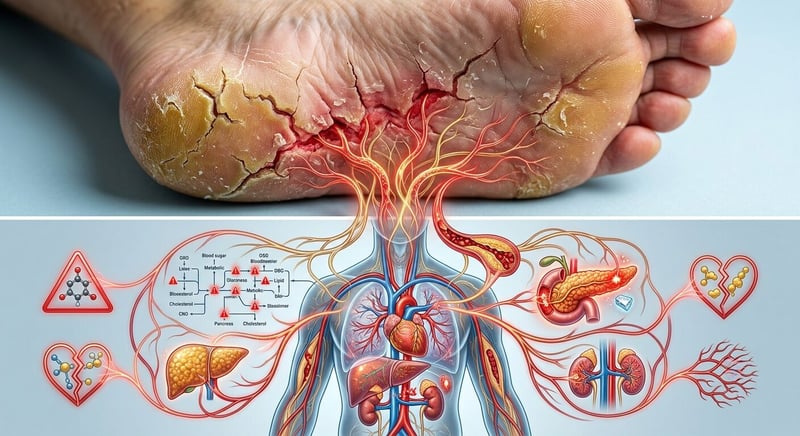
Investigating why one of South Africa's most common foot problems may be a warning sign of something far more serious.
JOHANNESBURG, South Africa – Most South Africans treat cracked heels as a cosmetic inconvenience. A little moisturiser, a quick scrub with a pumice stone, perhaps a pedicure before summer.
Dermatologists and podiatrists, however, increasingly argue that severe heel fissures deserve far more attention.
During this investigation, publicly available clinical research from organisations including the American Diabetes Association, DermNet NZ, the American Academy of Dermatology, Diabetes South Africa and published dermatological studies reveals that cracked heels are often far more than simply "dry skin". In many cases they are the visible result of mechanical stress, damaged skin barriers, chronic dehydration—or, in some individuals, the earliest external sign of underlying systemic disease.
Why Do Heels Crack in the First Place?
Contrary to popular belief, cracked heels are not caused simply because skin becomes dry.
Healthy heel skin contains natural moisturising factors (NMFs), including naturally occurring urea, amino acids and lactic acid, which help maintain flexibility and prevent excessive water loss.
When these natural components decline, the skin begins losing moisture through a process known as Transepidermal Water Loss (TEWL).
As moisture escapes, the thick callused skin surrounding the heel becomes increasingly rigid.
Every step places tremendous pressure on the heel's natural fat pad, which expands sideways under body weight. When the surrounding skin can no longer stretch, it simply tears.
The result is what clinicians refer to as a heel fissure.
Why South Africans Are Especially Vulnerable
South Africa presents several unique environmental factors that make heel fissures more common than many people realise.
Dry Highveld winters, walking barefoot at home, wearing open sandals throughout summer and prolonged exposure to dust all accelerate moisture loss from the skin.
At the same time, diabetes continues to place increasing pressure on South Africa's healthcare system.
According to Diabetes South Africa, foot complications remain among the most serious long-term consequences of poorly controlled diabetes.
When blood glucose remains elevated over long periods, damage may occur to the small autonomic nerves responsible for regulating sweat and oil production in the feet.
Without these natural oils, skin rapidly becomes dry, brittle and susceptible to deep cracking.
Even more concerning is that diabetic neuropathy often reduces sensation, meaning many patients continue walking on bleeding heel fissures without realising the severity of the injury.
When Cracked Heels Become a Medical Concern
Most minor heel cracks improve with appropriate skin care.
However, healthcare professionals recommend seeking medical advice if heel fissures become:
Deep enough to bleed
Increasingly painful
Swollen or inflamed
Slow to heal
Recurrent despite treatment
Associated with diabetes or poor circulation
Clinical guidelines classify many deep heel fissures as pre-ulcerative lesions, meaning they may become entry points for bacterial infection if ignored.
Research published through the American Diabetes Association has shown that diabetic foot ulcers remain one of the leading causes of lower limb amputations worldwide, highlighting why seemingly minor foot problems should never be dismissed.
Many South Africans Also Ask: How Can You Identify Locally Made Skincare?
Consumers increasingly want to support locally manufactured skincare products, but identifying genuine South African products can sometimes be confusing.
Health and retail experts generally recommend looking for several indicators:
A GS1 barcode beginning with 600, indicating South African registration.
Packaging that clearly states Manufactured in South Africa.
The registered Proudly South African logo where applicable.
Ingredient lists containing locally recognised botanicals such as rooibos, marula or baobab.
Locally manufactured skincare also offers practical advantages including shorter supply chains, fresher stock rotation and easier quality control.
Why Ordinary Moisturisers Often Don't Solve the Problem
One of the biggest misconceptions surrounding cracked heels is that any body lotion will solve the problem.
Dermatological research suggests otherwise.
Standard cosmetic moisturisers primarily hydrate the skin surface.
Severe heel fissures require a different strategy.
Clinical foot care frequently combines:
Gentle exfoliation to remove excessive dead skin.
Keratolytic ingredients that soften thick calluses.
Intensive moisturising agents that restore the damaged skin barrier.
Occlusive treatments that reduce overnight moisture loss.
This explains why many podiatrists recommend intensive overnight repair rather than occasional moisturising during the day.
Investigating One South African Approach
During this investigation into locally manufactured foot care products, one system that stood out was the SoleSilk Foot Repair Combo from Easy Slimming.
Rather than relying on a single cream, the combination follows the same multi-step principles commonly recommended in dermatological literature—helping remove built-up dead skin before supporting intensive moisturisation to improve the skin barrier.
While no cosmetic product can diagnose or treat underlying medical conditions, structured skincare routines aimed at restoring moisture and reducing excessive callus formation may help improve comfort and support healthier-looking skin for people experiencing environmentally induced dry, cracked heels.
The Bigger Picture
Perhaps the most important finding from this investigation is that cracked heels deserve far greater respect than they usually receive.
Sometimes they are simply the result of South Africa's dry climate.
Sometimes they reflect poor footwear choices.
But occasionally they represent the body's earliest warning sign that something much deeper deserves medical attention.
Understanding that difference may ultimately prove far more valuable than finding another moisturiser.
Total Words: 863
Published in Health and Medicine
Get new press articles by email
Subscribe to receive our latest press releases and news directly to your inbox.
Easy Slimming (Pty) Ltd is a South African health, wellness and white label supplement company committed to making quality wellness products accessible to both consumers and entrepreneurs. We offer a growing range of natural health, beauty, weight management and lifestyle products, alongside custom white label solutions that enable businesses to launch their own wellness brands with low minimum or... Read More
Latest from
- The Entrepreneurship Trap - Why Most South African Startups Fail Before They Make Their First Sale
- The Bloating Mystery - Why Your Stomach Can Look Fat Even When You Aren’t Gaining Fat
- Why Does Your Face Look Older Even When You’re Losing Weight?
- Cellulite Is Not What You Think - The Science Behind the Dimples Nobody Talks About
- When Stress Stops Feeling Like Stress - The Physical Warning Signs Nobody Talks About
- The Silent Epidemic - Why Adult Acne and Eczema Rates Are Surging Across South Africa, and the Hidden Cost of Corticosteroid Abuse
- The Unregulated Formulation Crisis - Why Transparency is the Ultimate Line of Defence in South Africa’s Natural Weight Loss Supplements Industry
- The Blueprint for Sustainable Change - An Investigative Look at Constructing a Healthy Slimming Routine for Beginners in South Africa
- The Transparency Equation - An Investigative Audit into South Africa’s Weight Management Industry and the Hidden Science of Product Labeling
- Ozempic Side Effects South Africa - The Weight Loss Crisis Nobody Is Talking About
- How to Fix Cracked Heels - What South African Foot Specialists Want You to Know Before Buying Another Foot Cream
- Why Dermatologists Say Your Moisturiser Could Be Making Your Acne Worse
- Why Dermatologists Say Daily SPF Is One of the Most Powerful Anti-Ageing Products You Can Own
- Why South Africans With Darker Skin Are More Likely to Experience Post-Acne Marks Than Permanent Scars
- Why More Dermatologists Are Talking About Skin Barrier Repair Instead of Miracle Skincare Products
The Pulse Latest Articles
- The 1% Problem: Are We Misjudging Cryptocurrency? (September 7, 2026)
- N3yh Moves Beyond Sleepwear With Its First Leisurewear Collection (September 3, 2026)
- N3yh Moves Beyond Sleepwear With Its First Leisurewear Collection (September 2, 2026)
- Safari Travelers Are Asking What Happens Beyond The Game Drive (September 2, 2026)
- Kruger National Park Is Waking Up For Spring (September 2, 2026)