
South Africa has crossed a solar inflection point
Written by: Teresa Kok Save to Instapaper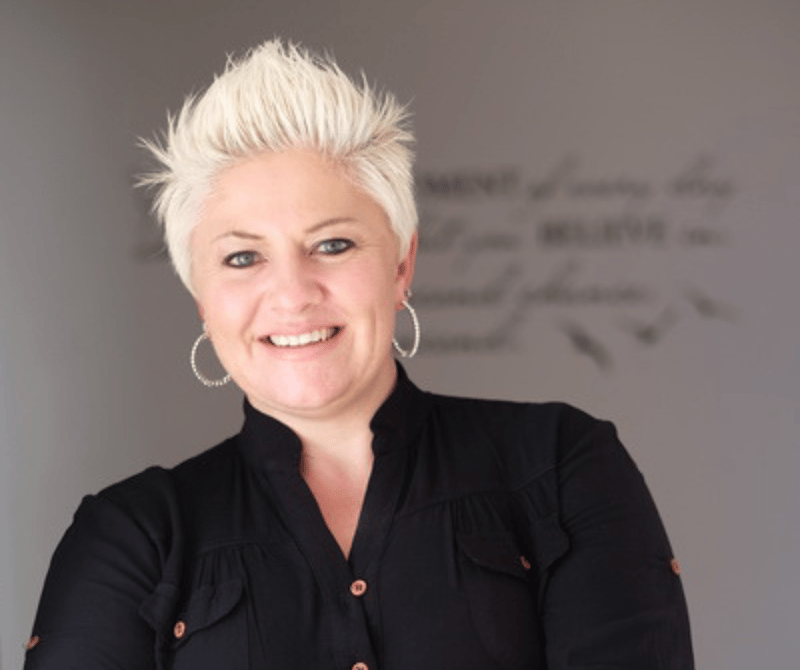
Solar is dramatically cheaper than grid-supplied electricity – even if financed
South Africa has reached a clear solar inflection point. For a growing number of households and businesses, generating power yourself is already materially cheaper than buying from the grid, and that gap keeps widening with each tariff increase.
One Energy’s recent client case studies put hard numbers behind what many consumers already feel: grid electricity has become an unstable, premium-priced input, while solar is a long-term asset that can produce power for 20+ years at predictable costs.
“Electricity prices are already tracking beyond R4/kWh+, and substantial cumulative tariff hikes are confirmed until 2028, alongside rising fixed charges and declining municipal reliability. At the same time, solar can deliver power at around R0.80/kWh,” says Teresa Kok, Director of One Energy. She adds that NERSA has approved Eskom to recover an additional R54.7 billion over the next two financial years, resulting in an 8.7% increase for 2026/27 and a further 8.8% increase the following year. These take effect on 1 April 2026 for direct Eskom customers and 1 July for municipal customers.
“The blunt truth is that if you still buy most of your electricity from the grid, you are paying the highest rate for the least reliable product, with ongoing increases and no return on that spend. Solar is no longer an ‘alternative’; it is increasingly the cheapest electricity source available, because after installation you generate kWh at a far lower effective cost than grid supply,” she says.
Critically, this can hold true even when systems are financed. In many cases, monthly savings are large enough to cover the loan repayment and still improve cash flow.
One Energy’s actual client case studies demonstrate the economics of solar:
- Case study 1: Lakefield (Benoni) Household, average usage 40-45kWh per day
This household consumed around 1,200–1,300 kWh per month on a tariff of R3.80/kWh. One Energy installed an 8kW hybrid inverter, 20kWh battery storage, and a 9kW solar array at an installed cost of R170,000.
The system now generates between 1,260–1,340 kWh per month, taking the household to 98–100% off-grid. In most months, they buy no electricity units and pay only their fixed line charge of about R140. During winter, when generation dips slightly, they top up by roughly 50kWh, around R200 per month, if needed.
The inflection point is clear in monthly cash flow. The household avoids about R4,600–R4,900 per month in grid spend. If financed through Nedbank MFC solar finance, repayment is around R2,980 per month over 96 months at 13.5% interest (subject to credit profile and final rate). Even after allowing for occasional grid top-ups, the homeowner is still around R1,600+ per month better off.
In practical terms, they are redirecting spend that previously disappeared into monthly electricity bills toward owning an energy asset. Once the loan term ends, that asset can continue producing low-cost electricity for years, while reducing exposure to outages, fixed-charge pressure, and tariff shocks.
Case Study 2: Print Shop business
The same economics scale into SME operations. One Energy’s print shop case in Northmead, Ekurhuleni, involved a site using on average 5,000 kWh per month, with an electricity bill of around R18,000. The installed system included a 30kW hybrid inverter, 40kWh battery backup, and a 30kW solar array.
Financial impact:
- R14,000/month saving based on a 25-day work month (6-day work week).
- R170,000 annual saving, excluding future tariff hikes.
- 90% off-grid performance.
- System payback period of 2.8 years.
- Effective electricity cost locked in below R0.80/kWh for 20 years, versus about R3.70/kWh and rising.
- Ability to claim Section 12B (100% tax deduction on qualifying solar assets), reducing taxable income.
- Asset finance option at about R9,600/month over 84 months, with no annual escalation, and full ownership at end of term (based on 13.5% interest, subject to credit profile).
- After finance repayments and residual 10% grid purchases (about 600kWh), the business still improves its bottom line by about R7,000/month, with savings likely to expand as tariffs rise. Once fully paid, the savings are huge for any small business.
For both households and businesses, the pattern is consistent: once solar supplies a meaningful share of usage, the economics flip. Grid electricity becomes a top-up product rather than the primary source.
That shift protects users from two systemic risks: unpredictable availability (outages, load reduction, municipal failures) and predictable escalation (tariffs and fixed charges rising faster than incomes). At 80–95% grid reduction, the grid becomes backup rather than dependency. Beyond rands per kWh, that means continuity, comfort, and control.
The fine print that will make or break your “savings”
Not all funding structures produce the same financial outcome. One Energy stresses that the funding method materially affects value. Consumers should understand the difference between bank asset finance (similar to vehicle finance), rent-to-own, and subscription/rental models.
Subscription and rental offers can appear affordable upfront, but contract mechanics often increase long-term cost: initiation fees, 7–10% annual escalations, evergreen terms, early cancellation penalties, de-installation costs, large buy-out clauses, and no guaranteed ownership.
Two issues matter most:
- Rental/Subscription Escalations that compound against youMany rental contracts escalate annually, which can erode savings quickly. A R1,500/month rental escalating at 7% compounded reaches roughly R2,300/month by year five, about R800/month more for the same power, still without ownership. In some structures, implied cost per kWh can end up higher than municipal or Eskom tariffs, even before later escalations are applied.
- No ownership means no equityWith subscriptions, customers typically do not own the system. That means no equity creation and limited ability to capture property value uplift from a quality installed solar asset. In effect, you may simply redirect utility spend to another provider without building a long-term asset.
So what funding tends to deliver the best outcomes?
If the objective is strongest ROI and maximum lifetime savings, the hierarchy is generally:
Cash purchaseUsually delivers the fastest payback and strongest total return over system life.Bank solar financeWell-structured bank finance typically avoids annual contract escalations; instalments are linked to interest rates, not escalating rental formulas. Ownership transfers to the customer at the end without punitive buy-out fees.Rent-to-own (selectively)Can work but only where terms are genuinely fair: no annual escalation, transparent ownership transfer, no limitations on battery storage usage, and no punitive settlement or buy-out structure. Terms vary significantly and must be thoroughly scrutinised.This is the point where solar should be treated as a serious capital decision, not a lifestyle add-on. The cost curve for solar and the tariff curve for grid electricity have crossed. When a financed solar system can be repaid from the savings it creates - while improving resilience and reducing future tariff exposure - remaining fully grid-dependent is no longer a neutral choice. It is a decision to keep paying more for less certainty.
For households and businesses that can fund or responsibly finance a system, solar now represents one of the clearest paths to lower long-term energy costs and meaningful grid independence - without waiting for the next tariff shock to force the decision.
Get new press articles by email
As a boutique public relations agency, we have made a conscious decision to be a small giant. Not the biggest, but the very best at what we do. Our success lies in our exclusivity, our passionate involvement and the pursuit of excellence in all that we do for our clients. TSC Johannesburg is a leading boutique public relations agency representing some of South Africa’s most prestigious... Read More
Latest from
- Consistent Customer Experience Does Not Happen by Accident
- Alternative Risk Transfer Becomes Core Strategy for South African Businesses
- You're Young and Healthy. That's Exactly Why You Should Plan.
- We Cannot Ask Twelve Months to Repair Eighteen Years
- Turning Geopolitical Risk into Manufacturing Resilience
- BulkSMS Honoured by WASPA at Telemedia Johannesburg 2026
- Balancing Sasria and PTS Cover in an Uncertain World
- MetroFibre brings superfast fibre connectivity to North-West Province with its 8th Experience Store
- Your technology stack is not a customer experience strategy
- When more is less - abundant rewards and the paradox of choice
- Track DNA. Street Legitimacy.
- The First 48 Hours After a Weather Catastrophe Could Determine Your Claims Outcome
- Winter Risk for Complex Portfolios
- Professional Indemnity for Intermediaries
- Two wheels, half the bill - why a motorbike now makes more sense than ever
The Pulse Latest Articles
- Sotru Launches To Stop Supplier Fraud At The Moment Of Payment (June 23, 2026)
- The Death Of The Dinner Party? Why South Africans Are Choosing Convenience Over Traditional Entertaining (June 23, 2026)
- Wildbeest Media Launches 2026 Tourism Marketing Campaign Service For South African Travel Brands (June 22, 2026)
- Opinion Piece: The Chair Is Not The Person: A Ceo’s Hardest Leadership Lesson (June 22, 2026)
- Pura And Soweto Cyclists Celebrate Youth Day 50 Years After The 1976 Uprising (15) (June 18, 2026)