
The First 48 Hours After a Weather Catastrophe Could Determine Your Claims Outcome
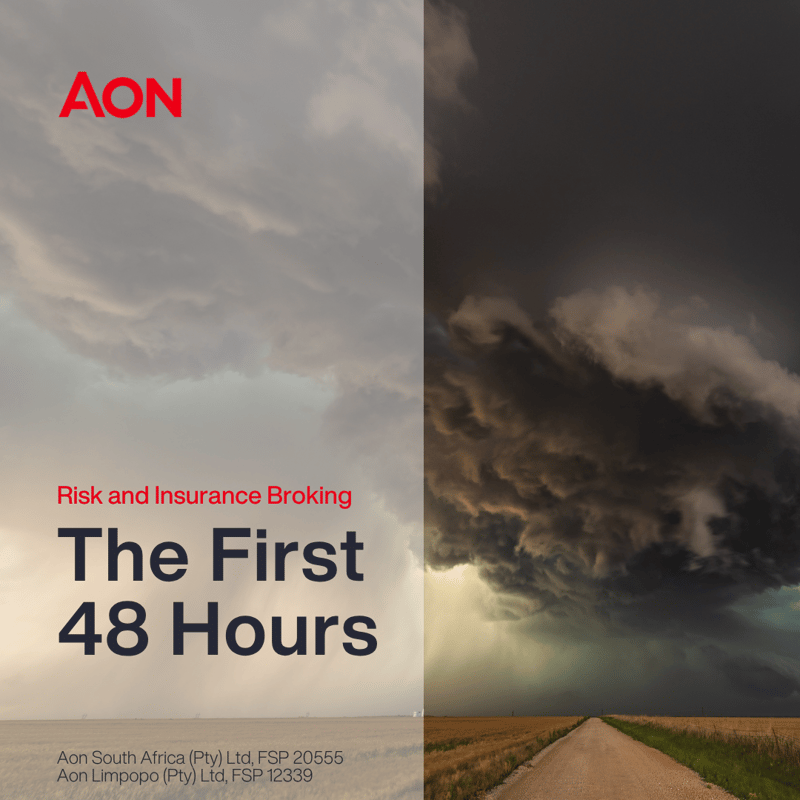
The First 48 Hours After a Weather Catastrophe Could Determine Your Claims Outcome
The Importance Of Early Claims Notification
In the aftermath of the severe storms and floods that battered the Eastern and Western Cape, homeowners and businesses are facing the difficult process of assessing damage, salvaging property and navigating insurance claims. While the full extent of losses is still unfolding, one important lesson is already clear, early notification to your insurer and broker can significantly improve the outcome of a claim.
According to Viksha Rajkumar-Narraidu, Business Unit Head of Claims and Claims Advocacy at Aon South Africa, one of the biggest mistakes policyholders make after a major weather event is waiting too long before involving their broker.
“Many insured clients may assume the damage is not too severe and attempt to manage the clean-up and salvage themselves – for example, extracting water from the affected area or attempting to dry carpets or other insured items without professional equipment.”
“While they may be trying to avoid claiming and impacting their insurance costs over time, this delay in fact creates additional complications. Water damage, for example, can continue developing after the storm itself has passed. Furniture, carpets, building materials and other insured items that may have been salvageable immediately after the event through effective loss mitigation, instead deteriorate significantly as they are left wet for several days, and once the mould sets in, is likely to be a total loss.”
Faster Mitigation Through Early Notification
By contrast, early claims notification results in faster mitigation and a better loss outcome. Many policyholders are unaware that insurers may assist with emergency mitigation costs and measures as part of the claims process.
“Using industrial extraction and drying equipment arranged by your insurer as early as possible can dramatically reduce secondary damage and Increase the likelihood that items could be restored,” explains Viksha.
“Early notification allows brokers and insurers to coordinate the appropriate service providers quickly, helping to prevent losses from escalating further. Documenting damage thoroughly is equally critical,” she advises.
“It’s important that property owners take photos and videos of all damaged items and not dispose of these items until cleared by your insurer. Taking immediate steps to protect your property from further deterioration, is essential. Delaying the reporting of a claim increases the risk that it may be repudiated if it is not notified within the time limits specified in the policy wording.”
Managing Claims During Catastrophe Events
Following widespread catastrophe events, however, the claims environment becomes increasingly complex. Assessors, contractors and restoration specialists are often under immense pressure as claims volumes surge across large geographic areas.
“At this stage, assessors focus on reaching affected clients as quickly as possible. The administrative processes and detailed reports typically follow later, once the immediate mitigation work has been prioritised,” Viksha explains.
The Importance Of Claims Advocacy
Aon’s claims teams work closely with insurers, assessors and service providers to help clients navigate the claims process, particularly during periods of exceptionally high demand.
Dedicated service teams proactively follow up on outstanding matters, monitor turnaround times, coordinate communication and keep clients informed on the status of their claims.
“Affected clients are already dealing with the stress and disruption caused by the event itself. Many may not be able to access their homes as they may be uninhabitable due to the damage, which means they will need alternative accommodation. As their broker, our role is to help provide clarity and support during this time, facilitate the processes and ensure the claim continues moving forward as efficiently as possible,” Viksha explains.
Managing Complex Business Claims
The value of a broker and claims advocacy becomes particularly important in complex commercial claims, notably Business Interruption (BI) losses.
Severe weather events can have long-term operational and financial consequences for businesses, especially where premises become inaccessible, machinery is damaged or supply chains are disrupted.
In industries such as agriculture and viticulture, the financial impact may extend well beyond the immediate physical damage.
“You may be looking at the loss of future production cycles, reduced yields and crops and extended recovery periods,” Viksha explains.
“That’s why it is so important for businesses to review their policies regularly with their risk advisors and finance team. While Business Interruption (BI) cover is likely to save your business in a worst-case scenario, calculating the correct value to insure your business for is complex. Equally crucial is that it happens long before you experience a BI incident,” she adds.
It is essential to speak to an experienced broker for at least an annual review of your BI policy in line with the production and sales cycles for your specific business.
Rising Climate Risks And Preventative Measures
While insurers in South Africa have historically continued to support weather-related claims, Viksha notes that the increasing frequency and severity of natural catastrophe events and climate related risk are commonly cited drivers contributing to rising insurance and reinsurance costs globally.
“As the market hardens, risk management and preventative maintenance are becoming increasingly important for both households and businesses. Simple measures such as regularly cleaning gutters and storm water drains, maintaining roofs and properly maintaining trees and overhanging branches will reduce the risk of damaging your home during severe storms. Ensuring that buildings comply with South African building regulations and SANS (South African National Standards) can significantly reduce the extent of the damages experienced during a storm.”
Preparation And Early Action Remain Essential
Ultimately, Viksha believes that preparation, early action and communication remain the most effective tools policyholders have, following a catastrophe event.
“Even if the damage appears minor initially, notify your broker or insurer as soon as possible. Early intervention can make a significant difference to both the claims process and the outcome – rather notify early and get the support to mitigate and reduce your loss, versus leaving it and suffering a catastrophic loss that has implications for your insurance costs down the line.”
Ends…
Disclaimer
The contents hereof should not be construed as legal advice on any matter. You should not act or refrain from acting on the basis of any content included in this communication without seeking professional legal counsel. This communication does not constitute or create a lawyer-client relationship between us.
About Aon
Aon plc (NYSE: AON) exists to shape decisions for the better — to protect and enrich the lives of people around the world.
Our colleagues provide our clients in over 120 countries and sovereignties with advice and solutions that give them the clarity and confidence to make better decisions to protect and grow their businesses.
Follow Aon on LinkedIn, Twitter, Facebookand Instagram.
Stay up-to-date by visiting the Aon Newsroom and sign up for News Alertshere.
Media Contact
Deidre Beylis
This email address is being protected from spambots. You need JavaScript enabled to view it.
+27 84 426 0410
Release information
Issued on behalf of
Aon SA
Media contact
TS Communications
Thuli Sikhosana