
Volvo C30 at 20 - A compact icon that redefined the brand
Written by: Press Release Save to Instapaper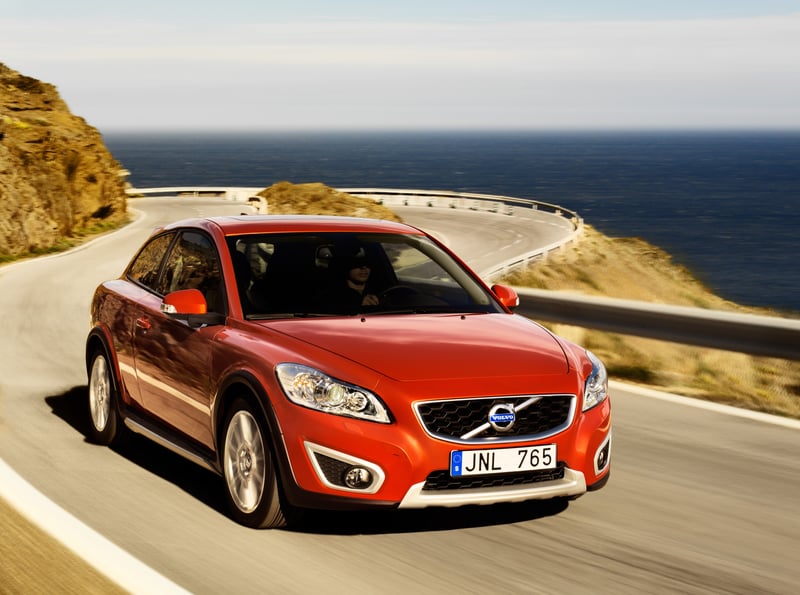
A design-led hatchback that blended heritage-inspired styling with real performance, and quietly became the launchpad for Volvo’s electrified future.
- The Volvo C30 brought bold design and distinctive character to the premium compact segment, standing apart from its German rivals with unmistakable Scandinavian identity.
- From five-cylinder performance models to efficiency-focused variants and the pioneering C30 Electric, the range showcased Volvo’s breadth of engineering innovation.
- As Volvo’s first production electric vehicle, the C30 Electric laid the foundation for today’s EV lineup, including its spiritual successor, the fully electric EX30.
Over the years, Volvo has built a diverse range of vehicles. From practical station wagons with unexpected motorsport pedigree, to elegant coupes fit for the silver screen, and family-focused SUVs engineered with safety at their core. While the Swedish marque has long been celebrated for its sensibility and pioneering approach to occupant protection, there are moments when Volvo steps outside convention and delivers something truly unexpected.
Twenty years ago, Volvo introduced the C30, a bold move that propelled the premium automaker into the increasingly competitive compact hatchback segment. Entering a space dominated by German rivals was never going to be easy, but Volvo leaned on its legacy of innovative engineering and Scandinavian character to create something that stood apart from the crowd.
The C30’s striking styling, inspired by the iconic Volvo P1800ES and later the 480ES, was first previewed through the Volvo SCC (Safety Concept Car), unveiled in 2001. Although refined for production, the SCC established the unmistakable silhouette and glass tailgate design that would go on to define the C30 and cement its status as one of Volvo’s most recognisable modern models.
Designed to appeal to a younger, style-conscious audience, the C30 quickly became a platform for experimentation and performance-focused creativity. In the same year as its 2006 reveal, several high-profile concept variants were unveiled at SEMA, including the twin-turbo EVOLVE C30, the supercharged C30 by IPD, and the HEICO HS3 THOR.
These were soon followed by additional concept models later that year, one of which introduced a plug-in hybrid powertrain, a clear early signal of the electrified direction Volvo would later embrace as a defining part of its identity.
The production-ready Volvo C30 made its official debut at the 2006 Paris Motor Show. Adopting the brand’s new design language (first seen on the S40, S60, and S80), the C30 brought a sharper, more contemporary look to Volvo’s lineup. But this wasn’t simply a smaller member of the range.
With its distinctive proportions, frameless glass tailgate, and clear nods to the P1800ES and 480ES, the C30 felt deliberately different, a compact Volvo with genuine attitude, aimed at buyers who wanted their premium hatchback to stand out rather than blend in. The all-glass tailgate, notably, had no traditional metal frame, further emphasising its clean, distinctive rear design.
Inside, the C30 continued to challenge convention. The interior featured Volvo’s signature floating centre console design (first seen on the second-generation S40), while the second row sported two distinct rear seats rather than a traditional bench, creating a more intimate and sporty cabin layout.
A 2010 facelift further sharpened the C30’s appearance, aligning it more closely with Volvo’s evolving design direction while retaining its distinctive rear profile.
Throughout its lifecycle, Volvo offered the C30 with a wide range of powertrain options, from efficient turbodiesel and petrol engines to the charismatic five-cylinder T5. The lineup also included Polestar-enhanced variants and, notably, even fully electric derivatives.
In fact, the C30 holds a significant place in Volvo history as the first production model ever offered with an electric powertrain. It helped lay the groundwork for the brand’s rapidly expanding EV portfolio, most recently expanded by models such as the EX60 and EX60 Cross Country.
Of course, the performance variants are the most desired among enthusiasts. The T5, powered by a turbocharged 2.5-litre five-cylinder, offered up to 169 kW and 320 N.m of torque, sent to the front wheels via a six-speed manual transmission or a five-speed automatic. Those wanting more power could opt for the aforementioned Polestar Limited Edition, which took things to the next level with 186 kW and 370 N.m, making it one of the most powerful hatchbacks consumers could get their hands on at the time.
Beyond the numbers, the C30’s compact dimensions and wide stance gave it an agile, planted feel on the road. Combined with the unmistakable warble of Volvo’s turbocharged five-cylinder engine, it delivered a driving experience that was as characterful as it was capable.
Among the more intriguing global variants was the 1.6-litre turbodiesel-powered C30 Efficiency. Building on an already economical engine, the Efficiency model introduced a series of fuel-saving enhancements aimed at reducing drag and improving overall efficiency. These updates included a lowered ride height, a more aerodynamic body kit, drag-reducing alloy wheels paired with low-rolling-resistance tyres, revised gearing, and several other subtle refinements designed to maximise economy.
The Volvo C30 Electric broke new ground as the brand’s first-ever production battery-electric vehicle. First shown as a prototype in 2009 before entering limited production in 2011, it paired an 82 kW electric motor with a 24 kWh lithium-ion battery pack cleverly packaged within the central tunnel and fuel tank area, preserving practicality while delivering a claimed range of up to 150 km.
Built in small numbers and leased mainly to corporate and government fleets, the C30 Electric served as a real-world test bed for battery integration, thermal management and everyday usability in demanding Scandinavian conditions. Limited in volume, the electric C30 laid the foundation for Volvo’s modern EV ambitions, and ultimately, the arrival of its spiritual successor, the EX30.
“The C30 helped redefine what a Volvo could be, bringing bold design, performance and innovation into a new segment,” commented Grant Locke, Managing Director of Volvo Car South Africa. “Its legacy continues today as Volvo builds on that same spirit of progress through a growing range of electrified vehicles, including the EX30, which carries forward the idea of a compact Volvo with a strong identity.”
Two decades on, the C30 remains one of Volvo’s most distinctive modern creations. A dynamic and premium hatchback that proved the brand could be expressive and forward-thinking, without ever compromising its core values, much like every Volvo that came before and after it.
Submitted on behalf of
- Company: Volvo Car South Africa
- Contact #: 0696371805
- Website
Press Release Submitted By
- Agency/PR Company: Have Your Say ZA
- Contact person: Megan Isaiah
- Contact #: 0696371805
- Website
Get new press articles by email
What makes us remarkable, is that we care. We care about stories, people, and results. We understand the responsibility of telling your stories online, in a world where every word, picture, film, lasts forever on servers around the world. We know that relationships are the core of our business – we are generous and we thrive on connecting people and ideas. Finally, we measure everything and... Read More
Latest from
- OMODA gears up for the Hollywoodbets Durban July 2026 with an electrifying entertainment lineup
- AutoTrader drives digital innovation in SA automotive as OLX Group reports strong FY2026 results
- From workhorse to weekend warrior - South Africans are making bakkies their own
- iCAUR V23 Earns International Design Recognition at Red Dot Awards
- Subaru’s safety record gives South African families more reason to look beyond the badge
- OMODA & JAECOO South Africa to expand J5 range with hybrid and fully electric models
- AutoTrader data shows monthly +4% rise in used car sales as value shapes buyer demand
- AutoTrader becomes the first automotive marketplace in South Africa to integrate listings with ChatGPT
- OMODA C5 gains fresh momentum as local sales near 17,000 units
- AutoTrader gives SA car dealers first-of-its-kind listing visibility through ChatGPT integration
- AutoTrader lights up the N1 with South Africa’s largest digital billboard launch
- Used car prices hold above 2025 levels even though Chinese brands reshape market value, AutoTrader data shows
- OMODA C7 SHS wins Family category at 2026 South African Car of the Year sponsored by Old Mutual Insure
- A Closer Look at the OMODA C5 Style X
- Get to Know the OMODA C7 and C7 SHS
The Pulse Latest Articles
- What We Miss When We Focus Only On Behaviour (July 6, 2026)
- Bundox Moves Beyond Safari Packages With “experience Our Wild Africa” (July 3, 2026)
- Tutor Doctor South Africa Celebrates Double Award Wins (June 30, 2026)
- Rethinking Performance: Part 5 Aligning Judgement In Performance Evaluation (June 30, 2026)
- Axor: Redefining The Architecture Of Luxury Living (June 29, 2026)