
Why South Africa’s new-energy market needs more than EVs
South Africa sold almost as many new-energy vehicles in the first seven months of 2026 as it did in the whole of 2025. Buyers chose 8,078 conventional hybrids, 5,851 plug-in hybrids and 2,360 fully electric vehicles. Together, they represented 88% year-on-year growth, according to Naamsa.
Manufacturers have to sell into that variety long before they can know which technology will eventually dominate. Even a business convinced that the future is fully electric needs an answer for the household replacing its car this year. The vehicle may have to serve through a change of job or address, and its buyer has to judge charging access over the years ahead. A prediction about motoring in 2035 cannot make that decision for them.
An EV ties part of its value to a property its buyer may not own. Someone with a private garage can arrange charging directly; an apartment resident may need decisions about shared wiring, parking and billing before making the same purchase. A tenant also has to calculate whether to invest in equipment at an address they may leave. The difference between these buyers can be the control they have over a parking space, even when their incomes and daily journeys are similar.
The International Energy Agency estimates that a typical battery electric vehicle uses around 70% less energy per kilometre than a similarly sized petrol car. Home charging helps turn that efficiency into lower energy bills, with the savings dependent on tariffs and mileage.
A workplace charger or an installation in a residential complex can change an EV’s appeal without anything changing in the car itself. These installations can add potential customers for models already on sale. A national assessment of whether South Africa is “ready” misses how locally the market develops.
South Africa already has public charging along the N1, N2 and N3, among other routes, as GreenCape’s market research documents. Fully electric ownership can include intercity travel. A driver covering substantial distances on familiar routes may be well placed to use an EV; someone travelling fewer kilometres between changing destinations may value more flexibility. Annual mileage alone cannot tell a manufacturer which customer it is looking at.
Nor does an identical commute make two households the same market. An EV joining a two-car garage can take on the daily mileage while another vehicle remains available for other duties. A family buying its only car is making a broader commitment. The occasional long journey or visits to relatives outside a metropolitan area can carry more weight in that decision than their share of annual kilometres suggests. A car is also bought for the things its owner needs it to do infrequently.
For that buyer, a plug-in hybrid’s petrol engine can have a value that exceeds how often it runs. With regular charging and a suitable electric range, a PHEV can cover much of the recurring local travel on electricity, with petrol available for additional range and power. The proportion of electric driving depends on the vehicle and how it is used.
The ability to refuel gives the owner latitude over journeys that fall outside that routine. Someone can commit to electric driving for much of the week while keeping options open for a work trip or a holiday. A PHEV can consequently be a considered choice for an entire ownership cycle; another household may move directly from petrol to an EV. There is little commercial sense in expecting both to pass through the same sequence.
BMW’s investment in its Neue Klasse electric cars sits alongside continued production of combustion models and plug-in hybrids. In South Africa, that includes the X3 30e xDrive, built at Rosslyn.
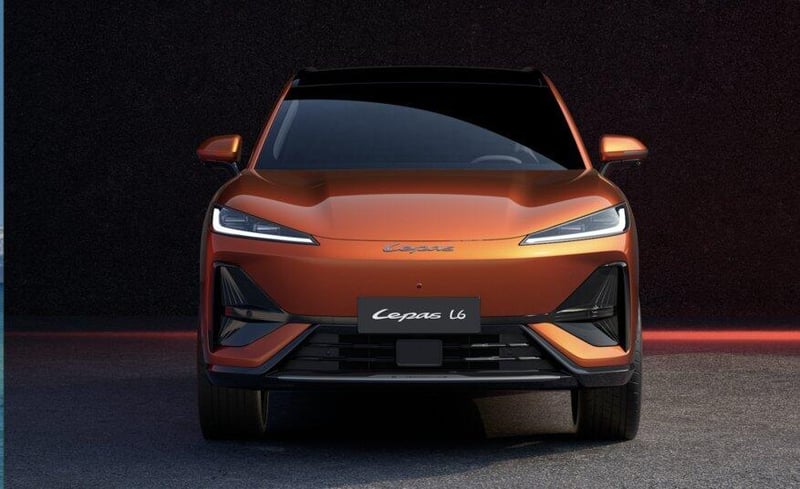
Legacy brands leverage this wide range to keep customers as their driving needs evolve. Meanwhile, newcomers like Lepas use variety to capture market share from the start, offering petrol models alongside the soon-to-be-launched L4 and L6 EVs, plus the L8 plug-in hybrid. This setup lets buyers switch powertrains as charging infrastructure, driving habits, and budgets shift over time.
To sweeten the deal, some Chinese brands include home wallboxes and charging credits with EV pre-orders. Lepas, for instance, packages a home charger installation with every L6 EV purchase. For homeowners with standard parking, this removes the upfront hassle and extra expense of setting up home charging, embedding essential infrastructure right into the vehicle's price tag.
Carmakers will not get to choose when a landlord installs charging, when a workplace upgrades its parking or when a family replaces its car. They can, however, choose whether their range has something to offer when buyers make the decision.
Release information
Issued on behalf of
Lepas South Africa
Media contact
Have Your Say
Megan Isaiah