
South African Education Model Faces Strain As Labour Market Fails To Absorb Graduates
Written by: BizCommunity Editor Save to Instapaper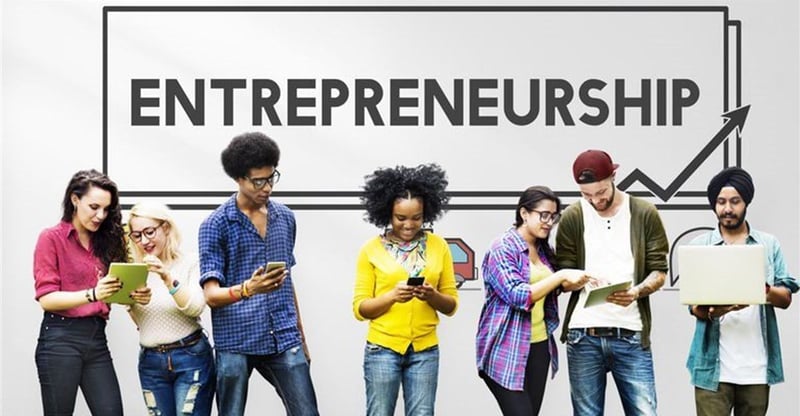
For decades, the country's education system has operated on a simple expectation that learners would work hard at school, obtain qualifications, pursue higher education or vocational training, and eventually secure employment.
That pathway shaped the ambitions of families, educators and policymakers alike. The challenge is that the economy which supported that model is changing faster than our classrooms are adapting to it.
Fully qualified with nowhere to go
South Africa continues to produce thousands of graduates, diploma holders and matriculants annually, yet the labour market struggles to absorb them. According to Statistics SA, youth unemployment remains among the highest in the world, with unemployment among those aged 15 to 24 exceeding 60%.
At the same time, artificial intelligence, automation and digital technologies are reshaping industries and changing the nature of work globally. Some occupations are disappearing, others are evolving rapidly and entirely new sectors are emerging.
Preparing young people exclusively for specific jobs that may not exist in the future is becoming an increasingly risky strategy.
Elevating entrepreneurship
This is no longer simply an employment crisis; it is becoming an education relevance crisis. Entrepreneurship can no longer be viewed as an alternative pathway for those who fail to find work.
It must be recognised as a legitimate and important career option in its own right, one that young people are encouraged to pursue from an early age.
Unfortunately, entrepreneurship in South Africa is still too often associated with necessity rather than opportunity. Many young people enter business because they have exhausted other options rather than because they have deliberately chosen entrepreneurship as a first-choice career.
The result is that survivalist entrepreneurship dominates much of the small business landscape. While these businesses play an important role in supporting livelihoods and local economies, they differ significantly from the kind of opportunity-driven enterprises that create employment, attract investment and contribute to long-term economic growth.
Countries that have built successful entrepreneurial ecosystems have not achieved this by chance. Nations such as the United States, China and India have invested heavily in innovation, business development and entrepreneurship education because they recognise that economic growth increasingly depends on the ability of citizens to create value rather than simply seek employment.
More than just starting a business
Entrepreneurship education is often misunderstood as simply teaching learners how to start companies or write business plans.
In reality, its value extends much further. It develops problem-solving abilities, creativity, resilience, financial literacy and adaptability.
It encourages learners to identify opportunities where others see obstacles and equips them with the confidence to take calculated risks and respond to changing circumstances. These are not only entrepreneurial skills.
Employers increasingly seek individuals who can innovate, think independently and adapt quickly to changing environments. The qualities that define successful entrepreneurs are increasingly the same qualities that define successful employees.
Digital opportunities
The rise of digital platforms and the creator economy has further lowered the barriers to entrepreneurship.
Young people today can build businesses through e-commerce, software development, content creation, digital marketing and freelance services in ways that were unimaginable a generation ago.
Yet many learners still leave school without understanding the basics of budgeting, pricing, customer acquisition or business sustainability. This represents a missed opportunity not only for individuals but for the economy as a whole.
Make it mainstream
South Africa has already taken important steps in recognising this challenge. The Department of Basic Education's Entrepreneurship, Employability and Education initiative has introduced entrepreneurial thinking to hundreds of thousands of learners across the country.
However, pilot projects and extracurricular programmes cannot solve the challenge alone.
Entrepreneurship education should not remain an optional enrichment activity available only to selected schools or provinces. It should become a mainstream component of the curriculum, integrated into the educational experience of every learner.
Corporate role
Corporate South Africa also has an important role to play. Businesses frequently identify skills shortages as a major barrier to growth, yet many organisations only engage with education at the point of recruitment.
Stronger partnerships between schools, higher education institutions and business can help close this gap. Mentorship programmes, entrepreneurship competitions, internships and experiential learning opportunities can expose young people to business realities while giving them access to role models and support networks.
Enterprise and supplier development programmes also present an opportunity to strengthen entrepreneurial ecosystems beyond compliance obligations and scorecard requirements.
Investment in entrepreneurship education should therefore be viewed not only as corporate social investment but as long-term economic development.
From job seekers to job creators
Today's learner may become tomorrow's entrepreneur, supplier, customer or business partner. South Africa's young people already possess the ambition, creativity and resilience needed to compete in the economy of the future. What they need is an education system that equips them to build it.
The future economy will require employees, professionals and technical specialists, but it will also require founders, innovators and problem-solvers capable of creating entirely new forms of economic activity.
If South Africa wants to move from a nation of job seekers to a nation of job creators, entrepreneurship education can no longer be optional. It is one of the country's most important investments in its economic future.
Get new press articles by email
We submit and automate press releases distribution for a range of clients. Our platform brings in automation to 5 social media platforms with engaging hashtags. Our new platform The Pulse, allows premium PR Agencies to have access to our newsletter subscribers.
Latest from
- Municipality Extends EPWP Contracts To Secure Service Delivery Ahead Of Local Government Elections
- Camp in 45,000 Acre Solio Reserve Provides Day And Night Game Drives Walking Safaris And Photography Support
- Tsiba Launches #WeAreTSIBA Theme to Honour Community and Shared Purpose
- Reframing Business Models for a Sustainable World Calls Sustainability a Core Strategic Imperative
- How SMEs Can Identify Real AI Opportunities Amid Hype
- Wheat And Maize Weaken As FAO Reports 3.5% Drop In Cereal Price Index
- Johannesburg Embraces 15‑Minute City Principles With Central Park Precinct
- Savanna Uganda Launches Unlimited Voice And Data Model For Kampala And Greater Kampala
- Living Soils Programme Trains Emerging Women Farmers In Regenerative Methods And Boosts Local Food Security
- Nedbank IMC Releases 2026 Agenda Shift Happens Programme Focuses on Marketing Creativity and Leadership
- Majority Of South African SMEs Struggle With Working Capital Amid Extended Payment Cycles
- Top 10 Social Entrepreneurs Pitch to Food Lover’s Market With Ecovado Among Leading Finalists
- South African Marketers Embrace AI as Standard Practice in 2026 Social Media Landscape Report
- The Odd Number Tops Agency Scope South Africa for Overall Client Satisfaction and Agency Performance
- South African Agencies Must Bridge Generational Digital Skills Gap
The Pulse Latest Articles
- Bundox Moves Beyond Safari Packages With “experience Our Wild Africa” (July 3, 2026)
- Tutor Doctor South Africa Celebrates Double Award Wins (June 30, 2026)
- Rethinking Performance: Part 5 Aligning Judgement In Performance Evaluation (June 30, 2026)
- Axor: Redefining The Architecture Of Luxury Living (June 29, 2026)
- The Real Ai: How African Ingenuity Drives Growth And Distinguishes The Continent’s Logistics Sector (June 25, 2026)