
FSA Members Preserve More Than 300000 Hectares Of Natural Ecosystems Across Forestry Land
Written by: BizCommunity Editor Save to Instapaper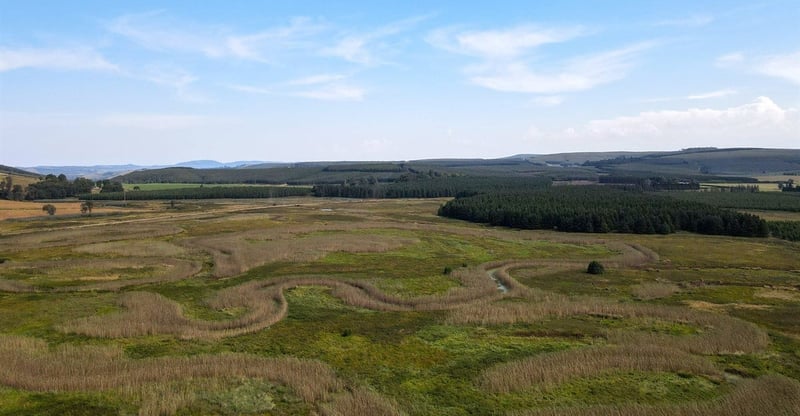
Source: Supplied | Sappi Shafton Kusane Wetland
Ahead of the International Day for Biological Diversity on 22 May, Forestry South Africa (FSA) said biodiversity stewardship was becoming increasingly important beyond formally protected conservation areas.
“Biodiversity stewardship must extend beyond the boundaries of protected areas,” said Dr Ronald Heath, FSA’s Director of Research and Protection.
“Conservation has to happen across entire landscapes, where productive land uses and natural ecosystems coexist and support one another.”
Grasslands, wetlands and indigenous forests protected
A recent survey by FSA found that its members collectively preserve more than 300,000 hectares of natural ecosystems within forestry landholdings, representing more than 20% of the total forestry area.
This includes:
• More than 170,000 hectares of grasslands and associated wetlands• 61,000 hectares of indigenous forests• 10,000 hectares of fynbos• Extensive riverine ecosystems
According to FSA, these areas are actively managed and maintained as part of broader environmental stewardship programmes.
The organisation said the preserved ecosystems create ecological corridors that support species movement, ecosystem functioning and climate resilience across broader landscapes.
Conservation extends beyond individual species
FSA said biodiversity preservation within forestry landscapes extends beyond protecting individual endangered species and focuses on maintaining functioning ecosystems and ecological processes.
“Healthy wetlands, grasslands, forests and river systems provide essential ecosystem services including clean water, healthy soils, carbon storage, pollination, erosion control, climate resilience, as well as being home to a multitude of species,” Heath said.
One example highlighted by the industry is MTO Forestry’s conservation work supporting the critically endangered Hewitt’s Ghost Frog, which occurs in only a few locations globally.
At MTO’s Longmore plantation, approximately half the landholding remains unplanted natural habitat, with conservation activities funded through revenue generated from planted areas.
These activities include alien invasive plant removal, controlled ecological burning and environmental maintenance.
Partnerships support biodiversity protection
The forestry sector also pointed to collaborative conservation initiatives involving industry, conservation organisations and communities.
Sappi’s Rare, Threatened and Endangered Species Programme was highlighted as one example of partnership-driven conservation aimed at protecting vulnerable species and ecosystems.
Another initiative includes the WWF South Africa and Sappi water stewardship partnership focused on the uMkhomazi catchment, part of the Maputaland-Pondoland-Albany biodiversity hotspot.
“South Africa needs connected landscapes where ecological corridors run through multiple land uses, and landowners work together toward shared biodiversity goals,” Heath said.
“The forestry sector has shown that productive landscapes can also sustain living ecosystems, and this model will become increasingly important in securing biodiversity and ecosystem services for future generations.”
Get new press articles by email
We submit and automate press releases distribution for a range of clients. Our platform brings in automation to 5 social media platforms with engaging hashtags. Our new platform The Pulse, allows premium PR Agencies to have access to our newsletter subscribers.
Latest from
- Meta Says AI Could Add R528 Billion To South Africa Economy Over The Next Decade
- Western Cape Flood Disaster Highlights Urgent Need For Support In Affected Communities
- Anthropic Keeps Claude Mythos Under Tight Control Following Advanced Security Testing
- Agro Processor Scale-Up Programme Targets Growth And Innovation For South African SMEs
- University Of Pretoria Advances Sustainable Energy Strategy With Large-Scale Solar Investment
- Conference Calls For Greater Inclusion And Community Voices In Social Impact Programmes
- SACAP Highlights Critical Role Of Registered Counsellors In Early Mental Health Intervention
- South Africans Embrace Portfolio Careers As Professionals Seek Greater Flexibility And Security
- Parsons Power Park Advances South Africa Energy Transition With Major Solar Development
- African Energy Chamber Backs SNPC Drive To Expand Congo Energy And LNG Development
- Location Bank Earns Siinda Recognition For AI Tool Simplifying Enterprise Data Management
- South Africa Intensifies Youth Employment Drive Following Sharp Rise In Unemployment Rate
- Firexpo 2026 To Explore How Fire Risk Impacts Building Performance And Business Continuity
- QuickEasy BOS ERP Transforms Manufacturing Planning With Integrated Factory Floor Control
- Strong Grain And Produce Supplies Push South Africa Food Inflation Down To 2.8 Per Cent
The Pulse Latest Articles
- South African Women Are Missing This Essential Nutrient (May 20, 2026)
- Opinion Piece: Rethinking Performance: Why Behaviour Remains The Missing Link In Evaluation (May 20, 2026)
- 125 Years Of Hansgrohe And The Designers Who Made Axor A Luxury Language (May 19, 2026)
- World Whisky Day: Whisky Lovers Challenged To Stop Saving Their Best Bottles (May 15, 2026)
- Hidden Inefficiencies Are Draining South African Businesses (May 15, 2026)