
Entrepreneurs Face A New Era As AI Advances And Human-Centred Value Takes Centre Stage
Written by: BizCommunity Editor Save to Instapaper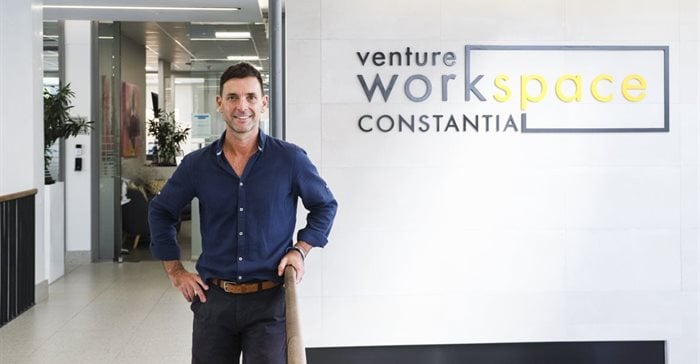
Louis Fourie | image supplied
From where I sit in the workspace industry, I see in real time how businesses and professionals are adapting. What is clear is this: the future of entrepreneurship is not being shaped by one big disruption, but by several steady shifts that are changing how we build companies, lead teams, and define work itself.
Predicting the future is a good way to look clever briefly and foolish permanently. Still, here is what I sense we will see more of in the next 12 months, and what it means for entrepreneurs.
AI grows, but human value grows with it
AI will continue to move deeper into everyday business operations in 2026. Some companies will accelerate their adoption of AI tools, while others will deliberately move more cautiously. That balance will look different for every business.
There is a growing narrative globally that AI and robotics will make human work optional. While the technology is advancing rapidly, the South African reality looks different. Many people here will work well past traditional retirement age, not only for financial reasons, but because work gives us purpose and identity.
What stands out is that businesses are still hiring for roles that could technically be automated. From admin support and IT to management roles, there is a clear demand for people, not just systems. The lesson for entrepreneurs is not to reject AI, but to use it to work smarter while strengthening the human qualities that machines cannot replace. Judgement, empathy, creativity and personality are becoming differentiators.
Businesses that combine AI efficiency with strong human leadership and culture will be better positioned than those chasing full automation at any cost.
Hybrid work becomes the default structure
Work-life balance has been discussed for decades, but hybrid work has turned it from theory into daily practice. In 2026, more South African professionals will align with hybrid models because they offer a workable balance between home, remote and office-based work.
Hybrid is no longer a temporary solution or a pandemic legacy. It is becoming the default structure of modern work. It also forces a deeper question about lifestyle. How do people want to allocate their time, energy and attention?
Most employees do not want to return to five full days in an office. At the same time, many do not want to be fully remote forever. Flexibility now plays a direct role in employee retention and talent attraction. For entrepreneurs, this means that workplace design and policies are no longer operational details. They are strategic tools.
The office shifts from supervision to connection
If hybrid work is the structure, connection is the purpose behind the physical office.
Loneliness has quietly become one of the defining issues of modern work. It affects people across age groups and is especially visible in younger professionals navigating early careers. This is not just a social issue. It has implications for productivity, engagement and mental wellbeing.
As a result, employers are drawing people into physical spaces less for control or compliance, and more for collaboration and community. The office’s real value now lies in bringing people together to build relationships, strengthen culture and solve problems face to face.
Entrepreneurs who treat physical space as a tool for connection rather than oversight will build stronger, more resilient teams.
Coworking and decentralised hubs continue to rise
Early predictions suggested hybrid work would dramatically reduce the need for office space. Instead, it has changed how space is designed and used.
In 2026, shared coworking environments will continue to grow across the country, especially in high semigration areas. Shopping and lifestyle centres are increasingly being repurposed as decentralised work hubs closer to where people live. This reduces commuting pressure and supports a better work-life balance.
For small and medium businesses, flexibility in space has become a risk management strategy. Long, rigid leases are harder to justify in uncertain markets. Coworking allows businesses to scale up or down as needed while still accessing professional environments, reliable power and high-speed connectivity.
South Africa’s millions of SMMEs, which employ a significant portion of the workforce and contribute meaningfully to GDP, need this kind of adaptability. Many local startups are building impressive technology under difficult conditions. Infrastructure reliability and flexible space are no longer perks. They are enablers of growth.
Shared spaces become learning environments
Another effect of coworking and hybrid models is increased exposure to people outside one’s immediate team or industry. When professionals work in shared environments, knowledge spreads faster. Informal conversations often lead to new ideas, partnerships and skills development.
This matters in a country where youth unemployment remains one of the biggest challenges. A large portion of young adults are not employed, studying or in training, despite being one of the most educated generations yet. Environments that encourage interaction, mentorship and informal learning can play a small but meaningful role in bridging gaps between education and employment.
For entrepreneurs, building ecosystems around their businesses, not just companies in isolation, will become increasingly important.
Leadership shifts from control to clarity
The past few years have reminded business owners that growth is rarely linear. Success, failure, learning and trying again are part of the cycle for most South African businesses, whether they are in year one or year 20.
In this environment, strong leadership looks different. It does not pretend everything is fine. It acknowledges reality, provides clarity and helps people find their footing before asking them to move ahead.
Entrepreneurs who communicate clearly, set realistic expectations and focus on consistency will earn more trust than those relying on hype or constant urgency. Culture, stability and reliability are becoming competitive advantages.
The bigger picture for 2026
The next phase of work in South Africa will be shaped less by dramatic revolutions and more by steady shifts. AI will become more common, but so will the need for human judgment. Hybrid work will remain, but physical spaces will evolve into hubs of connection and learning. Flexible infrastructure will support entrepreneurial resilience, and leadership will centre more on clarity than control.
Ultimately, businesses are built by people who show up consistently and do what needs to be done. In 2026, that human foundation, supported by the right tools and environments, will define which entrepreneurs move forward and which get left behind.
Get new press articles by email
We submit and automate press releases distribution for a range of clients. Our platform brings in automation to 5 social media platforms with engaging hashtags. Our new platform The Pulse, allows premium PR Agencies to have access to our newsletter subscribers.
Latest from
- Skincare Experts Champion Safety And Barrier Health As The Future Of Skin Wellness
- Creativity And Flow Identified As Key Drivers Of Energy Resilience And Effective Leadership
- Scopen Celebrates Its 10-Year South African Milestone With Exclusive Johannesburg Event
- Mining Elites In Africa 2026 Recognises Industry Leaders Driving Innovation And Sustainability
- The Creative Dividend Research Introduces New Tools To Strengthen Advertising Effectiveness And ROI
- Higher Education Portfolio Committee Commends University Of Venda After Oversight Visit
- Club Med Empowers Travel Agents With Early Access To High-Value Snow Holidays 2026/27
- Portfolio Committee On Transport Calls For Action As Pietermaritzburg BRT Project Stagnates
- Portfolio Committee On Communications To Conduct Oversight Visit At USAASA And USAF
- Namibia Announces Significant Entry Fee Hikes Across Key National Parks And Reserves
- Scenic Reveals 2026/27 Asia Programme Featuring Luxury Mekong Voyages And Iconic Land Journeys
- Cyber Insurance Enters A New Era As AI Drives Continuous Underwriting And Risk Scrutiny
- Fintech Innovation Drives New Era Of Dynamic Financial Inclusion In South Africa
- Real Estate And SME Leaders Highlight Purpose As A Competitive Advantage In A Noisy Digital World
- Education Takes Centre Stage As Leaders Call For Schools To Shape The Future, Not Chase It
The Pulse Latest Articles
- Bite Sized Wellness, Big Time Benefits (January 28, 2026)
- Opinion Piece: The Power Of Engagement Surveys (January 26, 2026)
- Meet Gloot Energy: Power Made For Women (January 22, 2026)
- The Silent Threat: Why The Passively Complacent Workforce Undermines Business (January 20, 2026)
- Amarantine Travels Announces A Refined Approach To Women-only Travel, Grounded In Intention And Support (January 19, 2026)