
Aukotowa Fisheries and Partners Challenge Environmental Authorisation for Offshore 3D Seismic Survey
Written by: BizCommunity Editor Save to Instapaper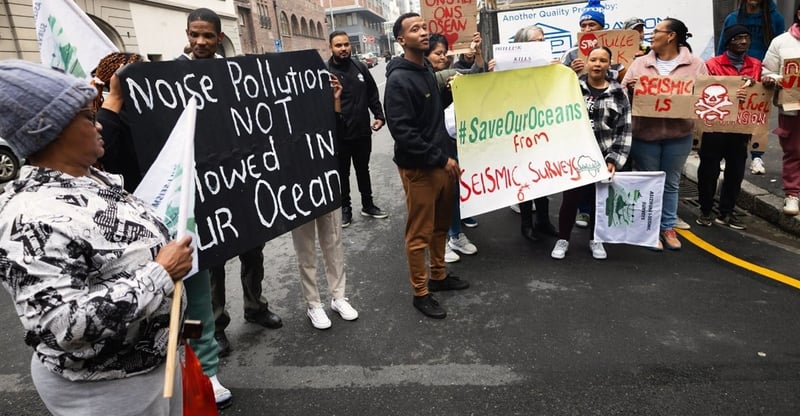
Aukotowa Fisheries Primary Cooperative, The Green Connection and Natural Justice are leading the legal challenge against the State and TGS Geophysical Company UK Ltd.
Serving the public interest
According to The Green Connection's outreach ambassador, Neville van Rooy, “A key issue was whether decision-makers had access to, and properly considered, all relevant information before approving the project.
“Given its potential consequences for marine ecosystems and coastal livelihoods, this case is not only about compliance – it is about transparent and lawful decisions that genuinely serve the public interest.”
The case concerns the environmental authorisation – granted by the Department of Mineral and Petroleum Resources (DMPR) and, on appeal, confirmed by the Minister of Forestry, Fisheries and the Environment – for a large-scale offshore 3D seismic survey off South Africa's West Coast to search for oil and gas deposits.
The small-scale fishers and civil society organisations approached the courts to seek a review of these decisions.
The applicants contend that several critical issues were not adequately assessed before environmental authorisation was granted, including the risks posed by seismic blasting – high-intensity sound pulses used to map the seabed for potential oil and gas deposits – to marine species and the ecosystems on which coastal communities depend.
“The need and desirability assessment for the project focuses largely on the projected economic benefits of the project.
“However, what is missing is a fair assessment of the potential costs, risks and consequences for coastal communities, marine ecosystems and future generations of the oil and gas value chain, which starts with seismic surveys.
“It is reckless not to consider the full picture. It's like deciding to buy a house because of the view or the size, without checking whether the roof leaks, whether the area floods in winter, or what the monthly costs will be.
“Responsible decision-making seeks to weigh the potential benefits against long-term risks and consequences,” adds Van Rooy.
“We therefore hope the court, just like in the Searcher Geodata case, recognises that important environmental and social impacts were not adequately considered before authorisation was granted,” he says.
Justified?
The case also focused on whether “need and desirability” were properly assessed.
This means thoroughly checking to ensure the project is needed, environmentally responsible and socio-economically justified.
The environmental organisations believe that the project's approval raises broader concerns about how energy decisions are being made.
“This case also highlights another question that lies at the heart of this case, and the other legal challenges we have brought: how can South Africa claim to be committed to reducing greenhouse gas emissions under the Paris Agreement when approximately 90% of its ocean territory is under lease for offshore oil and gas exploration?
“Oil and gas exploration cannot be considered in isolation.
“Decision-makers should assess full lifecycle impacts – including environmental, social and climate consequences – rather than focusing narrowly on speculative economic benefits,” says Van Rooy.
The organisations previously challenged the government’s approval of TotalEnergies’ Block 5/6/7 offshore drilling plans.
The Western Cape High Court overturned the approval, ruling that the environmental impact assessment (EIA) failed to address key risks, legal requirements, and public participation.
Get new press articles by email
We submit and automate press releases distribution for a range of clients. Our platform brings in automation to 5 social media platforms with engaging hashtags. Our new platform The Pulse, allows premium PR Agencies to have access to our newsletter subscribers.
Latest from
- AutoTrader Joins Jacaranda FM as Official Launch Partner for N1 Solar B Highway Billboard
- Limbada Emphasises Local Truths and Listening in New KFC India CMO Role
- Traderbag Launches Sustainable Paper Shopping Bags in Response to Unclear Recycling Labels
- KwaZulu‑Natal Department Flags Income Discrepancy in Illovu Housing Project Beneficiary Registration
- TFG Africa Sees 49.2% Online Sales Growth Driven By Bash Platform
- South African Consumers Shift Brands for Health and Demand Cleaner Food Production
- Global Design Thinking Alliance Launches Afrika Chapter to Strengthen Continental Collaboration
- Canon South Africa Names Tunca Rodoplu Country Director To Expand Digital Production Printing And Imaging Solu
- iProspect South Africa Wins Multiple Awards for Engaging Campaigns With Castle Lite Castle Milk Stout and Flyi
- Publicis Groupe UAE Chief Strategy Officer Tahaab Rais To Speak On Psychological Shift At Nedbank IMC 2026
- LEES 2027 Returns To Tripoli With Execution Focus For Libya Energy Sector
- Wesizwe Abandons Phased Ramp Up at Bakubung Platinum Project
- Duncan Pieterse Says South Africa On Track To Meet Fiscal Targets Despite Middle East Conflict
- Kasi Career Expo Returns to Engage Over 4,000 Grade 12 Learners With STEM and Career Pathways
- NSFAS Launches Further Refund Drive For Pre‑2010 Scheme Loan Accounts
The Pulse Latest Articles
- The Hidden Cost Of Living Crisis Is No Longer Inflation - It Is Energy (June 4, 2026)
- Hisense Powers Up For Fifa World Cup 2026 With New Tv Launch (June 4, 2026)
- Finfind Partners With The Silulo Foundation To Expand Funding Access For Underserved Msmes (June 2, 2026)
- You Can’t Measure What You Can’t Define – Or Can You? (part 3 Of 5) (June 2, 2026)
- South African Women Are Missing This Essential Nutrient (May 20, 2026)