
Afghan Women Turn To South Africa's History Of Resistance In The Fight To End Gender Apartheid
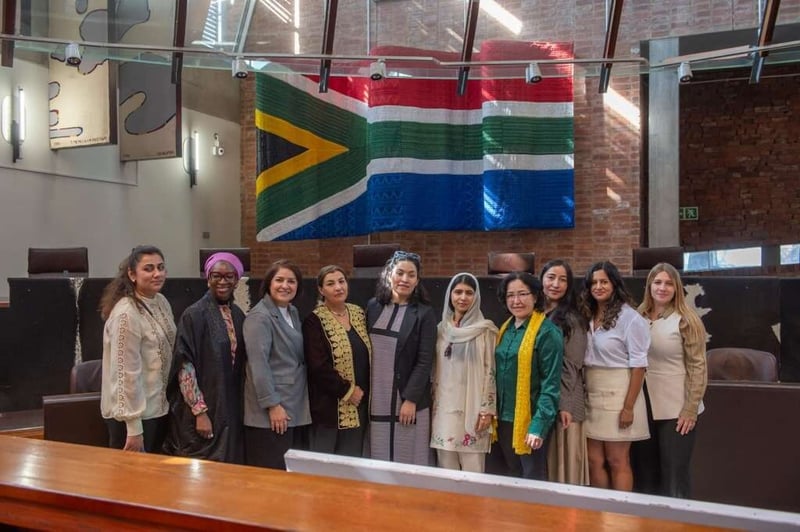
A delegation of Afghan women activists including lawyers, educators and human-rights advocates is in South Africa this week to learn from the country's struggle against apartheid, and to explore how those lessons can strengthen the global campaign led by Afghan women to end gender apartheid in Afghanistan.
The visit comes at a particularly significant moment in South Africa’s history. This Women’s Month, the country marks 70 years since more than 20,000 women marched to the Union Buildings on the 9th of August 1956 to protest against pass laws. This year also marks 50 years since the 1976 youth uprising in Soweto and the 30th anniversary of the adoption of South Africa’s Constitution, which placed human dignity, equality, freedom, non-racialism and non-sexism at the centre of the country’s democracy.
Delegation meetings and exchange
The Afghan women delegation is meeting will meet with government representatives, anti-apartheid veterans, women’s-rights activists, legal experts, civil-society organisations, educators and young people. Together, they will exchange experiences, reflect on lessons from South Africa's transition from apartheid to democracy, and explore strategies to strengthen the global movement against gender apartheid.
The delegation will share their experiences of life under Taliban rule, including the more than 200 decrees that have legislated the systematic exclusion of women and girls from secondary education and public life, and the ways Afghan women continue to organise, resist and create opportunities to learn, work, lead and participate in society despite severe restrictions aimed at their erasure.
Nobel Peace Prize laureate Malala Yousafzai is joining the Afghan women-led delegation in solidarity. As part of the visit, Malala Yousafzai will participate in South Africa's 2026 National Women's Day Official Programme in Pretoria on 9 August, joining South Africans in commemorating Women's Day and honouring the country's legacy of women's leadership and resistance.
"South Africans know what it means to live under a system where the law itself decides who you are allowed to be. They also know how such a system is dismantled - through organising, through coalitions and through global pressure to call out and end injustice. We want to learn from South Africa’s deep history of resistance, because Afghan women are doing it now." - Gaisu Yari, Advocacy and Policy Manager, Afghanistan Initiative, Malala Fund.
Shared lessons and solidarity
While the histories and circumstances in South Africa and Afghanistan are different, the visit offers an opportunity for shared learning and solidarity. The delegation hopes South Africa's experience - and the voices of those who helped shape its journey - will offer practical lessons for the Afghan women-led campaign to end gender apartheid.
Nearly five years after the Taliban returned to power in August 2021, Afghanistan remains the only country in the world where girls are prohibited from attending secondary school and women are barred from university. According to UNESCO, approximately 2.2 million adolescent girls have been denied the opportunity to continue their education beyond primary school.
For decades, Afghan women and human rights advocates have described this system as gender apartheid: a deliberate and institutionalised system of laws and policies designed to exclude, control and subordinate women and girls because of their gender. In Afghanistan, these restrictions extend across education, employment, movement, public life and freedom of expression.
"I survived the first Taliban regime, from 1996 to 2001. Now my daughters are living under the second - and it is worse than what I survived. The first time, the world could have acted, could have stood with Afghan women. It failed. We are not asking the world to understand a new problem. We are asking the world to stand with us so it can finally be addressed. That is why we are in South Africa: a country whose history reminds us that change is possible when people refuse to accept injustice and the world chooses to act."— Horia Mosadiq, Afghan human rights activist.
Call for legal recognition
Malala Fund has been calling for gender apartheid to be formally recognised and codified as a crime against humanity under international law.
Recognition would strengthen the legal and political tools available to dismantle systems of gender apartheid, hold perpetrators accountable, protect women and girls and prevent similar systems from emerging elsewhere.
Release information
Issued on behalf of
Malala Fund
Media contact
Express Yourself
Melini Moses