
South Africa’s Changing Mobility Dynamics Shift Two-Wheeler Demand from Niche to Mainstream
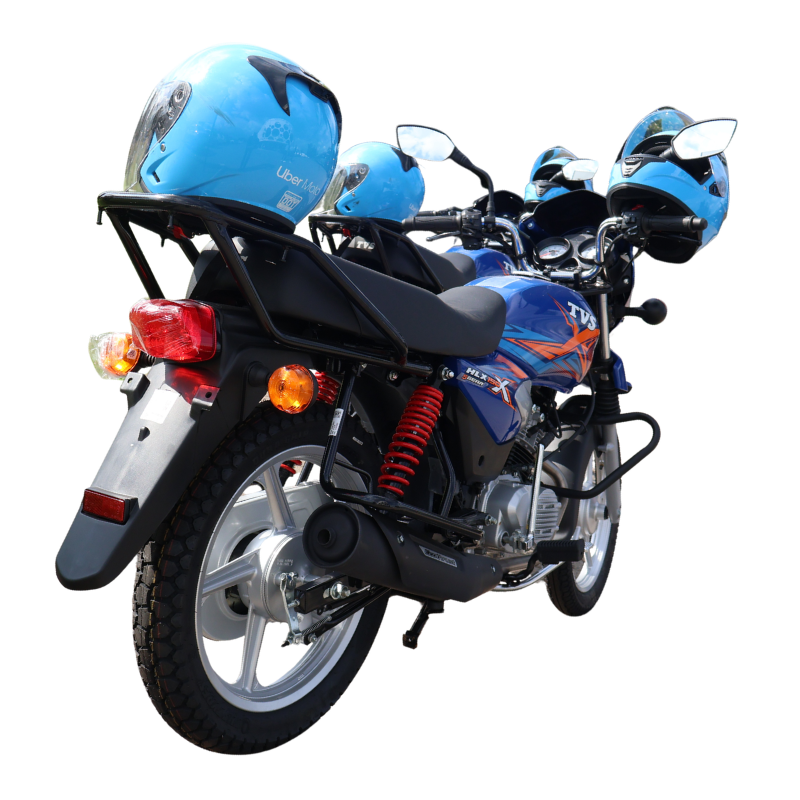
South Africa is entering a structural two-wheeler mobility shift, driven by urban congestion, rising transport-cost pressure, and rapid growth in on-demand commerce and last-mile delivery ecosystems.
The macro shifts behind the mobility dynamics are increasingly clear. South Africa’s online retail market has expanded rapidly, with industry data showing the online retail market projected to pass R130 billion in 2025. That same research points to online retail’s share of total retail rising toward 10% by 2026.¹
As e-commerce and convenience delivery scale, two-wheelers are becoming more central to last-mile operating models.
“The continued expansion in South Africa’s on-demand delivery segment, including category expansion beyond food into high-frequency convenience retail, is in turn driving demand for agile, lower-cost delivery mobility. South Africa is following a pattern we’ve seen in other growth markets two-wheelers move from being viewed as discretionary transport to becoming core economic infrastructure for commuting and income mobility,” says Rahul Nayak, Senior Vice President, TVS Motor Company.
Shifting Demand From Niche To Mainstream
Robin van Rensburg, Managing Director of The Nexus Collective, under Bidvest Group Limited, the sole distributor of TVS Motor Company in South Africa, adds that for 2-wheeler brands in this sector, scale alone is no longer enough. Reliability, service depth, parts availability, and rider economics are what determine long-term relevance and reliability in a mobility market set for rapid growth.
“Local demand is being shaped by three converging realities - urban congestion pressure where commuters and working riders need lower-cost, time-efficient movement in congested corridors; income-linked mobility that is seeing delivery and micro-entrepreneurship ecosystems expanding the use-case for two-wheelers as productive assets; and affordability, where both individual riders and fleet owners are prioritising total cost of ownership, uptime, and service responsiveness,” explains van Rensburg.
Enabling Economic Participation Through Mobility
South Africa’s labour context also reinforces the mobility shift.
“In a country with persistently high unemployment, two-wheelers can serve as practical enablers of economic participation for independent contractors and small operators – from commercial delivery, township and urban micro-logistics and last-mile commutes to entrepreneurship-led mobility use cases. When mobility becomes more accessible and affordable, it unlocks business formation, income generation, and inclusive growth,” says van Rensburg.
As just one practical use-case example, he references the TVS 3-wheel King Cargo, a safe and sturdy solution, with higher load capacity, for the likes of mobile food/beverage stations, on-site repair and maintenance services, mobile retail delivery, and last-mile service businesses that require low operating costs, high reliability, safety and efficient daily mobility.
Global Context And Market Parallels
Globally, the pattern is consistent. In India - one of the most mature two-wheeler ecosystems - SIAM reported the segment crossing 20.5 million units in 2025, underscoring how two-wheelers become foundational in high-density, cost-sensitive mobility markets.
In African peer contexts such as Kenya, two-wheelers are deeply integrated into urban mobility and livelihood systems.²
Building A Sustainable Mobility Ecosystem
For South Africa, TVS believes the market opportunity is not only product-led, but ecosystem-led. That means investing in retail and aftersales networks, rider support, technician capability, and fleet partnerships that reduce downtime and improve operating economics.
“Two-wheeler growth in South Africa will be won on trust and execution,” adds van Rensburg. “Riders and fleet operators need partners who understand both mobility economics and mobility culture - from first-time commuters to entrepreneurs and lifestyle riders.”
For TVS and The Nexus Collective, practical utility and rider identity are central to their market approach in South Africa supporting daily commuting, enabling entrepreneurial mobility, and building long-term rider communities around dependable ownership experience.
“As South Africa’s mobility mix evolves, two-wheelers will play a larger role in how people commute, earn, and access opportunity, mirroring the trajectory already visible across comparable urbanising markets,” concludes van Rensburg.
References
South Africa’s Online Retail set to surpass R130-billion in 2025. https://www.worldwideworx.com/onlineretailsa2025/
Society of Indian Automobile Manufacturers. https://www.siam.in/news-&-updates/press-releases/auto-industry-performance-of-december-2025-and-q3-october---december-2025/595?utm
Media Contact
Nadine van Tonder
T: 011 894 2767
M: 072 707 4919
This email address is being protected from spambots. You need JavaScript enabled to view it.
Release information
Issued on behalf of
TVS Motor Company
Media contact
TS Communications
Nadine van Tonder