
Ebola Crisis Exposes Failure of Current Global Health Architecture, says AHF
JOHANNESBURG (May 26, 2026)
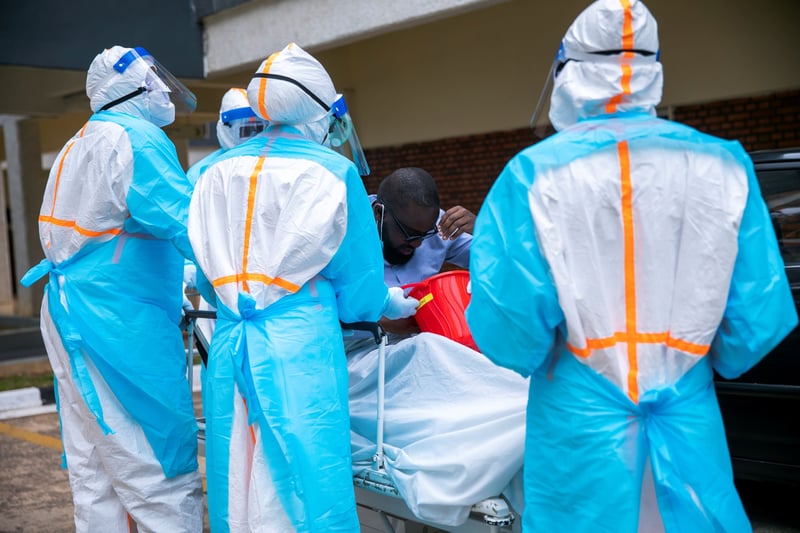
As Uganda and the Democratic Republic of the Congo (DRC) confront a rapidly evolving Ebola outbreak, AIDS Healthcare Foundation (AHF) warns that the crisis highlights persistent weaknesses in the world’s ability to respond quickly and equitably to emerging infectious disease threats.
The current outbreak involves the Bundibugyo strain of Ebola virus, for which no approved vaccines or therapeutics currently exist, heightening concerns among global health officials and frontline responders, according to reporting by Health Policy Watch.
The World Health Organization has declared the outbreak a Public Health Emergency of International Concern (PHEIC), while the Africa Centres for Disease Control and Prevention has designated it a Public Health Emergency of Continental Security (PHECS).
According to public reporting, more than 500 suspected cases and over 130 suspected deaths have been identified as surveillance and laboratory testing efforts continue to expand.
Calls For Greater Global Preparedness And Equity
“Outbreaks like Ebola remind us that pathogens do not respect borders, politics, or wealth,” said Dr. Jorge Saavedra, Executive Director of the AHF Global Public Health Institute and a former member of the Harvard–London School of Hygiene & Tropical Medicine Independent Panel on the Global Response to Ebola convened following the 2014–2016 West Africa outbreak.
“The world cannot continue repeating the same cycle of delayed action, unequal access, and fragmented cooperation every time a dangerous infectious disease emerges. Preparedness must be rooted in solidarity, transparency, and equity—not nationalism and scarcity.”
AHF noted that Uganda and other African countries have repeatedly demonstrated strong leadership in outbreak detection, contact tracing, community mobilization, and emergency response, often despite limited resources and immense logistical challenges.
Pandemic Agreement Negotiations Stall
At the same time, as countries confront another deadly outbreak, negotiations at the World Health Assembly failed to finalize the proposed Pathogen Access and Benefit Sharing (PABS) Annex to the WHO Pandemic Agreement—reportedly due to continued disagreements over equity and benefit-sharing obligations.
The delay effectively places the broader Pandemic Agreement framework on hold at a moment when the need for international cooperation and clear accountability mechanisms is once again being tested in real time.
“The current global health architecture needs to be reformed from its foundations with a bottom-up approach, transferring the resources and decision-making power to define priorities and public health strategies to regional bodies, and not to a First World crystal tower based in Geneva, one of the richest cities in the world, from where they see tropical disease from a far distance,” added Dr. Saavedra.
“Incremental, sometimes cosmetic reforms will not be enough. If we continue adjusting the system at the margins rather than addressing its structural flaws, we should expect the same outcomes we have seen repeatedly: persistent inequities, fragmented responses, and missed opportunities to strengthen global health security.”
Ebola Outbreak Highlights Structural Challenges
AHF emphasized that Ebola is once again exposing the consequences of a fragmented global health system—where frontline countries are expected to rapidly detect, report, and contain dangerous pathogens while negotiations over equitable access to diagnostics, treatments, vaccines, technology transfer, and financing remain unresolved.
AHF has supported awareness and response efforts against Ebola in Uganda and Sierra Leone in collaboration with national partners and lost a doctor to Ebola in the 2014-2016 West Africa outbreak.
As governments continue debating equity provisions in Geneva, the outbreak serves as a real-world reminder that global health security cannot function without trust, cooperation, and enforceable commitments that apply to all countries equally.
XXX
About AIDS Healthcare Foundation
AIDS Healthcare Foundation (AHF), the world’s largest HIV/AIDS healthcare organization, provides cutting-edge medicine and advocacy to more than 3 million people across 50 countries, including the U.S. and in Africa, Latin America/Caribbean, the Asia/Pacific Region, and Eastern Europe.
In January 2025, AHF received the MLK, Jr. Social Justice Award, The King Center’s highest recognition for an organization leading work in the social justice arena.
To learn more about AHF, visit us online at https://www.aidshealth.org, find us on Facebook, and follow us on Instagram, Twitter, and TikTok.
Release information
Issued on behalf of
Aids Healthcare Foundation
Media contact
The Lime Envelope
Sarah Martin