
South Africa's Coffee Trade with Indonesia Highlights the Importance of Quality and Farmer Development
As South African roasters source coffee internationally, Indonesian foundation KAPPI is strengthening producer education, quality development and small-business export readiness.
**JAKARTA, INDONESIA — 29 October 2026** — South Africa's coffee industry has an established trade connection with Indonesia, one of the world's diverse coffee-producing countries. As specialty coffee businesses explore different origins and flavour profiles, the quality and consistency of imported coffee remain important considerations for roasters and buyers.
According to 2025 international trade data published by the World Bank's World Integrated Trade Solution (WITS), South Africa imported approximately 403 tonnes of unroasted, non-decaffeinated coffee from Indonesia, valued at US$2.48 million.
The figures demonstrate that Indonesian coffee already participates in South Africa's sourcing market, providing a relevant context for initiatives aimed at improving quality and strengthening the capabilities of coffee-producing communities.
The Coffee Development and Education Foundation (KAPPI), based in Indonesia, is contributing to these efforts through farmer education, technical mentoring and international coffee diplomacy.
What Indonesian Coffee Offers South African Roasters
Indonesia produces coffee across a wide range of growing environments, including the highlands of Sumatra, the volcanic regions of Java and Bali, and the coffee-producing areas of Sulawesi.
Origins such as Aceh Gayo, Mandheling and Toraja are internationally recognised, while other Indonesian growing regions offer additional varieties, processing traditions and sensory characteristics.
For South African coffee businesses seeking to broaden their sourcing options, understanding differences between producing regions can help inform purchasing decisions and product development.
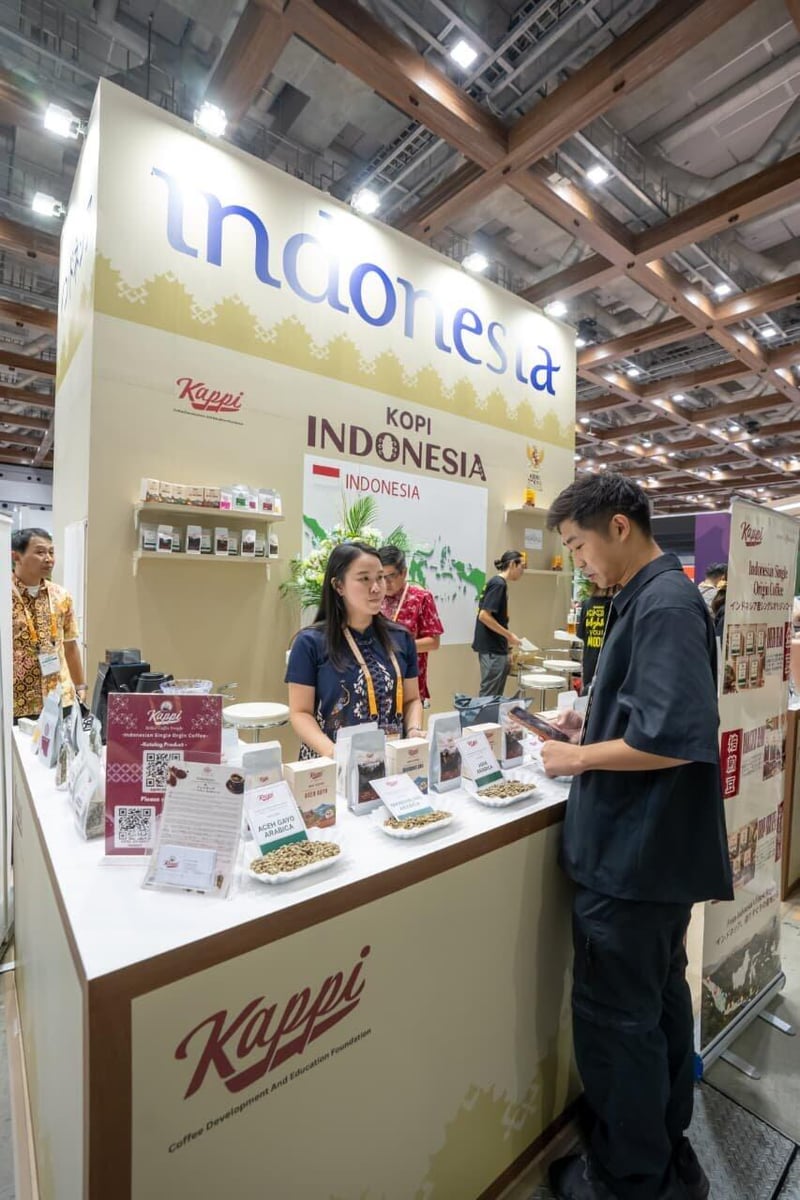
KAPPI recently highlighted this diversity at the Specialty Coffee Association of Japan (SCAJ) 2026 exhibition in Tokyo, held from 14 to 16 October.
Working with Bank Indonesia, the foundation introduced curated coffees produced by farmers participating in the central bank's development programmes.
Visitors explored coffees from Aceh Gayo, Mandheling, Java, Bali and Kalosi Toraja, alongside kopi luwak, through aroma evaluation and tasting.
One interesting reaction came from visitors who found that an Indonesian robusta displayed flavour characteristics reminiscent of arabica. Although this was an informal sensory observation rather than a scientific assessment, it demonstrated the value of evaluating individual coffees beyond conventional assumptions about their species.
Quality Development Begins with Farmers
For international coffee buyers, the reputation of an origin must be supported by reliable quality.
KAPPI focuses on strengthening farmer knowledge through education and technical mentoring covering soil management, fertilisation, pruning and harvesting techniques.
These agricultural practices contribute to the development and consistency of coffee quality long before beans reach an international roaster.
Roby Wibisono of KAPPI regards international exhibitions as opportunities to understand consumer and buyer expectations while introducing Indonesia's coffee diversity.
Insights gathered through international engagement can inform future education and quality-development activities for farming communities.
Connecting Smaller Producers with International Markets
KAPPI's collaboration with Bank Indonesia also supports efforts to help Indonesian micro, small and medium enterprises (MSMEs) better understand the requirements of overseas markets.
At SCAJ 2026, selected coffees from farmers supported by Bank Indonesia were introduced to industry professionals and visitors, providing opportunities for sensory feedback and market exposure.
Ricky P. Gozali, Deputy Governor of Bank Indonesia, has emphasised the importance of understanding international coffee preferences and presenting Indonesia's best coffees, with the broader aim of increasing exports and improving farmers' livelihoods.
The exhibition was part of KAPPI's international engagement activities, which have included World Expo Osaka 2025, SCAJ 2025, Foodex Japan 2026 and World of Coffee Bangkok 2026.
Relevance for South Africa's Coffee Industry
South Africa sources green coffee from several producing countries, including Brazil, Vietnam, Tanzania, Uganda, Ethiopia, Kenya and Indonesia.
For local importers and roasters, access to different origins provides opportunities to explore flavour diversity, sourcing strategies and product differentiation.
KAPPI's activities do not represent a newly announced South African partnership or supply agreement. Rather, they illustrate how producer education and international market feedback can contribute to the long-term quality development of coffee from an existing source country in South Africa's import market.
Through farmer mentoring, institutional collaboration and international engagement, KAPPI aims to strengthen the competitiveness of Indonesian coffee while supporting the communities that produce it.
About KAPPI
KAPPI is an Indonesian non-profit coffee development and education foundation working to strengthen the country's coffee ecosystem through farmer mentoring, technical assistance, community and women's empowerment, research, innovation and international coffee diplomacy.
Release information
Issued on behalf of
KAPPI Global
Media contact
KAPPI Global
Pangesti Boedhiman