
Africa Plugs In - A Continental eMobility Framework
Points the Way as COP31 Turns to Energy and Transport
THE 31st United Nations Climate Change Conference (COP31) in Antalya, Türkiye, holds its Energy and Transport Day today, 10 November. The day puts energy security, electrification, grid infrastructure, and sustainable transport at the centre of the global climate talks.
Africa comes to this conversation with a clear plan of its own. In April 2026, transport and energy ministers from across the continent adopted the African Union’s (AU) Continental Framework on Electric Mobility (eMobility). Her Excellency Lerato Mataboge, AU Commissioner for Infrastructure and Energy, led the process. The convening met under the theme "The Africa We Build: Transport and Energy as Catalysts for Africa's Prosperity”.
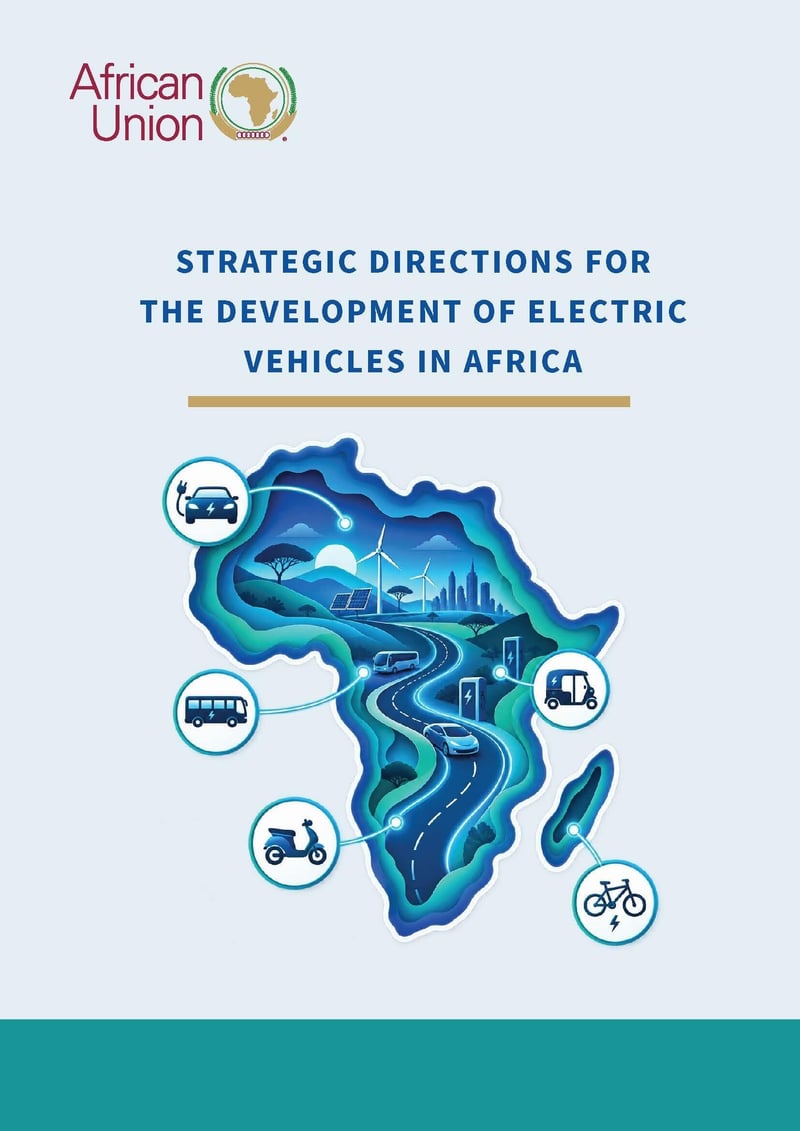
The framework has the title "Strategic Directions for the Development of Electric Vehicles in Africa". The African Union Commission prepared it with the United Nations Environment Programme (UNEP) and the United Nations Economic Commission for Africa (UNECA).
“This framework sets out strategic directions for AU member states to formulate policies, strategies, and regulatory frameworks for the development of electric vehicles in Africa”, says Hiten Parmar, Executive Director of The Electric Mission. “It gives guidelines for national policy frameworks that support economic growth. It links the governance of mineral resources to local value addition and promotes industrial development. As a result, the framework treats e-Mobility as a plan for jobs, industry and energy security, as well as a climate measure.”
The case for this plan is strong. Africa produces about 3.8 percent of global carbon dioxide emissions, but it is one of the regions most exposed to climate change. Transport produces about 12 percent of the greenhouse gas emissions of the continent. African countries, excluding Nigeria and Angola, spent USD15.3 billion on petroleum imports in 2022. The framework sees electric transport as a pathway to decrease this import bill and to improve energy security.
Africa also has natural advantages. The continent holds about 60 percent of the world’s solar potential, and this energy can power vehicles with clean, local electricity and is also rich in the minerals that batteries need, including lithium, nickel, manganese and graphite. Currently, Africa captures less than five percent of the value in the global battery value chain.
The continental framework calls for investment in mineral processing, regional battery hubs, and value addition in each country, so that more of this value stays on the continent, setting out 10 strategic directions. These cover local manufacturing and regional value chains, charging infrastructure, and grid readiness, finance and incentives, and skills and research. They also cover regional co-operation, common standards for vehicles, batteries and charging, and rules for used electric vehicle imports and battery recycling.
Further directions deal with zero-emission targets, sustainability, a just transition with gender equity, and good governance.
“The framework is practical about where to start. It asks each country to shape its policy around its own resources and needs. It identifies commercial fleets, such as minibuses, buses, and motorcycles, as the strongest business case in the near term,” says Parmar. “These vehicles travel long distances every day, so lower running costs give fast returns. The framework also asks governments to electrify public transport and government fleets. This creates early demand for electric vehicles and shows leadership from the public sector.”
African examples already show what is possible. In Rwanda, electric motorcycles that use solar-powered battery swapping cut operating costs by about 30 percent. In Morocco, the Tanger Automotive special economic zone decreased the cost of electric vehicle components by about 20 percent with manufacturing that uses renewable energy.
The framework names South Africa as a leader in vehicle manufacturing, Morocco as a leader in components, and East Africa as a hub for two- and three-wheelers. Under the African Continental Free Trade Area (AfCFTA), common tariffs and standard charging plugs can link these strengths into regional value chains.
The framework also points to green bonds and to micro-finance for fleet operators. For skills, it calls for the training of technicians and engineers through technical and vocational colleges.
COP31 Energy and Transport Day gives Africa a global platform for this message. The framework aligns with Agenda 2063, the United Nations Sustainable Development Goals, and the Paris Agreement. It shows that African countries agree on a shared direction for clean transport, built on African minerals, African energy, and African industry. Partners, investors, and development finance institutions have a clear, continent-wide reference for where to put their support.
For Africa, the move to electric transport is a chance to build industries, create jobs, manage dependence on imported fuel bills and give people cleaner air.
Release information
Issued on behalf of
The Electric Mission
Media contact
Electric Mission
Electric Mission