
Early Childhood Development Organisations join hands helping KZN’s youngest
In tough economic times, it is difficult for Non-Profit Organisations (NPOs) in the Early Childhood Development (ECD) space to raise sufficient funds to assist South Africa’s most vulnerable citizens.
Six organisations in KwaZulu-Natal (KZN) - Zero2Five Trust, LETCEE, Lulamaphiko, Midlands Community College, Singakwenza and Thanda - are joining hands. They will create the country’s very first Early Learning Outcomes Measure (ELOM) Community of Practice (COP). This will openly share learning, expertise and data across multiple urban and rural districts. The areas are uMzinyathi, Zululand, uMkhanyakude, uMgungundlovu, uThukela and Ugu.
A Collaborative Approach To Strengthening Early Learning
“What makes this collaboration unique is the spirit of openness and trust. Organisations are sharing both their successes and their challenges, creating a safe learning space where ideas, resources and innovations can move freely between programmes,” said Julika Falconer, CEO of Durban-based Zero2Five Trust.
She said it was “definitely first out of the starting blocks” and likely to set an important precedent for ECD across the country.
Falconer welcomed President Cyril Ramaphosa’s State of the Nation Address (SONA) commitment to elevate ECD to a core foundational education priority. Plans will get all children aged zero to five into ECD structures by 2030. However, a great deal of on-the-ground work is still needed. NPOs deliver much of this.
“Technically, we all compete for the same funders in a tough economic landscape. So, we set this aside to share our best practices and tools for a common goal. The goal is to see more young children in KZN thrive. We wish to accelerate improvements in early learning outcomes. We will do this by pooling expertise, resources, and data to identify, test, and disseminate practical micro-changes. These changes can be replicated across diverse contexts. By working as a collective rather than in isolation, we aim to contribute meaningful evidence to the broader South African ECD sector,” she said.
Addressing Critical Gaps In Early Childhood Development
The decision to collaborate was inspired by the findings of the Thrive by Five Index, the largest survey of preschool child outcomes ever attempted in South Africa. It measured the proportion of children aged between 50–59 months across nine provinces to determine whether or not they were developmentally “on track” for their ages.
The findings revealed that 55% of South African children attending Early Learning Programmes cannot do the learning tasks expected of their age, with 28% falling far behind and requiring intensive intervention. One in 18 children (5.65%) showed signs of long-term malnutrition.
Children between four and five regarded as moderately stunted are five to six months behind their peers with normal height-for-age, while mildly stunted children are approximately 2.4 months behind.
These delays may be further compounded by social and emotional challenges. Under the Social Relations with Peers and Adults category, 27.5% of children did not meet the standard. This increased to 33.4% for Emotional Readiness for School. Within a group of 20 children starting Grade R in 2023, only eight began with the right foundations in place, while more than half started school already struggling.
“This highlights the urgent need to strengthen early learning outcomes for many children. These children struggle with foundational skills such as numeracy, visual motor integration and cognitive and executive development. By using the ELOM tool, the organisations are working together to better understand how children in their programmes are developing. They will test small, practical improvements – known as micro-changes – that can strengthen teaching practices and learning experiences for children,” Falconer explained.
Turning Insight Into Practical Action
She said the next step would be the upcoming first cross-training workshop for the programme leads and trainers of all six organisations.
“The collaboration will produce a resource pack of ten low-cost learning resources made from recycled materials. Each learning resource will have suggestions for activities, covering 20 weeks. The pack will support implementation of the identified micro-changes by providing practical guidance on using each activity to strengthen numeracy, visual-motor integration (VMI), and executive functioning.”
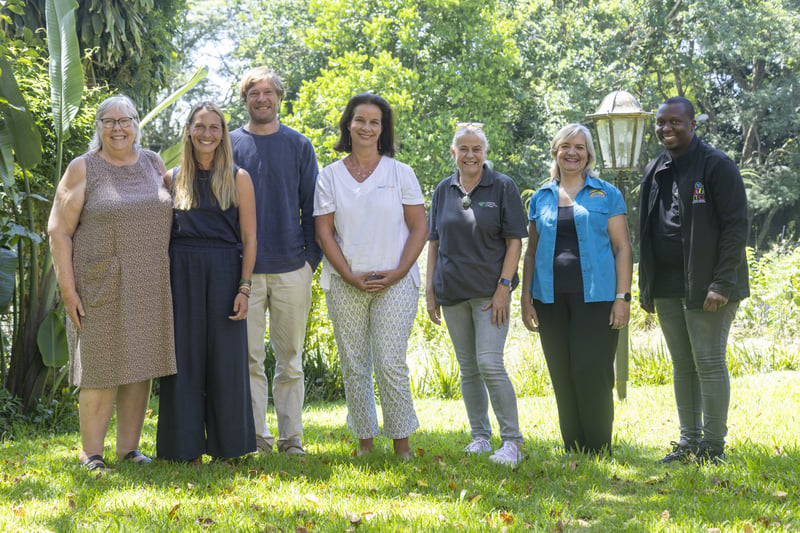
Caption: Six organisations in KwaZulu-Natal (KZN) - Zero2Five Trust, LETCEE, Lulamaphiko, Midlands Community College, Singakwenza and Thanda are joining hands to create the country’s very first Early Learning Outcomes Measure (ELOM) Community of Practice (COP). Pictured at their workshop are from left to right: Lynn Stefano, Lulamaphiko; Angela Larkan and Tyler Howard, Thanda; Julika Falconer, Zero2Five; Rebecca Wakeford, MCC; Julie Hay, Singakwenza; Malusi Mthembu, LETCEE.
Release information
Issued on behalf of
Zero2Five
Media contact
Shirley Williams Communications
Shirley Williams