
iContact BPO puts employee wellness at its core with onsite healthcare clinic for 1500 employees
For thousands of young South Africans, a first job is more than a payslip. It is often the first step into independence, financial responsibility and adulthood - a transition that, for many, happens without the safety net of accessible, quality primary healthcare.
In South Africa, where private healthcare remains out of reach for most young workers and public facilities are chronically overburdened, access to quality primary care can be life-changing. For employees in high-pressure industries such as business process outsourcing, this is not only a health and wellness issue, it is a people issue, a productivity issue, and ultimately, an employer responsibility.
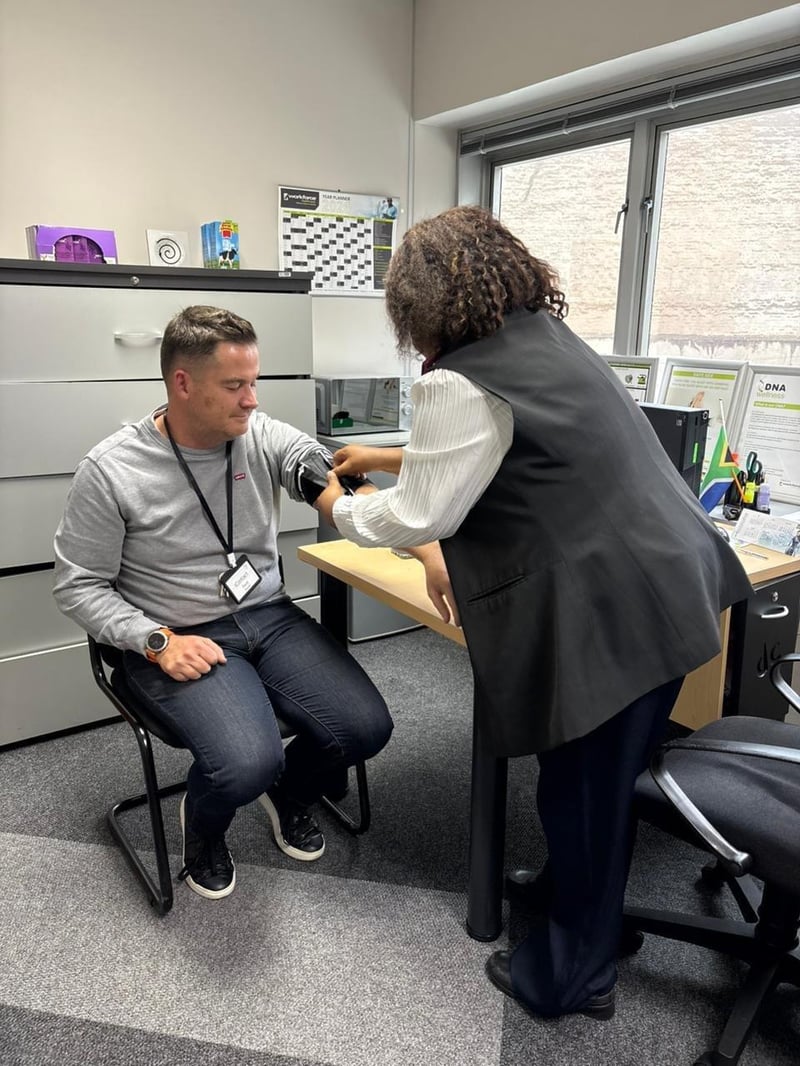
This is the thinking behind iContact BPO's investment in an onsite healthcare clinic and Employee Assistance Programme (EAP) for its 1,500-plus employees across the wider Alefbet Group, operated in partnership with Workforce Healthcare. The clinic and EAP are fully funded by the employer, giving staff access to occupational health, wellness services, primary healthcare and psychosocial services at the workplace, conveniently, confidentially and at no cost to them.
For David Hood, Chief Operations Officer of iContact BPO, the investment reflects a deliberate commitment to putting people first. "BPO is a people business before it is anything else," he says. "Our employees are the heartbeat of our operation. If we want them to perform at their best, we have a responsibility to support their wellbeing in a meaningful and practical way."
Hood is direct about the reality facing much of the workforce. "Many of our employees are young people, often in their first formal job, for whom private healthcare is simply not affordable. By bringing quality primary care into the workplace, we remove the barriers that prevent people from getting help early, whether for a minor illness, stress, depression, family planning or a chronic condition that needs monitoring. They don't have to take a full day off to sit in a public clinic queue, or delay treatment because of cost."
Primary healthcare is widely recognised as the foundation of effective healthcare delivery, addressing the vast majority of a person's needs over their lifetime - from preventive care and early diagnosis through to chronic disease management, family planning, health education, mental wellbeing and referrals for specialist intervention where needed. For iContact BPO's employees, the clinic effectively delivers comprehensive coverage for most of their medical and psychosocial needs, without the financial burden or logistical barriers that typically accompany care.
The clinic is staffed by a professional nurse, with access to a doctor when required. Services include treatment for minor ailments, wellness checks, hypertension screening, chronic medication support, family planning, psychosocial assistance and an employee assistance programme (EAP) - making professional mental health support available to its workforce. The EAP supports employees facing personal, emotional, or work-related challenges and provides confidential counselling, guidance, and referrals to help employees restore mental wellbeing. Where needed, employees are referred to longer-term community or specialist resources for continued professional care.
Dr Richard Malkin of Workforce Healthcare has spent decades building the case for workplace-delivered care, a conviction rooted in his experience in the Eastern Cape in the 1980s. "I saw first-hand the impact of providing healthcare at the workplace," he says. "It became a mission for me." Workforce Healthcare now operates approximately 100 onsite clinics and seven walk-in centres nationally, providing clinic-based care to around 100,000 people.
Dr Malkin notes that the BPO and call centre environment presents specific wellness challenges. "Many employees are young, in their first job out of school, and navigating a rapid transition into independence and adulthood. They may be dealing with financial pressure, debt, stress or psychosocial challenges. Having trusted, accessible support at the workplace makes a significant difference."
He adds that the model depends on creating an environment where employees feel safe enough to engage - to speak to a nurse, ask for help or disclose a concern without stigma. "That trust has a direct impact on health, productivity, absenteeism and retention. In an environment where very few organisations offer this, it also positions the company as a genuine employer of choice."
Hood agrees that employee wellness and operational performance are inseparable in a sector where empathy, resilience and consistency are essential. "When employees are unwell, stressed or unable to access basic healthcare, it affects their lives first and their work second," he says. "The clinic is one of the ways we are saying: we see you, we value you, and your wellbeing – physical, mental and emotional - matters here."
He also frames the investment in broader terms. While businesses cannot solve South Africa's healthcare challenges alone, they can make targeted, tangible interventions that improve access and reduce vulnerability. "Yes, healthy employees are more productive, and workplace healthcare supports retention and reduces absenteeism. But that is not the only reason to do it. When a young employee can access care without worrying about cost, when someone under pressure or suffering from depression can speak to a professional before a problem escalates, that is meaningful impact."
For the Alefbet Group, the clinic aligns with a wider ethos of building businesses grounded in people, performance and long-term value. In a sector where South Africa has become globally competitive on the strength of its talent and service culture, employee wellbeing is increasingly central to sustainable growth.
"South Africa's BPO industry has a powerful role to play in youth employment," says Hood. "But creating jobs is only part of the story. We also need to create workplaces where young people can grow, stay healthy and build a future. If we want to build a resilient business, we need to build resilient people - and that starts with caring for them in ways that are real, relevant and accessible."
Release information
Issued on behalf of
iContact BPO
Media contact
Teresa Settas Communications
Teresa Settas