
Why Cheetahs Have Tear Marks and Nine Other Mind-Blowing Facts This International Cheetah Day
Written by: The Platinum Club Save to Instapaper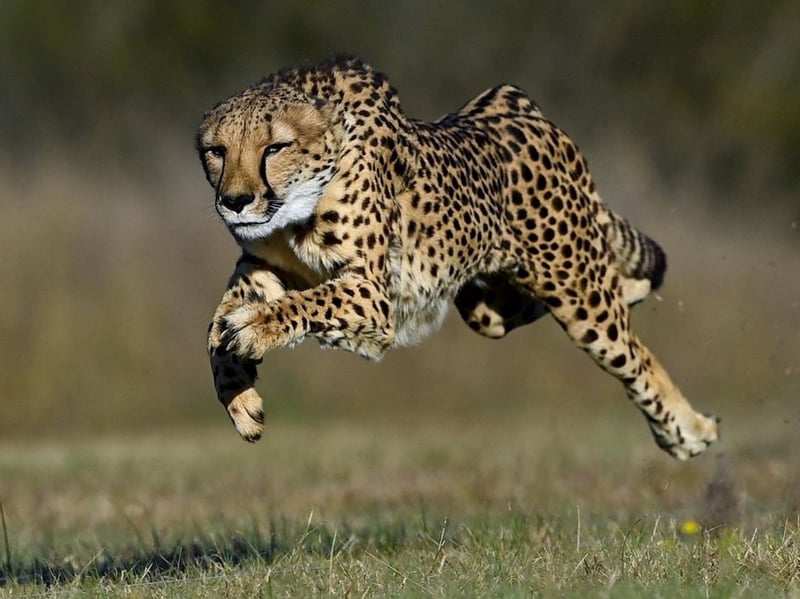
As International Cheetah Day approaches on 4 December, the Lion & Safari Park is shining a spotlight on one of Africa’s most extraordinary and misunderstood predators. Home to several magnificent cheetahs, the park is inviting families, wildlife lovers and photographers to visit and witness these remarkable cats up close.
Cheetahs are often associated only with speed, but their adaptations, behaviours and survival challenges reveal a species far more complex, and far more vulnerable, than most people realise. To celebrate these icons of the African savanna, the Lion & Safari Park has compiled 10 incredible facts that showcase just how unique cheetahs truly are.
They have built-in sunglasses
Those bold black “tear marks” aren’t just for dramatic effect. They’re made of dark pigment that absorbs sunlight, reducing glare and helping cheetahs see clearly during midday hunts, something few predators attempt.
Faster than a Ferrari, but only for 20–30 seconds
A cheetah can accelerate from 0 to 120 km/h faster than a sports car, but it can only maintain that pace for half a minute. Afterward, its temperature skyrockets and it collapses to recover. This is a reminder of how physically extreme each chase is.
Permanent running spikes
Unlike lions or leopards, cheetahs can’t fully retract their claws. They function like sprinting spikes, giving traction during high-speed pursuits. Even the paw pads have a tough ridge designed for grip.
They chirp, not roar
Cheetahs cannot roar due to the structure of their larynx. Instead, they “chirp”, a high-pitched, birdlike call used between siblings, mothers and cubs, or when greeting familiar humans.
Heart-breaking cub survival odds
A mother cheetah can give birth to as many as nine cubs, but only one typically survives to adulthood. Predation, starvation and habitat loss make their early years incredibly dangerous.
Cubs are born with a punk-rock cape
Nature has provided the cubs with a unique defence. Newborn cheetahs have a long, silvery mantle of hair running down their backs, mimicking the colouring of a fierce honey badger, a natural defence that helps discourage predators.
No tree climbing for these cats
Those blunt, semi-retractable claws mean cheetahs are poor climbers. Instead, they use termite mounds, rocks and raised structures to scan the landscape for prey.
Strategy over strength
Weighing far less than lions and leopards, cheetahs rely on stealth and timing rather than brute force. They trip prey by hooking a claw behind the back leg, a precise move executed at incredible speeds.
One third of all cheetahs now live on farmland
Around a third of the remaining cheetah population lives outside protected areas, often near livestock. Conservation programmes, including metapopulation initiatives supported by private reserves like Lion & Safari Park, are helping reduce conflict and protect genetics.
A purr you feel in your chest
When relaxed and content, cheetahs produce an astonishingly loud, deep purr that can be heard across an enclosure. It’s one of the most surprisingly soothing sounds in the animal kingdom.
As International Cheetah Day approaches, the Lion & Safari Park encourages the public to learn more, care more and take action to protect these extraordinary animals. By visiting the park, guests not only enjoy an unforgettable wildlife experience, but also directly support ongoing conservation efforts that ensure cheetahs continue to roam the African landscape for generations to come.
For more information, visit https://lionandsafaripark.com/ or the Lion & Safari Park’s Facebook or Instagram pages.
Submitted on behalf of
- Company: The Platinum Club
- Contact #: 1
- Website
Press Release Submitted By
- Agency/PR Company: The Platinum Club
- Contact person: El Broide
- Website
Get new press articles by email
The Platinum Club is a boutique entertainment, lifestyle and travel PR agency based in Johannesburg, South Africa.
Latest from
- Aidin Caye Promises High-Energy, Forward-Thinking ULTRA South Africa Set
- Jacaranda FM Unveils Brand-New State-of-the-Art Studio
- South Africans Are Going Bigger on TVs, but Are They Choosing the Right Size?
- Why 2026 Marketing Success Lies in the ‘Why,’ Not the ‘What’
- Kagiso Media Radio Rebrands to Kagiso Connect Reflecting Its Widening Scope and Focused Strategy
- Carol Ofori Champions African Travel After Inspiring Family Adventure in Kenya
- Blok Partners With Cape Town Furniture Week 2026
- 5 Things You Didn’t Know About The Bothongo WonderCave
- BarkingMad South Africa Launches Groundbreaking National Initiative to Establish Minimum Standards for South African Animal Shelters
- TCL’s FreshIN Technology Redefines What an Air Conditioner Can Do
- Diagnosed with Terminal Brain Cancer at Two, 17-year-old Tristan Smit’s Life Celebrates the Legacy of Jacaranda FM’s Good Morning Angels
- SAFTA-Nominated Chanley Wong Joins Expresso Morning Show In Johannesburg
- Want to Work in Radio? Jacaranda FM Presenters Share Advice for the Next Generation of Broadcasters ahead of World Radio Day
- Why Gen Z Is Quietly Switching Off Brands That Don’t Walk the Talk
- Africa Is Not One Country - Why the Travel Industry Is Failing the Continent
The Pulse Latest Articles
- Celebrating 125 Years Of Hansgrohe: Setting The Beat Of Water Since 1901 (February 25, 2026)
- Celebrate Pokémon Day At Toys R Us Menlyn On 28 Feb (February 25, 2026)
- The Great Generational Handover: Why South Africa’s Middle Managers Are The Hinge Of 2026 (February 23, 2026)
- Jennifer Hadley Photography Announces A Curated 2026 Katmai Bear Photography Season (February 18, 2026)
- Life Doesn’t Have To Be A Lot – The In-between Drink (February 17, 2026)