
Why Most of Africa Is Losing the Tourism Race Before It Even Starts
Written by: The Platinum Club Save to Instapaper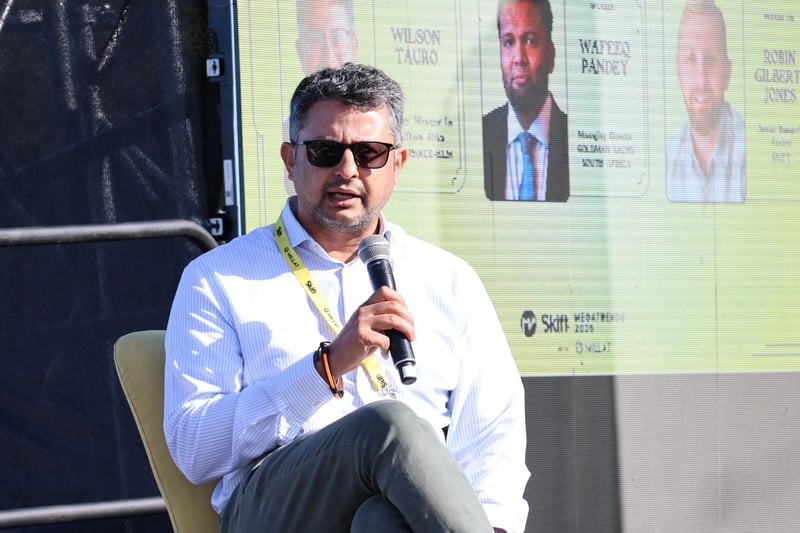
If you look at Africa’s tourism map, a few places dominate: Morocco, Tunisia, Egypt, Kenya, Tanzania, Mauritius and South Africa clearly attract more international visitors than many other countries on the continent. Wilson Tauro, Country Manager Southern Africa for Air France-KLM, has a simple explanation for why these pockets succeed while much of the continent lags.
The Access Advantage
The uneven success of African tourism destinations is largely driven by one factor: connectivity.
“North Africa didn’t become successful by accident,” he says. “It’s connected to Europe in a way the rest of the continent simply isn’t.”
Air access shapes tourism flows. Direct routes, frequency, affordability and ease of travel all influence destination choice. In regions where connectivity is strong, tourism follows. Where it’s fragmented, growth stalls.
“In many parts of Africa, people need to take three or four flights just to reach a destination,” Tauro explains. “That’s a huge deterrent, especially when travellers are comparing Africa to destinations that are easier, faster and cheaper to reach.”
While South Africa has seen added capacity in the last few years, the same cannot be said for the rest of the continent, including places like Tanzania, Kenya, and Mauritius.
“You can’t say the same for large parts of the continent,” Tauro says. “Connectivity remains inconsistent, and that limits tourism growth before it even starts.”
The ‘Missing Middle’ In Luxury
Across much of the continent, tourism offerings tend to skew towards extremes: ultra-luxury lodges at premium prices or low-quality, budget options with limited appeal.
“What’s missing is the middle,” Tauro says. "If you have to go to specific places in Africa, that luxury is going to cost you an arm and a leg. If you compare that with the fact that it takes you three days to get there, it deters potential tourists from visiting."
This gap matters. Travellers are increasingly value-conscious, weighing cost, experience and convenience across a global set of options.
Africa is no longer competing only with Europe or Asia. Emerging destinations across Central Asia and Eastern Europe, including countries in the CIS region such as Armenia, Azerbaijan and Kazakhstan, are actively entering the tourism space.
“We’re competing with 185 countries,” Tauro says. “To stay competitive, Africa needs to offer a full spectrum of accommodation, particularly strong, well-priced mid-market options.”
Government Support And The Visa Barrier
Policy barriers further restrict growth. Visa regimes across Africa remain complex, costly and inconsistent, discouraging both international and intra-African travel.
Tauro recounts a personal experience trying to travel within Africa.
“I once wanted to visit Sudan, and the visa process was so onerous that I simply abandoned the idea,” he says. “And I’ve travelled extensively around the world.”
That experience sparked a sobering realisation.
“When I look at my travel map, the biggest gap is Africa,” Tauro explains. “Not because I don’t want to go, but because I know so little about many destinations.”
For him, this highlights a deeper issue: awareness. Even seasoned travel professionals struggle to locate or describe parts of the continent, while being intimately familiar with destinations elsewhere.
The solution, Tauro believes, lies in removing friction, particularly for intra-African travel.
Tauro is equally clear on the opportunity: intra-Africa travel. Nigeria alone has 200 million people, a massive potential market, but moving around the continent remains difficult.
“We focus heavily on attracting overseas tourists, which is important,” he says. “But intra-Africa travel could be transformative, if governments made it simpler.”
Tauro points to Europe’s Schengen visa as a model. One visa allows access to multiple countries, encouraging spontaneous, multi-destination travel. Africa, by contrast, remains fragmented.
A Vast Opportunity
The scale of the opportunity is undeniable. Paris alone welcomed 100 million tourists last year. Africa, collectively, attracts a fraction of that number.
“The pie is enormous,” Tauro says. “But unlocking it requires alignment, between governments, airlines and the private sector, and a shared commitment to access, affordability and awareness.”
Until those barriers are addressed, Africa’s tourism potential will remain just that: potential.
Submitted on behalf of
- Company: The Platinum Club
- Contact #: 1
- Website
Press Release Submitted By
- Agency/PR Company: The Platinum Club
- Contact person: El Broide
- Website
Get new press articles by email
The Platinum Club is a boutique entertainment, lifestyle and travel PR agency based in Johannesburg, South Africa.
Latest from
- What the Animal Kingdom Can Teach Us This Mother’s Day
- Jacaranda FM Embarks On An Epic Feel Good Tour to Celebrate Its 40th Birthday with Listeners Across South Africa
- La Réunion Chosen as the Official Destination for Tropika Island of Treasure Season 12
- Tropika Unveils Bold New Ginger Beer Flavour in Collaboration with Dr Esther Mahlangu
- What Clients Really Want From Agencies in 2026 (And What They Won’t Pay For)
- Nqobile Khwezi Explores Bali as the Hunt for the Next Tropika Island of Treasure Destination Wraps Up
- ULTRA South Africa 2026 Delivers a Masterclass in Production and Performance at Landmark 11th Edition in Johannesburg and Cape Town and Announces 2027 Dates
- Lion & Safari Park Busts Hyena Myths This International Hyena Day
- TCL’s Five-A-Side Road to Greatness Tournament Returns In 2026 with a Chance to Play in London
- Chunda Munki on Returning to the ULTRA South Africa Stage - “No Stage Can Compare”
- Inside The Mind-Bending Exhibitions Launching At The Museum Of Illusions In Durban This Week
- Bobby van Jaarsveld Explores Vietnam in the Search for Tropika’s Next Island
- Top Billing Announces Star-Studded Presenter Line-Up for Highly Anticipated Comeback Season
- Everything You Need To Know Ahead of ULTRA South Africa 2026
- Why Influencer Marketing Budgets Shifting Back to Authentic Creator-Led Content in 2026
The Pulse Latest Articles
- Consensuality, A Couples Intimacy Brand, Launches In The Garden Route With A New Retreat Concept (May 7, 2026)
- New Partnership Helps To Boost Msme Funding In Kwazulu-natal (May 7, 2026)
- Glow Through Winter: Meet Gloot’s Girl Essentials Pack (May 6, 2026)
- Solarpop Launches Spot It! South Africa (May 5, 2026)
- Games On The Go For Mother’s Day (May 5, 2026)