
Active safety systems move further into trucking as fleet risk comes under sharper focus
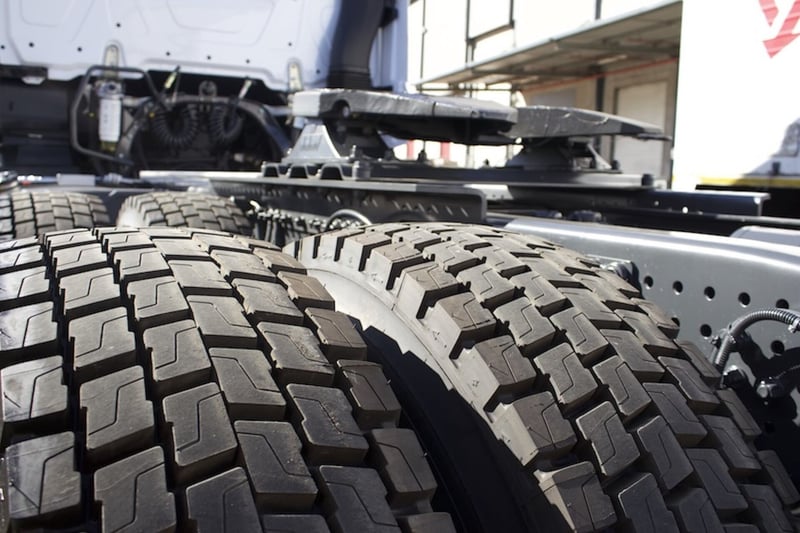
Already familiar to many motorists, technologies such as predictive warnings, emergency braking and blind-spot detection are becoming more prominent in heavy vehicles, giving logistics operators new ways to support drivers and reduce operational risk.
For years, vehicle safety has been shaped most visibly by the passenger car market.
New models are launched with increasingly sophisticated driver-assist systems, from automatic emergency braking and lane-keeping support to blind-spot monitoring and pedestrian detection.
These features have become part of how motorists choose their next vehicles, and part of how manufacturers compete.
The same pace of change has been slower in heavy commercial vehicles, despite the scale of the risk.
Trucks operate for longer hours, carry heavier loads and move through some of the country’s most demanding road environments.
Yet the technologies designed to help drivers anticipate hazards, reduce collision risk and protect vulnerable road users have historically been adopted more gradually in freight and logistics fleets.
Across the commercial vehicle sector, the picture is starting to shift as safety moves beyond stronger cabs, improved braking and driver training.
Newer trucks are increasingly being fitted with systems that can read the road, detect hazards earlier and support drivers before a dangerous situation escalates.
For operators, the significance is not only in the technology itself, but in what it enables: safer drivers, fewer incidents, lower downtime and more resilient fleet operations.
Why Adoption Has Been Slower
Part of the delay comes down to the way trucks are bought and used.
Passenger vehicles are influenced by safety ratings, consumer expectations and brand reputation.
Commercial vehicles are procured within a more complex operating equation, where payload, uptime, fuel efficiency, maintenance costs and total cost of ownership all carry weight.
A safety system has to prove its value not in a showroom, but over thousands of kilometres, across changing loads, routes, drivers and road conditions.
Heavy vehicles also present a more difficult engineering challenge.
A truck’s stopping distance, blind spots and handling characteristics change depending on its load, configuration and operating environment.
Systems such as emergency braking, side-collision warnings and lane support must be calibrated for vehicles that behave very differently from passenger cars.
That has made the rollout of advanced safety technology more complicated, even as the need for it has become harder to ignore.
The South African Context
In South Africa, that need is particularly clear.
Commercial fleets operate in a road environment shaped by long distances, congestion, driver fatigue, infrastructure constraints and unpredictable behaviour from other road users.
In this context, vehicle safety cannot be viewed only as a compliance requirement.
It is part of the operating risk that logistics companies have to manage every day.
The Road Traffic Management Corporation’s Easter 2025 road safety report recorded 155 fatal crashes and 186 fatalities during the Easter period, down from 236 fatal crashes and 335 fatalities in the comparable period in 2024.
The same report identified human factors as the leading contributor to fatal crashes.
For logistics operators, that statistic is significant because many modern safety systems are designed around precisely those moments when human reaction time, fatigue, distraction or poor judgement can shape the outcome of an incident.
Advanced Safety Systems In Heavy Vehicles
The newer generation of truck safety systems is designed to reduce the gap between risk and response.
Advanced emergency braking can detect a potential forward collision, warn the driver and, if necessary, apply the brakes.
Lane-support systems can alert drivers when a vehicle drifts unintentionally.
Adaptive cruise control can help maintain safer following distances.
Side-detection systems can warn of cyclists, pedestrians or vehicles in areas that are difficult to see from the cab.
These systems do not remove responsibility from the driver.
Instead, they provide another layer of support in moments where fatigue, distraction, road conditions or reaction time can determine the outcome.
For fleet operators, that layer of support is becoming increasingly important, particularly in urban delivery environments where trucks share space with pedestrians, cyclists, passenger cars, taxis and informal stopping patterns.
Global Developments Driving Change
The change is also being reinforced by developments outside South Africa.
In Europe, advanced emergency braking systems for trucks and coaches have been part of the regulatory environment for more than a decade, with United Nations regulations continuing to expand the scope and performance expectations of these systems.
Euro NCAP, long associated with passenger-vehicle safety ratings, launched its Truck Safe assessment programme in 2024, bringing a more visible rating framework to heavy goods vehicles.
While these developments are based in other markets, they still matter locally.
Truck manufacturing is global, and advances developed for one regulatory environment often filter into other markets through new vehicle platforms, optional equipment and fleet procurement standards.
As safety systems become more common in international models, local operators are likely to encounter them more frequently when replacing or expanding fleets.
Manufacturers are already moving in this direction.
Volvo Trucks has introduced systems that use camera and radar technology to detect vehicles, pedestrians and cyclists, including collision warning with emergency braking and side-collision support.
MAN’s assistance systems include adaptive cruise control, lane departure warning, lane return assist and emergency brake assist.
Component suppliers are also developing redundancy architectures for braking, steering and energy management, reflecting the growing importance of backup systems as trucks become more electronically controlled and more automated.
Safety As An Operational Advantage
For logistics companies, the significance of safer truck technology is measured in operational terms.
In a business where vehicles are moving through city streets, national routes, customer sites and distribution networks every day, safety is closely tied to reliability.
Ryan Gaines, CEO of City Logistics, says:
“Safety in logistics is not only about the vehicle, and it is not only about the driver. It is about the full operating environment. The more visibility we have across our fleet, and the more support drivers have on the road, the better we are able to manage risk before it becomes an incident.”
As newer vehicle platforms bring more advanced driver-assist systems into the commercial market, operators are beginning to see safety as part of a wider fleet-management picture.
Better vehicles, telematics, maintenance planning, driver coaching and route visibility all contribute to the same outcome: reducing preventable risk while keeping goods moving.
The Role Of Data And Fleet Management
The safety gains in logistics will not come from vehicle technology alone.
They will come from the way operators combine that technology with driver training, route planning, maintenance, telematics and real-time operational oversight.
A truck may be fitted with advanced safety systems, but the broader fleet environment determines how effectively those systems are supported, monitored and used.
Telematics and connected fleet systems already give operators a clearer view of driver behaviour, vehicle performance and route conditions.
Data can help identify harsh braking, speeding, fatigue risk, inefficient routing and recurring safety hotspots.
When paired with safer vehicles, this creates a more complete safety model: the truck can help reduce the immediate risk of an incident, while the fleet system helps managers understand patterns and intervene before those risks become routine.
This is where safety begins to overlap with efficiency.
A safer vehicle is less likely to be involved in costly downtime.
A better-supported driver is less exposed to avoidable risk.
A fleet manager with access to reliable data can make better decisions about routes, maintenance, scheduling and driver coaching.
For logistics companies, these are not abstract benefits.
They affect delivery performance, insurance exposure, asset utilisation and customer confidence.
Looking Ahead
The pace of adoption will still be shaped by cost.
Many South African fleets include older vehicles, and operators are under pressure from fuel prices, maintenance costs, infrastructure challenges and tight margins.
Advanced safety systems also have to be properly maintained and understood if they are to deliver their full value.
A warning system that drivers do not trust, or a braking system that is not correctly calibrated, cannot simply be treated as a box-ticking exercise.
Even so, the direction of the industry is becoming clearer.
Truck safety is becoming more intelligent, more data-led and more proactive.
The safest fleets will not be defined only by the strength of their vehicles or the experience of their drivers, but by how well people, vehicles and data work together.
For South Africa’s logistics sector, that shift could be significant.
Trucks will remain central to the movement of goods across the country, but the way they are specified, monitored and managed is changing.
As manufacturers bring more advanced safety systems into commercial vehicles, operators that invest in safer platforms and smarter fleet management will be better placed to protect drivers, reduce risk and keep goods moving.
The future of freight safety is unlikely to arrive through a single breakthrough.
It will be built through the everyday systems that help a driver react sooner, reduce the severity of an incident, alert a fleet manager to a recurring risk or prevent a vehicle fault from becoming a roadside failure.
In a sector where reliability depends on thousands of daily decisions, those small interventions can carry real weight.
Release information
Issued on behalf of
City Logistics
Media contact
City Logistics
Press Release