
A New Radio Play, ISONO SOMSULWA, Puts Community Stories at the Centre of Social Change
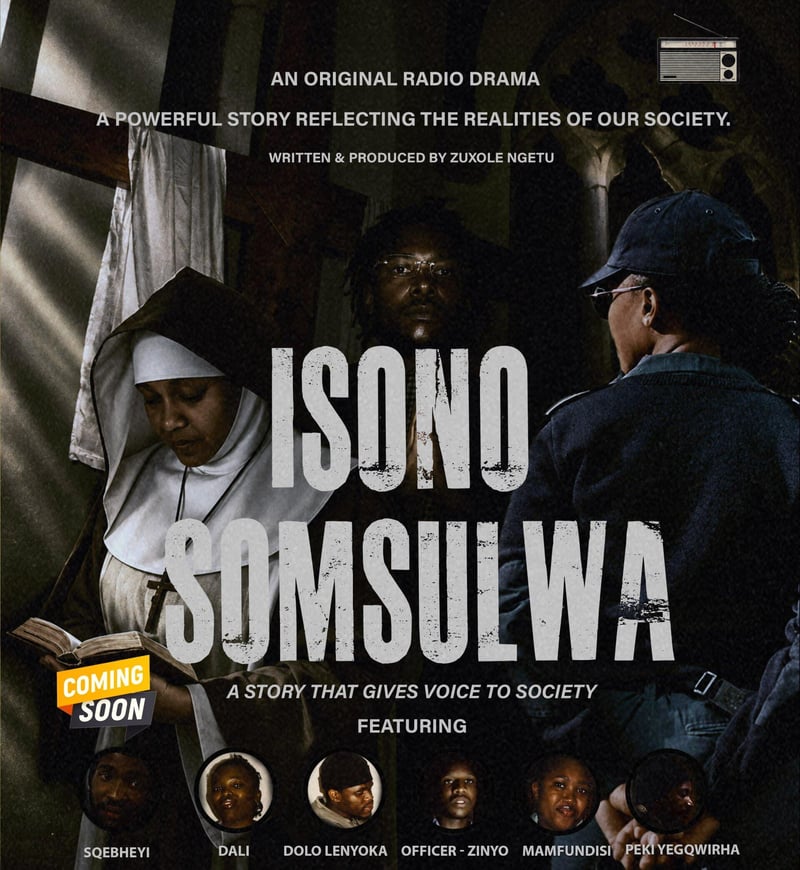
Through music, books, writing and now radio drama, Lolo Vandal is using the power of storytelling to amplify community voices, confront social realities and remind people that their experiences deserve to be heard.
There is something profoundly powerful about an artist who understands that creativity is not merely a means of personal expression, but also a responsibility to the community from which that creativity emerges. For Lolo Vandal, the journey through music, book writing and now radio drama reflects a broader commitment to using art as a platform for dialogue, reflection and social awareness. His production of ISONO SOMSULWA marks another step in an artistic journey that seeks to move beyond entertainment and engage with the lived experiences of ordinary people. Through this radio play, Vandal enters a space where storytelling can become a vehicle for community advocacy, giving listeners an opportunity to encounter familiar realities through characters, dialogue and dramatic situations.
The significance of ISONO SOMSULWA lies not only in its existence as a radio production, but also in what community-centred art can represent. In many communities, people carry stories that rarely find their way into mainstream conversations. These are stories of family struggles, social pressures, moral dilemmas, broken relationships, resilience, identity and the everyday decisions that shape human lives. When artists create platforms that engage with such experiences, they help transform private struggles into public conversations. Radio drama is particularly suited to this purpose because it allows listeners to imagine the characters, recognise familiar situations and reflect on the social realities presented through sound. Without relying on visual spectacle, the medium places language, emotion and imagination at the centre of the experience.
For Vandal, moving from music and book writing into radio drama demonstrates how artistic expression can take different forms while remaining connected to a common purpose. Music can communicate emotions that words sometimes struggle to capture, while books allow ideas and narratives to develop in depth. Radio theatre brings another dimension to this work by giving characters a voice and allowing stories to unfold through dialogue, sound and performance. These creative forms can complement one another, reaching different audiences and opening different pathways for engagement. Rather than treating each artistic discipline as an isolated pursuit, Vandal's work can be understood as part of a wider creative practice in which storytelling becomes a tool for communication, cultural expression and community participation.
At the heart of community advocacy is the question of who gets to tell the story. Too often, communities are discussed by outsiders, represented through stereotypes or reduced to their problems. Their strengths, knowledge, contradictions and aspirations can become secondary to narratives imposed upon them. Community-rooted artists have an opportunity to challenge this imbalance by creating work that takes local experiences seriously. They can present people not simply as subjects of social problems, but as individuals with agency, histories, emotions and the capacity to make choices. In this sense, a production such as ISONO SOMSULWA can contribute to a more meaningful cultural conversation by creating space for audiences to examine their own realities rather than simply consuming stories disconnected from their lives.
The advocacy potential of radio drama also rests in its ability to raise difficult questions without turning every conversation into a lecture. A well-developed play can invite audiences to consider the consequences of their decisions, the pressures influencing their behaviour and the responsibilities they carry towards others. Through believable characters and compelling situations, listeners may begin to question assumptions they have long accepted or recognise patterns within their families and communities. This is one of the distinctive strengths of dramatic storytelling: it does not always need to provide immediate answers. Sometimes its greatest contribution is to make people think, encourage them to listen differently and create the conditions for conversations that might otherwise remain unspoken.
However, the value of community advocacy through the arts should not be measured only by the message an artist intends to communicate. Its deeper impact depends on whether the work encourages meaningful engagement. A radio play can become a starting point for discussions among families, young people, educators, community organisations and local cultural practitioners. Where appropriate, conversations following the broadcast could explore the issues raised by the production, allowing listeners to share their interpretations and connect the story to their own experiences. Such engagement would help position radio drama not merely as a finished creative product, but as part of a continuing process of public dialogue. The artist creates the story, but the community also gives that story life through listening, interpretation and discussion.
There is also a wider cultural importance in artists who continue to create using accessible forms of communication. Radio remains a familiar medium for many audiences, and audio storytelling can reach people who may not regularly attend theatre performances or have access to certain cultural spaces. It allows a story to enter homes and everyday routines, creating an intimate relationship between the performer and the listener. This accessibility can be especially valuable when creative work seeks to engage audiences around social realities. Nevertheless, meaningful reach requires deliberate effort: strong writing, thoughtful production, effective distribution and opportunities for audiences to respond all contribute to whether a project can fulfil its wider potential.
Vandal's creative journey also raises an important question about the role of the independent artist in society. Artists are often expected to produce work that entertains, generates income or attracts public attention. Yet artistic practice can serve a broader purpose when it documents experiences, preserves local perspectives and gives expression to concerns that deserve recognition. This does not mean that every creative work must carry a social message, or that entertainment has less value than advocacy. Rather, it recognises that artists have the freedom to explore the full range of human experience and that, when they choose to engage with community issues, their work can contribute to a society's cultural and social understanding. The challenge is to maintain artistic quality while treating the people and issues represented with honesty, sensitivity and respect.
For ISONO SOMSULWA to achieve its fullest community value, its life need not end when the production is completed or broadcast. It can become an opportunity to strengthen relationships between artists and audiences, encourage emerging writers and performers & demonstrate the importance of investing in local storytelling. Community radio stations, cultural groups and educational spaces could potentially help extend conversations around the themes explored in the play. Such possibilities depend on the production's content and the partnerships available, but they point towards a broader vision: one in which community arts are supported as a meaningful part of cultural development rather than treated as occasional entertainment.
Ultimately, Lolo Vandal's move into radio drama represents an opportunity to reflect on the relationship between creativity and community responsibility. Through music, books and now ISONO SOMSULWA, his artistic practice brings attention to the many ways stories can travel, reach audiences and create space for reflection. The broader significance of this work lies in the possibility that ordinary people's experiences can become the foundation for serious artistic expression and constructive public dialogue.
A community's voice should not be heard only when a crisis demands attention. It should also be heard in its art, its literature, its music, its theatre and the stories it tells about itself. When artists create with an awareness of this responsibility, they help build a cultural environment in which people can recognise their experiences, question their circumstances and imagine new possibilities. ISONO SOMSULWA therefore offers a timely point of reflection on what community-centred storytelling can achieve: not simply giving people something to listen to, but creating an opportunity for them to hear themselves, consider one another and participate in the ongoing story of their community.
Release information
Issued on behalf of
African Elephant PR
Media contact
African Elephant Productions
Zuxole Ngetu