
Blame Won’t Save Them - Jobs, Care, and Creativity Will
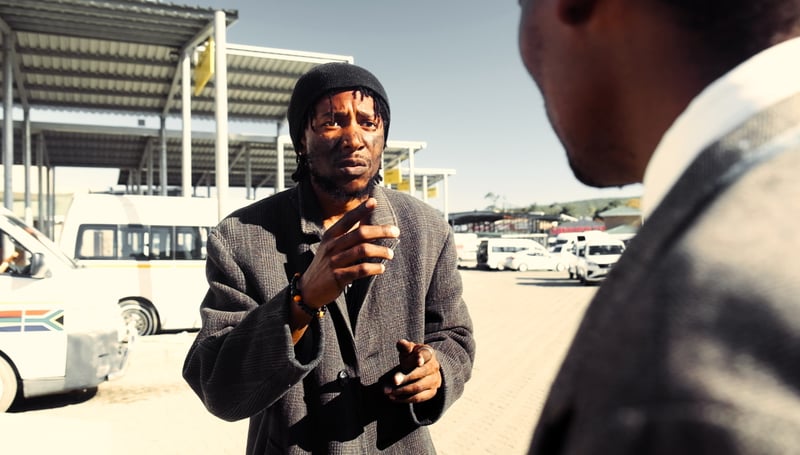
You have probably walked past someone on the street who looked tired, worn, or shut off from the world and kept going. Maybe you told yourself you were late, or that someone else would help, or that it was not your problem. That small choice to look away is the start of a story that plays out again and again in our neighbourhoods.
It usually begins with small losses: a job that disappears, a school that cannot help, a clinic that closes early. Those little things pile up until a person has fewer and fewer options. Without work, without support and without safe places to belong, people can drift toward drugs, isolation, or life on the margins. It does not happen overnight; it happens in slow, quiet steps that are easy to miss until the consequences are visible and urgent.
Moving Beyond Blame
When communities are under pressure, it is easy to look for a single cause or a single group to blame. Headlines and hot takes make scapegoating simple and satisfying, but it does not fix anything.
Pointing fingers at outsiders or at one visible problem distracts from the deeper, structural issues that leave young people vulnerable: chronic youth unemployment, underfunded mental-health services, shrinking community resources, and the disappearance of safe spaces where young people can learn, create, and belong.
Blame comforts us for a moment, but it leaves the next person unprotected. The slide from hope to harm is usually gradual; a young person who feels unheard, a family stretched too thin, a school that cannot offer alternatives and treating symptoms without fixing the causes only delays the next crisis.
The Role Of Art And Community
Art and creativity are not luxuries in this landscape; they are practical tools for prevention and recovery. When young people have access to places where they can make music, paint, write, or perform, they gain ways to process pain, to build identity, and to imagine different futures.
Mentors, job training, and after-school programs give practical skills and steady relationships that matter more than a single intervention. A single workshop, a listening ear, or a steady volunteer can be the difference between someone falling through the cracks and someone finding a way back.
Community arts programs do more than nurture talent: they create networks of care, teach resilience, and open doors to employment and education that would otherwise remain closed.
A Call For Responsibility
This is not a plea for pity. It is a call for responsibility. We can push for real solutions that change outcomes: more jobs for young people, better-funded mental-health services, and sustained investment in community arts and youth centres.
We can demand that schools, clinics, and local governments coordinate to keep support available when it is needed most. We can insist that public conversation move beyond blame and toward practical, measurable action.
When we invest in prevention; in mentorship, in training, in safe creative spaces, we reduce the need for crisis response later. Prevention is not cheaper because it is easy; it is cheaper because it works.
Building Stronger Communities
Communities that choose to act see results. When local leaders, non-profits, and residents come together to create after-school programs, to fund mental-health outreach, and to support local artists, they build a safety net that catches people before they fall too far.
These efforts do not erase hardship, but they change the trajectory of lives. They turn isolation into connection, despair into possibility, and wasted potential into contribution. The people who benefit are not abstract statistics; they are neighbours, siblings, and friends who, with a little support, can become active, creative members of the community.
Changing The Narrative
We must also change how we talk about these issues. Language matters. When public discourse reduces people to problems or blames entire groups for complex social failures, it hardens attitudes and makes policy solutions harder to pass.
Instead, we should tell stories that humanise, that explain the slow build of disadvantage, and that show how practical interventions work. We should amplify the voices of young people and community artists who can speak from experience about what helps and what harms.
Honest storytelling builds empathy, and empathy builds the political will to invest in long-term solutions.
Practical Steps You Can Take
If you recognise someone in this story, there are simple, concrete things you can do today. Stop and listen. Offer information about a local clinic or youth centre. Volunteer time at a community arts program or a mentorship initiative. Support local organizations with donations or advocacy.
Speak up when public conversation drifts toward scapegoating and demand that leaders focus on jobs, mental-health care, and youth services. Small acts, repeated across a community, add up into real protection and real opportunity.
A Moment To Choose Action
This is a moment to choose action over indifference. Treating people as neighbours rather than problems changes outcomes. When we fund the programs that keep young people connected, when we create pathways to work and when we make mental-health care accessible, we protect not only the vulnerable but the whole neighbourhood.
Art and creativity are part of that protection: they give people ways to heal, to be seen, and to build futures. Look, listen, and act; those three steps are the difference between another face we ignore and a life we help keep whole.
Release information
Issued on behalf of
African Elephant PR
Media contact
African Elephant PR
Zuxole Ngetu