
South Africa Unemployment Remains High at 32.7% with Youth Rate at 45.8%
Written by: BizCommunity Editor Save to Instapaper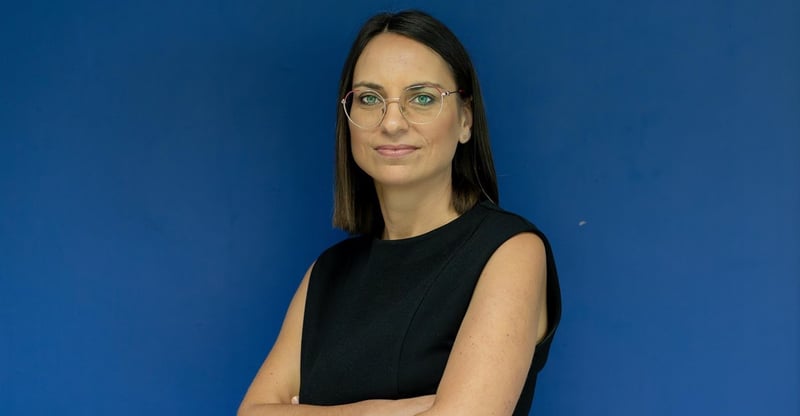
Dr. Mandi Joubert
According to the Quarterly Labour Force Survey (QLFS) Q1 2026, South Africa’s overall unemployment rate remains persistently high at 32.7%, while youth unemployment among those aged 15 to 34 stands at 45.8%. This is significantly higher than the national average and a stark reminder that young people remain the most vulnerable in our labour market.
Educational attainment continues to make a measurable difference. Individuals without matric face an unemployment rate of 37.6%, while graduates experience a significantly lower rate of 10.3%. Those with matric or lower qualifications sit above the national unemployment rate, while individuals with other tertiary qualifications fall below it.
These figures point to the enduring fact that education matters. It improves prospects and changes trajectories. Yet these figures do not tell the whole story.
While graduates are more likely to find work than non-graduates, employers continue to speak about a readiness gap. Young people are qualifying, yet too many still struggle to transition confidently into meaningful employment.
For higher education, this is the uncomfortable middle ground: access is improving outcomes, but qualification alone no longer guarantees a seamless transition.
This is the defining challenge confronting higher education in South Africa. More students are entering and completing qualifications, and private higher education institutions are filling a critical gap in expanding access. Eduvos student numbers are projected to grow by more than 25% from 2025, reaching close to 30,000 by the end of 2026.
But access alone is not enough. Alignment, adaptability and employability have become the new benchmark.
Redefining readiness in a time of rapid change
A few years ago, readiness was often defined by technical competence. Could a graduate code, analyse, calculate or execute according to specification? Today, that definition feels incomplete.
Employers now want to know that a graduate can not only complete a task, but also interpret a task, adapt their approach and improve on the expected outcome. Added to this is the acceleration with which generative AI has reshaped how work is performed across sectors. As AI increasingly supports drafting, coding and analysis, the premium placed on narrow technical execution alone is diminishing. The differentiator now lies in judgement, including the ability to ask better questions, contextualise outputs and apply critical thinking.
This marks a significant shift from computer literacy to digital literacy.
It is no longer sufficient to operate software competently. Graduates must navigate virtual environments confidently, interpret data responsibly and engage ethically with AI technologies.
Across industry conversations, employers are placing greater weight on capabilities that cannot be automated. These are often described as human or soft skills and include critical thinking, creativity, collaboration, communication and complex problem-solving.
Recent Eduvos employer engagement data reinforces this shift: 95% of employers identify digital literacy as critical, 86% emphasise workplace exposure, and 100% highlight human skills such as communication, adaptability and problem-solving as essential.
Global skills discourse, including insights from platforms such as the World Economic Forum, consistently identifies learning agility as a defining capability of the future workforce. The ability to learn, unlearn and relearn has become a defining feature of what makes a successful graduate.
In South Africa’s context of persistently high youth unemployment, this carries particular urgency. In this environment, resilience and entrepreneurial thinking often serve as the bridge between qualification and opportunity.
If completion alone is no longer enough, then readiness must be redefined.
Higher education’s responsibility extends beyond transferring knowledge. It must cultivate judgement, adaptability and confidence by designing environments where students practise applying theory to complexity before they encounter it in the workplace.
The readiness gap, therefore, is no longer about knowledge deficits. It is about applied competence in uncertain, real-world environments.
When theory meets application: designing readiness into the curriculum
Ensuring graduate readiness requires intentional design. At Eduvos, work-integrated learning (WIL) is embedded as a structured, credit-bearing requirement within qualifications. In 2025, more than 1,100 Eduvos students successfully completed work-based placements across 750 institutions. Students engage with workplace expectations and professional standards as part of their academic journey.
This structured design ensures readiness is competency-driven. Students develop and demonstrate decision-making ability, professional judgement, collaboration and problem-solving, capabilities employers consistently prioritise.
In the Faculty of Commerce, integrated business simulations replicate organisational complexity across strategy, finance and leadership. In the Faculty of Humanities, Media Studies students complete industry-simulated briefs, producing documentaries, podcasts and long-form features aligned to professional standards.
In the Faculty of Information Technology, students complete progressively complex, industry-aligned projects and capstone work, building software applications, cybersecurity solutions and data-driven platforms that simulate real technology environments. Many of these projects are showcased at the annual Eduvos Showcases, where students present their solutions to academic and industry panels, creating opportunities for professional feedback, networking and potential employment pathways.
Our hybrid learning model further strengthens this approach by alternating virtual online and physical campus lectures, which in turn requires autonomy, time management and adaptability.
In an economy where hybrid and virtual work are increasingly standard, the mode of delivery itself becomes part of readiness design. Students do not simply learn in these environments, they are shaped by them.
Closing the AI literacy gap
South Africa’s digital divide remains a defining reality of our education landscape. Not all students enter higher education with equal levels of digital fluency or exposure to technology.
Integrating AI into learning without structured support risks deepening inequality rather than reducing it. Closing the AI literacy gap must therefore be deliberate. This requires what Eduvos describes as a techno-critical stance.
A techno-critical approach neither rejects AI nor embraces it uncritically. It teaches students how to use AI effectively and interrogate it. Students must evaluate outputs, recognise bias, assess reliability and apply ethical judgement, because digital fluency without discernment risks dependency.
Responsible AI integration is not about keeping pace with technological trends. It is about capability-building, ensuring technology enhances agency rather than eroding it. If higher education is preparing students for an AI-shaped future, then technology must be embedded thoughtfully, questioned rigorously and applied responsibly.
Importantly, graduate readiness extends beyond employability alone. When students engage in real-world contexts through community initiatives, service learning and applied projects, they develop not only competence, but also responsibility.
These experiences shape graduates who are able to contribute meaningfully not only to the economy, but also to the communities in which they live and work.
Graduation is not the finish line
Formal curricula cannot evolve as quickly as technological cycles. By the time a new qualification is accredited, the workplace may already have shifted again. The true differentiator, therefore, is adaptability, curriculum agility and transferable skills.
Graduate readiness must prioritise transferable competencies that endure beyond specific tools. Learning agility, ethical digital engagement and the ability to apply knowledge in real-world contexts enable graduates to remain relevant as industries evolve.
As we look ahead, the challenge is not only to expand access but also to deepen alignment. In a country where youth unemployment remains structurally high, higher education cannot afford to produce graduates who wait to be trained. It must produce contributors equipped not only with qualifications, but also with capability, resilience and judgement.
Access matters. Affordability matters. But employability, rooted in adaptability, ultimately determines whether higher education fulfils its promise. Graduate readiness must be a pathway designed from day one.
Get new press articles by email
We submit and automate press releases distribution for a range of clients. Our platform brings in automation to 5 social media platforms with engaging hashtags. Our new platform The Pulse, allows premium PR Agencies to have access to our newsletter subscribers.
Latest from
- Slow Month End Closing Undermines Organisational Decision Making and Agility
- KPMG One Africa Opens Sixth Year Competition For Startups Across 13 Member Countries
- RMB And Standard Bank Back Bridgement With R330m To Scale AI-Powered SME Lending
- Guyana Hosts In-Country Launch Of Caribbean Energy Week 2027 To Showcase Regional Investment Opportunities
- The Ordinary Tops AI Brand Index With 7% Citation Share in Q1 2026
- MSGBC 2026 To Focus on Gas Processing LNG Infrastructure and Regional Monetization Pathways
- MSGBC Basin Moves to Standardised Engineering and Integrated Contracting for Next Deepwater Phase
- Kfm Best Of The Cape Awards Open Nominations Across 30 Categories Including New Best Place To Be Seen
- FedEx Executive Warns Operational Friction Hampers AfCFTA Benefits For SMEs
- South Africa Advances Food Donations Policy With New FLW Strategy Referencing FoodForward SA
- Eastern Cape Municipality Intensifies Compliance Inspections Amid Low Spaza Shop Registration
- Design Event Announces Johannesburg And Cape Town Dates For The Shape Of Us Programme
- TotalEnergies Drives Angola’s Energy Transition Through Multi-Billion-Dollar Deepwater and Gas Investments
- Saad Family Reclaims Management Of Tengile Properties From &Beyond And Unveils New Branding
- Sasol Oil Recognised for Historic B-BBEE Ownership Deal and Broad-Based Transformation Impact
The Pulse Latest Articles
- What We Miss When We Focus Only On Behaviour (July 6, 2026)
- Bundox Moves Beyond Safari Packages With “experience Our Wild Africa” (July 3, 2026)
- Tutor Doctor South Africa Celebrates Double Award Wins (June 30, 2026)
- Rethinking Performance: Part 5 Aligning Judgement In Performance Evaluation (June 30, 2026)
- Axor: Redefining The Architecture Of Luxury Living (June 29, 2026)