
South Africa Advances Food Donations Policy With New FLW Strategy Referencing FoodForward SA
Written by: BizCommunity Editor Save to Instapaper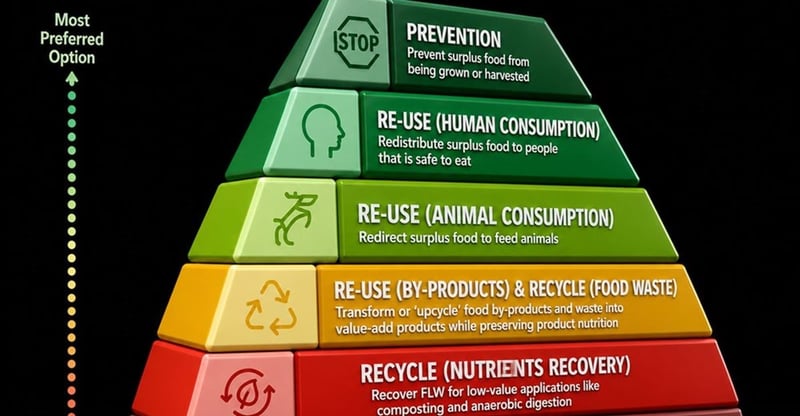
This standard marks an important step forward for food and nutrition security and for climate action, as part of South Africa's sustainable food future. Once public comments have been reviewed, the final document will be officially released, moving our country a step closer to a food donations policy. FoodForward SA is proud to have played an instrumental role in its creation and development.
Another exciting development is the Department of Forestry, Fisheries and Environment's (DFFE) Strategy for Reducing Food Losses and Waste (FLWS) 2025 - 2030, gazetted in August 2025. This long-awaited policy document meets a national crisis head-on and, once implemented, could provide the transformative impetus needed to recover more edible surplus food across the food system, while charting a roadmap towards a focused Food Donations Policy for South Africa.
South Africa wastes an estimated 10.3 million tonnes of food every year, one-third of everything the country produces - while roughly 60% of households experience some level of food insecurity. It is against this backdrop that the FLW strategy is built around four strategic outcomes:
- Creating an enabling environment for the implementation of FLW interventions
- FLW Beneficiation and Circular Economy
- Collaboration, Capacity Building, and Raising Awareness
- Food Waste Diversion and GHG Emission Reduction
It is Outcome 4 - Food Waste Diversion and Greenhouse Gas Emission Reduction - that carries the most direct implications for surplus food recovery organisations like FoodForward SA, the continent’s largest food redistribution NPO. FoodForward SA’s work is also referenced in the policy document.
FoodForward SA recovers thousands of tons of good-quality, edible surplus food from the consumer goods supply chain and redistributes it to registered and vetted community organisations serving the most vulnerable, sitting squarely within Tier 2 ("Feed Hungry People") of the Food Recovery Hierarchy that underpins the entire strategy.
The FLW strategy does not simply endorse this work in principle - it sets out concrete regulatory and institutional interventions designed to remove the barriers that have historically discouraged retailers, manufacturers, and farmers from donating surplus food in the first place.
The liability barrier – A legal incentive to dump and how the strategy addresses it
The single largest obstacle to food donation identified throughout the strategy is the issue of legal liability. Under the Consumer Protection Act's strict liability provisions for damage caused by goods, the legal risk of donating food currently sits with the food donor, even though they donate the food to a third party. As the strategy notes, "some donors may be reluctant in donating, in attempts to safeguard or protect their brand." Retailers and manufacturers with surplus, perfectly edible stock have, in effect, been given a legal incentive to send food to landfill rather than to organisations like FoodForward SA.
Outcome 4.2 of the Implementation Plan tackles this head-on. Under the intervention "Food Redistribution / Donation Programmes," the Department of Social Development (DSD) is tasked with delivering, by the 2027 / 2028 financial year:
- Established liability protection on food donations, including guidance on the limits of that protection and the specific steps a donor (or brand owner) and a food recovery organisation must follow to qualify for it;
- Liability insurance protection extended specifically to brand owners, food service establishments and retail stores that donate directly to final recipients;
- Amended regulations to enable food donation without compromising food safety; and
- National Norms and Standards for food donation, developed in partnership with the SA Food Loss and Waste Initiative's existing Food Donation Best Practice Guideline (SANS 2088)
This is a meaningful shift from voluntary best-practice guidance - which already exists via the Consumer Goods Council of South Africa (CGCSA), to a statutory framework with government backing.
For FoodForward SA, whose entire operating model depends on convincing retailers and manufacturers to donate surplus stock reliably and at scale, formal liability protection removes the single most persistent objection raised internally at donor companies: "What happens if someone gets sick from what we give away?"
What this means in practice
- More consistent, larger-volume donations. Once brand owners and retailers have statutory liability cover, risk-averse legal and compliance departments - often the real gatekeepers of corporate donation decisions, are more likely to approve consistent, rather than sporadic, surplus donations. This should help FoodForward SA move from irregular, opportunistic recovery to more predictable supply planning for its national network.
- Expanded donor base beyond current signatories. The strategy notes that as of September 2023, there were 74 core and 41 associate signatories to the SA Food Loss and Waste Initiative (SAFLWI) - a relatively small portion of the broader food economy. Clearer national norms and standards, rather than a voluntary agreement alone, could draw in smaller manufacturers, independent retailers and commercial farmers that have so far stayed on the sidelines due to legal uncertainty.
- Infrastructure and warehousing support. Outcome 4.2 also calls for supporting food distribution organisations "as a natural part of society's infrastructure. This dovetails directly with FoodForward SA's existing warehouse-and-depot model and could open access to additional storage capacity, cold-chain infrastructure and co-funding.
- Corporate Social Responsibility incentives. Outcome 3.5 promotes food donation as a recognised CSR activity and calls for incentives to companies that fund organisations distributing donated food - language that could translate into tax or reputational incentives that make partnering with FoodForward SA more commercially attractive to donor companies, not just ethically preferable.
- Better data and forecasting. Outcome 1 commits to a mandatory National FLW Prevention Plan with province-level targets, and DALRRD and DFFE are tasked with improving data on where and why losses occur. Better upstream data on where surplus is generated - particularly at the processing, packaging and distribution stages, which together account for over 40% of national food loss, could help FoodForward SA target its recovery logistics more precisely.
Let’s be careful not to drink all the kool-aid
Although the strategy represents a positive step forward, most of the proposed interventions are only planned for the 2027/28 financial year. This means that the liability protections and the associated norms and standards are not yet legally in effect. Bearing in mind that this is a five-year roadmap, not an immediate legal change, success will also depend on the promised institutional coordination between DSD, DALRRD, DFFE and provincial authorities materialising, and on food safety concerns being balanced carefully against the goal of maximising food donations.
Even so, for an organisation like FoodForward SA, the FLW strategy represents the first time South Africa's food donation ecosystem has been anchored in binding national policy rather than voluntary industry goodwill alone. If the promised liability protections and donation standards are delivered on schedule, they could be the single most consequential regulatory change yet for unlocking the scale of surplus food that currently ends up in landfills, instead of on a plate. We live in hope!
Get new press articles by email
We submit and automate press releases distribution for a range of clients. Our platform brings in automation to 5 social media platforms with engaging hashtags. Our new platform The Pulse, allows premium PR Agencies to have access to our newsletter subscribers.
Latest from
- Slow Month End Closing Undermines Organisational Decision Making and Agility
- South Africa Unemployment Remains High at 32.7% with Youth Rate at 45.8%
- KPMG One Africa Opens Sixth Year Competition For Startups Across 13 Member Countries
- RMB And Standard Bank Back Bridgement With R330m To Scale AI-Powered SME Lending
- Guyana Hosts In-Country Launch Of Caribbean Energy Week 2027 To Showcase Regional Investment Opportunities
- The Ordinary Tops AI Brand Index With 7% Citation Share in Q1 2026
- MSGBC 2026 To Focus on Gas Processing LNG Infrastructure and Regional Monetization Pathways
- MSGBC Basin Moves to Standardised Engineering and Integrated Contracting for Next Deepwater Phase
- Kfm Best Of The Cape Awards Open Nominations Across 30 Categories Including New Best Place To Be Seen
- FedEx Executive Warns Operational Friction Hampers AfCFTA Benefits For SMEs
- Eastern Cape Municipality Intensifies Compliance Inspections Amid Low Spaza Shop Registration
- Design Event Announces Johannesburg And Cape Town Dates For The Shape Of Us Programme
- TotalEnergies Drives Angola’s Energy Transition Through Multi-Billion-Dollar Deepwater and Gas Investments
- Saad Family Reclaims Management Of Tengile Properties From &Beyond And Unveils New Branding
- Sasol Oil Recognised for Historic B-BBEE Ownership Deal and Broad-Based Transformation Impact
The Pulse Latest Articles
- What We Miss When We Focus Only On Behaviour (July 6, 2026)
- Bundox Moves Beyond Safari Packages With “experience Our Wild Africa” (July 3, 2026)
- Tutor Doctor South Africa Celebrates Double Award Wins (June 30, 2026)
- Rethinking Performance: Part 5 Aligning Judgement In Performance Evaluation (June 30, 2026)
- Axor: Redefining The Architecture Of Luxury Living (June 29, 2026)