
TBWA Backslash Study - 62% Find Being Hard to Influence More Aspirational Than Being an Influencer
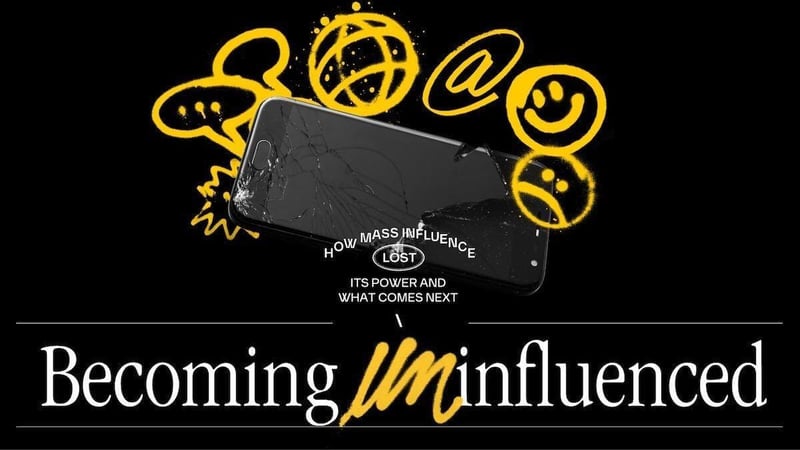
For years, cultural status came from influencing other people. Now, the aspiration is flipping. New research launching today from Backslash, TBWA’s cultural intelligence unit, finds 62% of people surveyed say being hard to influence is more aspirational than being an influencer.
Becoming Uninfluenced reveals just how skeptical people have become of online popularity. When something goes viral today, 42% first assume a brand engineered it, 33% suspect bots or fake engagement, and only 25% assume people genuinely love it. Virality is now cause for suspicion.
That skepticism is changing how people think about their own identity. Backslash calls it 'taste paranoia': the growing anxiety that your preferences are no longer entirely your own, but the product of algorithmic recommendations and engineered influence.
The desire to reclaim personal taste is also reshaping what people admire. Highly specific taste now outranks a large following as a marker of an interesting person. And when asked what makes a brand culturally relevant, respondents ranked a distinct point of view or unique taste first and mass popularity last.
“Influence isn’t disappearing. People still want recommendations and discovery. What they’re rejecting is influence that feels imposed on them,” said Cecelia Girr, head of strategy at Backslash. “When popularity can be manufactured, distinct taste and finding things for yourself carry more cultural currency.”
For brands, this creates a difficult paradox. Most growth strategies still depend on scale and visibility, but mass exposure alone is no longer enough. Backslash describes the shift as a move toward concentrated credibility, placing greater value on metrics like deep affinity, participation, physical presence, and share of trust.
“Brands have become incredibly good at generating visibility. The assumption we need to disrupt is that more reach automatically means more influence,” said Jen Costello, Global chief strategy officer, TBWA\Worldwide. “This isn’t an argument for abandoning scale. It’s about building something underneath it. The brands that earn a greater share of the future will be the ones with a distinct point of view and enough confidence to participate in culture without trying to manufacture it.”
“In South Africa, discovery has long moved through the people and places we trust. Mass influence has also helped shape what we see as desirable. But as popularity becomes easier to manufacture, finding something for yourself is becoming a signal of taste. Reach can put a brand in view, but brands earn deeper influence when they create worlds beyond the feed that people choose to explore, belong to and bring others into,” said Olivia Matterson, head of Strategy & Innovation at Omnicom Advertising South Africa.
Becoming Uninfluenced leaves brands with three principles for the next era of influence:
- The further from the feed, the greater the trust
- Things that feel genuinely discovered are now most desirable
- Stop manufacturing culture, start building places for it to happen naturally.
The report draws on deep cultural analysis, expert interviews and a proprietary survey of more than 700 respondents across the US and UK.
Download Becoming Uninfluenced: How Mass Influence Lost Its Power and What Comes Next at https://backslash.com/news/becoming-uninfluenced.