
Industry Expert Highlights Barriers Facing South African Wine Producers In Competitive Global Market
Written by: WineLand Media Editor Save to Instapaper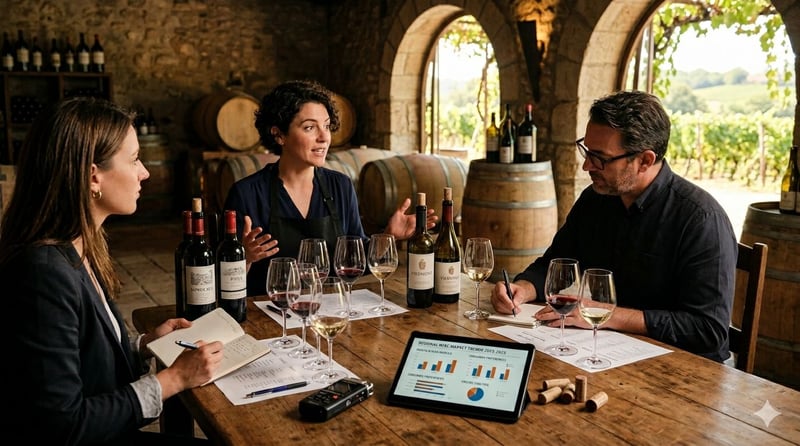
South Africa is geographically distant from key export markets such as the UK, Canada, and Europe. That means its wine regions have limited face time with buyers, difficulty building ongoing relationships, and rely on infrequent trade missions and trade fair attendance, ultimately leading to a high cost per interaction.
At the same time, the wine trade landscape is fragmented with major fairs like ProWein, London Wine Fair and Wine Paris, competing for attention alongside niche fairs and events. Local producers often have to pick one, if any, while buyers’ attention is divided.
This competition for mindshare is intensifying, says Lawrence Francis, founder of Interpreting Wine, which helps bridge the gap between wine regions and receptive markets. “Boutique and black-owned brands in South Africa have limited volumes and limited budgets, which means they can’t afford to waste opportunities on generic approaches,” he says.
Lawrence Francis, Founder of Interpreting Wine
The generic trap
Regional boards and associations often invest in market research from generic sources such as IWSR, Wine Intelligence, and other state-of-the-industry reports, but these have weaknesses. “These reports are available to everyone, including competitors, and rarely provide the level of detail required for strategic decision making,” Lawrence says. “They’re also several months old by the time they become available. Trends change quickly, so it’s important to understand what’s working now.”
As a result, different regions can end up taking the same unnuanced approach regardless of local context. “This is reflected in the language used by regions and producers in markets like London,” Lawrence says. “Words like ‘freshness’, ‘sense of place’ and ‘drinkability’ are frequently used to describe very different styles of wine, which is to be expected when they’re all relying on the same high-level market intel and general market feedback.”
Going deep
“At its most extreme, market feedback would allow you to read the mind of every consumer who comes into contact with your wines in a store, wine bar or restaurant – hearing what they’re thinking during the decision-making process, understanding why they choose your wine, and importantly, what they might choose instead and why,” Lawrence says. “Crazy as it sounds, this already exists for websites, with tools like Hotjar creating visitor website heatmaps and guiding business decisions based on actual visitor behaviour.”
But capturing consumer behaviour in the real world is a different matter. “Focus groups and surveys measure behaviour, but usually away from the heat of the actual purchase decision. Panels have to be run rigorously to avoid groupthink or individual participants taking over. There is, of course, a huge cost implication if you want targeted feedback on your products.”
To help address the ever-growing need for warm data, Lawrence began Market Pulse UK, a podcast featuring in-depth conversations with UK wine buyers across four key profiles: Michelin Sommeliers (fine dining, premium placements), Indie Merchants (specialist retail, wine enthusiast customers), Importers (portfolio decisions, volume commitments), and Wine Bars (by-the-glass programmes, casual discovery).
“Since the UK is South Africa’s largest export market, most local producers rely on distributor feedback or generic market reports,” Lawrence says. “Market Pulse UK goes direct to the decision-makers.”
Each interview includes a guest profile that covers their experience and delves into their current role. This is followed by information on their customers – how they actually buy wine and what they’re willing to spend. Each guest is then asked to share any trends currently on their radar.
Lawrence not only wants to connect producers to buyers, but also empower them through workshops, training, and resources to stand out with their own stories.
For South African wineries – especially boutique and black-owned brands – these insights can offer clarity on their positioning and training that bigger brands take for granted.
Starting the conversation
Lawrence also offers a paid regional version that delivers buyer intelligence tailored to specific regions. “While generic research tells you what the market wants broadly, the Market Pulse Regional tells you what key buyers want from your region specifically,” he says. “Generic reports will tell you, ‘UK wine consumption is declining’, or ‘the premium segment is growing’, but Market Pulse Regional can tell you what the Head Sommelier at Cord Restaurant looks for when choosing a wine for her by-the-glass list.”
“Market-Region Confidence builds progressively: from understanding what buyers think of your region (Market Pulse Regional), to getting wines in front of them (Buyer Activation), to converting relationships into sales (Market Activation).”
Six buyer conversations have already aired in March, including Bert Blaize (North Norfolk Cellars), Ben Easey (Parade Wines), David Lapsey (consulting Sommelier for Pine Trees Hotel), and Jiachen Lu (Head Sommelier at Cord by Le Cordon Bleu), among others.
Here is some of what they had to say:
Jiachen Lu, Head Sommelier, Cord by Le Cordon Bleu:
“I aim to build a wine list that is inclusive and thoughtful, especially when it comes to the by-the-glass selection,” he says. “For me, a red flag is a wine that fails to deliver value. I am far more excited by wines that impress both my guests and me through a strong sense of quality relative to their price.”
Tom Grater, Founder, Crystal Palace Wine Club:
On their ideal customer: “Open-minded and willing to step away from their most known brands, which we typically don’t stock. We like nice people our staff can engage with over a shared passion for wine and who will hopefully discover something that will interest them in our bars.”
His green flags: “Value, clear identity, good presentation.”
Bert Blaize, Founder, North Norfolk Cellars:
His green flags: “Sense of place, balance, represents good value for money, the winemaker takes care and pride in making the wine, it has a story”
Ben Easey, Founder, Parade Wines:
“I really like to work with vignerons/onnes that live and breathe their wines. Real farmers with a passion for their products.”
David Lapsey, Consultant Sommelier, ex-Pine Trees Hotel:
“I think the most memorable and repeated question from last year that I had was “and who makes this” … I think people now really embrace the overall story … Why is this here, who decided to pick this, why did you pick it, what made you love it.”
Lawrence Francis’ Market Pulse UK report is available from www.interpretingwine.com/MPUKreport.
Get new press articles by email
We submit and automate press releases distribution for a range of clients. Our platform brings in automation to 5 social media platforms with engaging hashtags. Our new platform The Pulse, allows premium PR Agencies to have access to our newsletter subscribers.
Latest from
- Online Education Provider Sees Surge In Mid Year Enrolments As Families Seek Flexible Learning
- Remax Southern Africa Hosts Nationwide Awards To Celebrate High Performing Agents And Teams
- New Data Highlights Urgent Need To Address Food Waste And Strengthen Food Security In South Africa
- Geolinks Named Bronze Sponsor At African Mining Week As It Expands African Operations
- Primedia Radio And City Sightseeing Team Up To Deliver Unique Carlpool Experience For Listeners
- Mercedes Benz Announces Andreas Brand’s Appointment To Key Global Supply Chain Role In Stuttgart
- SuperSport Let’s Play Programme Builds Sports Infrastructure To Empower Youth Communities
- Ashley Madison Unveils Rebrand Strategy To Move Beyond Past Controversy And Grow User Base
- Koa Academy Initiative Aims To Equip Students With Real World Skills Before Entering Workforce
- R275 Million Investment Strengthens Isambane Mining As Management Takes Full Ownership
- Dry Farmed Collective Debuts At ProWein To Promote Sustainable South African Viticulture
- John Deere Financial Highlights Jaco Kriel’s Role In Supporting Farmers And Agricultural Finance
- Industry Shift Sees South African Brandy Embrace Sustainability While Expanding Premium Market Share
- Ghana Withdraws From London Summit Citing Discrimination Against African Energy Professionals
- Senegal And Nigeria Advance Strategic Energy Cooperation To Accelerate Africa’s Industrial Future
The Pulse Latest Articles
- Bright Beginnings Preschool Celebrates Linden Campus (April 2, 2026)
- Female Founders Announce Launch Of South Africa’s Premium Brand Advisory Firm: Aura (April 2, 2026)
- Ai Fraud Defence Launches In South Africa As Deepfakes Hit Financial Institutions (April 1, 2026)
- Influencers Share Their Favourite Holiday Games (March 26, 2026)
- Procurement Can Buy Pr. It Cannot Buy Judgement. (March 25, 2026)