
Truth Coffee Founder David Donde Shifts From Destination Retail to Wholesale Bread at Flour Market
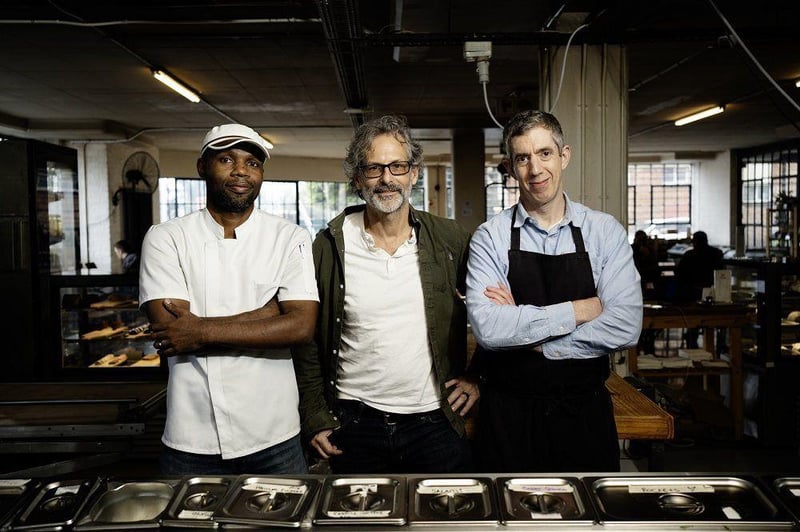
Donde built his reputation by turning everyday commodities into experiences.
With Truth Coffee Roasting, the Cape Town entrepreneur demonstrated how coffee could become more than a beverage by combining product, storytelling and theatre. Now, with Flour Market, he is applying a different version of that thinking to bread.
The Cape Town bakery is less dependent on destination footfall and more focused on what happens behind the scenes: sourcing, production, quality control and supplying professional kitchens consistently.
It marks a shift from selling an experience directly to consumers to becoming part of the experience other businesses deliver to theirs.
View this post on Instagram
From destination to distribution
Truth Coffee's model was built around a highly recognisable physical destination. Flour Market, by contrast, has a business-to-business proposition at its core, supplying restaurants and cafés with bread and pastry.
That changes the commercial equation.
Where a destination business relies heavily on location, foot traffic and customer experience, wholesale food production depends on repeat orders, reliable supply, consistent quality and the ability to deliver a product that performs predictably in another operator's kitchen.
For Donde, that means treating bread less as a basic commodity and more as a product where sourcing and production discipline can create differentiation.
“We wanted the real ingredients inside slow bread and pastry to speak for themselves,” he says.
Flour is weighed and sourced batch by batch, while imported stock is tested against local alternatives. Butter and biowheat are sourced from producers that the team has vetted directly.
Flour Market executive chef and head baker, Marcus Fundi. Image suppliedThat attention to inputs is matched by a production team led by senior chef Laurence Smith, who joined via Rapt's opening team in 2024 and oversees sweet and savoury product development, and executive chef and Head Baker Marcus Fundi, whose focus on fermentation and sourdough informs the bakery's daily production.
Consistency becomes the product
For a wholesale bakery, quality is only part of the proposition. The bigger commercial challenge is consistency.
A restaurant ordering bread needs to know that the product arriving today will perform in the same way next week, regardless of whether it is being served with breakfast, used in a sandwich or placed alongside a plated dish.
Donde describes sourdough as a deceptively simple product.
“A sourdough is four ingredients: flour, water, salt and time. If a kitchen can smell a soft sourness in the crumb, if the loaf resists a knife instead of collapsing under it, they know what they're buying,” he says.
“It’s alive, like wine. These are ancient rules – we chose to respect them.”
That philosophy translates into a broader business proposition: taking a product that restaurants can easily treat as an interchangeable input and making quality and reliability part of the reason to maintain a supplier relationship.
A retail shop window for a wholesale business
Flour Market does have a consumer-facing side. It opens for breakfast daily and sells loaves directly to customers.
But the retail counter plays a different role from the flagship model that helped establish Truth Coffee.
Rather than being the entire business, the physical bakery provides consumers with an opportunity to experience the product while giving the wholesale operation a visible brand presence.
The model effectively creates two routes to market: direct retail and professional food service.
For the latter, the potential is less about one-off transactions and more about becoming embedded in the operations of restaurants and cafés.
“The white-collar dining rooms of the city – the ones with the linen and the wine lists – are quietly running on Flour Market's blue-collar graft,” says Donde.
“Flour Market doesn't dress that labour up. It delivers, consistently, and lets the kitchens that plate the bread take the credit for the polish.”
That relationship between producer and restaurant is central to the model. For a wholesale supplier, winning a place on a restaurant's menu can create recurring demand, but it also raises the operational bar: production, fulfilment and delivery all have to work as reliably as the product itself.
Applying an entrepreneurial playbook to a basic commodityFlour Market forms part of a wider portfolio of businesses associated with Donde, whose ventures have extended from coffee into food, hospitality and technology.
Alongside Truth Coffee and Origin, his interests have included What‽ Food Group, Rapt, Floatpays, Minimalist Chocolate and Oaternative.
The common thread is not necessarily the category, but the opportunity to apply a more deliberate commercial and operational model to products or services that can otherwise become commoditised.
Coffee was one example. Bread is another.
The difference is that bread is fundamentally a volume business. There is less room for scarcity or spectacle when supplying professional kitchens, making production discipline, procurement and repeatability considerably more important.
Flour Market's location in a changing Cape Town inner-city precinct also supports the dual model, providing a public-facing bakery while operating as a production and distribution business behind the scenes.
Can the model scale beyond the loaf?
For Donde, the appeal of bread appears to lie precisely in its ordinariness.
“You're either part of the problem or part of the solution. I've been lucky enough to build things that put the right thing in people's mouths. That's what drives me – coffee, bread,” he says.
The commercial test for Flour Market will be whether that philosophy can translate into a sustainable wholesale operation, where margins are tighter, volumes are higher and customers judge the business not by the spectacle of the storefront, but by what arrives at their kitchens each morning.
For an entrepreneur who built a global reputation by making coffee an experience, bread represents a different challenge: can the same attention to product, sourcing and brand turn an everyday staple into a durable wholesale business?