
Lesotho Advances Renewable Energy Ambitions With Plans To Assess Floating Solar On Key Dams
Written by: BizCommunity Editor Save to Instapaper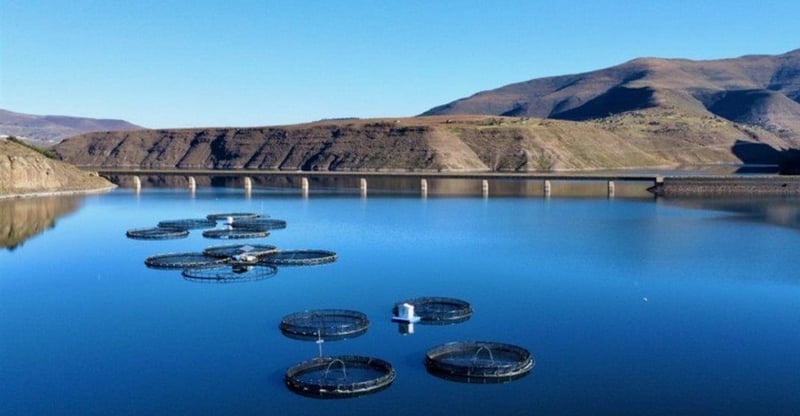
Source: GroundUp/Sechaba Mokhethi.
For decades, the dams have supplied water to South Africa and hydropower to Lesotho through the Muela Hydropower Plant. Now, the Lesotho Highlands Development Authority (LHDA) is exploring whether the same reservoirs could also become sites for large-scale solar electricity generation.
A recently issued LHDA tender calls for consultants to conduct a feasibility study for floating solar photovoltaic plants on the two dams. According to the tender, the project could eventually involve power plants ranging between 50MW and 400MW.
The LHDA says the Katse and Mohale reservoirs already have strategic advantages because they are connected to Maseru through existing 132kV transmission lines and roads constructed for the Lesotho Highlands Water Project.
Lesotho struggles to meet domestic electricity demand despite its significant renewable energy potential. According to the LHDA tender, in 2024, the country consumed 970GWh of electricity. Only 532GWh was generated locally, with 438GWh imported mainly from South Africa and Mozambique.
Currently, the country’s largest local power source is the LHDA-operated Muela Hydropower Station, which produces 72MW. Other existing and planned renewable projects include the 30MW Ramarothole Solar photovoltaic plant in Mafeteng; a planned 50MW expansion at Ramarothole; another LHDA proposed 90MW Oxbow hydropower project; a planned 100MW Hirundo wind farm; and several private solar projects.
LHDA spokesperson Mpho Brown said preliminary concept work estimated that a large-scale floating solar development could cost around R4.9bn. No financing decisions have yet been made, because the project remains at the feasibility assessment stage.
He said possible funding models involve development finance institutions, climate finance facilities, private investors, public-private partnerships, and other renewable energy financing structures.
The floating solar concept would place solar panels on floating platforms anchored on underused reservoir surfaces, preserving land for agriculture, tourism, and settlement.
“Only a small portion of the reservoir area will be used to limit potential negative effects on the environment, particularly on water resources, biodiversity and on socio-economic activities,” the document says.
The project follows positive prefeasibility studies conducted by the Energy Research Centre at the National University of Lesotho (NUL).
The commercial structure of the project remains undecided. According to Brown, future electricity sales could include supplying Lesotho’s domestic grid through the Lesotho Electricity Company, participation in the Southern African Power Pool, or other commercial arrangements.
The initiative appears to signal an expansion of the traditional role of the Lesotho Highlands Water Project, which for decades has focused on supplying water to South Africa while generating hydropower for Lesotho through the Muela plant.
Asked whether South Africa is involved in the project, Brown said it is “primarily being explored as a Lesotho renewable energy development initiative within the broader context of LHDA infrastructure and reservoir assets located in Lesotho”.
The tender document also shows that the reservoirs are increasingly being viewed as economic development zones, including for example aquaculture operations.
The feasibility study procurement process is currently underway, with proposals from consultants expected before the end of June.
Published originally on GroundUp.
© 2026 GroundUp. This article is published under the GroundUp Republication Licence Version 1.0. Email to request permission to republish.
Get new press articles by email
We submit and automate press releases distribution for a range of clients. Our platform brings in automation to 5 social media platforms with engaging hashtags. Our new platform The Pulse, allows premium PR Agencies to have access to our newsletter subscribers.
Latest from
- New Vineyard Technologies Recognised For Boosting Productivity And Reducing Environmental Impact
- Why Human Oversight Must Be The Cornerstone Of Every Responsible AI Policy In South African Business
- Organisations See Better Outcomes When Engagement Drives Change Instead Of Delivering Messages
- Women Are Shaping The Future Of South African Dairy From Farms To Executive Leadership Roles Helen McDougall Champions Recognition Of Women Driving Progress Across South Africa’s Dairy Industry
- CambriLearn Partners With Virgin Active To Strengthen Student Wellbeing Beyond Online Learning
- South Africa Records First National Pet Ownership Data In Major Milestone For Animal Welfare
- Online MCom And New PGCE Launch To Address Leadership And Teacher Development Demands
- Growing Calls For Stronger Bereavement Leave Policies In South African Workplaces
- Santam Syndicate 1918 Appoints Sam Geddes As Chief Executive Officer
- AI And Learning Innovation Set To Reshape Africa’s Global Workforce Competitiveness
- Helm Highlights Intellectual Property Risks As Organisations Expand AI Capabilities
- Atlantic Seaboard Buyers See Returns Driven By Asset Selection Not Market Momentum
- Portfolio Committee On Health Marks National Cancer Survivor Day With Renewed Commitment
- News24 And Netwerk24 Introduce All That And Alles For Informed Consumer Choices
- Economic Challenges Intensify As South Africans Confront Higher Prices And Interest Rates
The Pulse Latest Articles
- You Can’t Measure What You Can’t Define – Or Can You? (part 3 Of 5) (June 2, 2026)
- South African Women Are Missing This Essential Nutrient (May 20, 2026)
- Opinion Piece: Rethinking Performance: Why Behaviour Remains The Missing Link In Evaluation (May 20, 2026)
- 125 Years Of Hansgrohe And The Designers Who Made Axor A Luxury Language (May 19, 2026)
- World Whisky Day: Whisky Lovers Challenged To Stop Saving Their Best Bottles (May 15, 2026)