
Sasol Urges Scientists to Solve Green Hydrogen Cost, Efficiency and Scaling Challenges for Power-to-Liquids
In his address, he said producing sustainable fuels through power-to-liquids technology remains constrained by costs, efficiency limits, and the difficulty of scaling scientific discoveries into commercially viable projects.
The sub-forum is part of the 19th Pujiang Innovation Forum in Shanghai, China, where South African and international researchers, policymakers and business representatives gathered to discuss innovation and technological cooperation.
South Africa is this year’s Country of Honour, with the Minister of Science, Technology and Innovation, Professor Blade Nzimande, leading the South African delegation.
Breaking the barriers
“These challenges are precisely where research and innovation can create value. I invite the next generation of scientists and engineers to help us address them,” Mudzunga said.
He added that power-to-liquids technology could allow Sasol to combine renewable electricity, green hydrogen and captured carbon dioxide to produce sustainable liquid fuels.
While Sasol’s decades of experience in synthetic-fuel production gave it an advantage, significant scientific and commercial obstacles remain.
“We need further innovation throughout the process. We must improve hydrogen efficiency, achieve higher conversion efficiency, increase yields and reduce overall costs — particularly the cost of green hydrogen, which remains very high.”
Mudzunga warned that scientific breakthroughs alone would not drive the energy transition. Universities, government, research institutions and companies needed to collaborate from early research through to commercial deployment.
“At the research end, we work closely with universities, government and other organisations to advance fundamental and applied science, access world-class capabilities and develop talent.
“At the commercial end, industrial partners must be integrated into the process to unlock funding and create markets. Importantly, we must scale up these innovations. If we do not scale them, they will remain research projects,” he said.
He described the journey between scientific discovery and commercial application as long and complex, arguing that closer cooperation could reduce both the time and risks involved in introducing new technologies.
“By combining fundamental scientific research, development, industrial expertise and engineering, we can accelerate innovation and significantly reduce the risks associated with new technologies. Partnerships are therefore not simply enablers of success – they are a precondition for success,” he said.
Transitioning in SA
South Africa’s transition, he said, was particularly difficult because it had to reduce emissions while continuing to pursue industrialisation, economic growth, competitiveness, inclusion and employment.
“These objectives may, at times, appear contradictory, but we believe they can be achieved together through the adoption of technology and innovation,” he said.
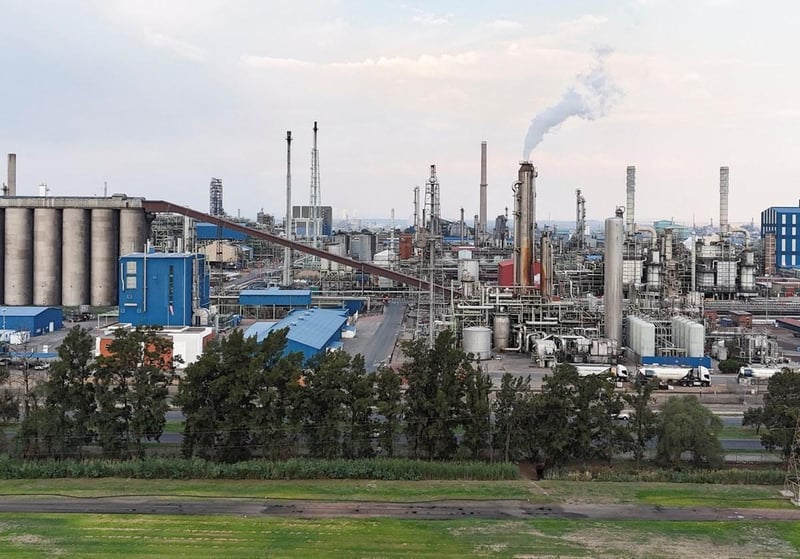
Sasol’s operations remain heavily dependent on coal, making decarbonisation both a commercial and societal necessity.
Mudzunga said the company’s strategy involves lowering emissions and operating costs while using the transition to establish new businesses.
“No single technology can decarbonise a complex industrial system such as ours. Success will require an integrated portfolio,” he said.
That portfolio, he explained, would include renewable power and feedstocks, greater process efficiency, digital technologies, carbon capture and storage, carbon valorisation and circular-economy initiatives.
“Rather than searching for a single cure or silver bullet, we must combine multiple solutions and deploy them strategically at scale. The energy transition will ultimately be achieved through an integrated approach, rather than through a single technology,” he said.
He said Sasol had already developed expertise that could support sustainable aviation fuel and other low-carbon products.
At the same time, its existing industrial facilities could reduce the capital required to scale emerging technologies.
However, future projects would have to be selected according to their feasibility and ability to compete commercially.
“The energy transition is one of the greatest challenges facing our society, but it is also one of our greatest opportunities.
“Through technology, collaboration and sustained innovation, we believe Sasol can play a meaningful role in building a more sustainable future,” he said.