
Why Africa’s Mining Sector Must Rethink Digital Transformation To Unlock Sustainable Growth
Written by: BizCommunity Editor Save to Instapaper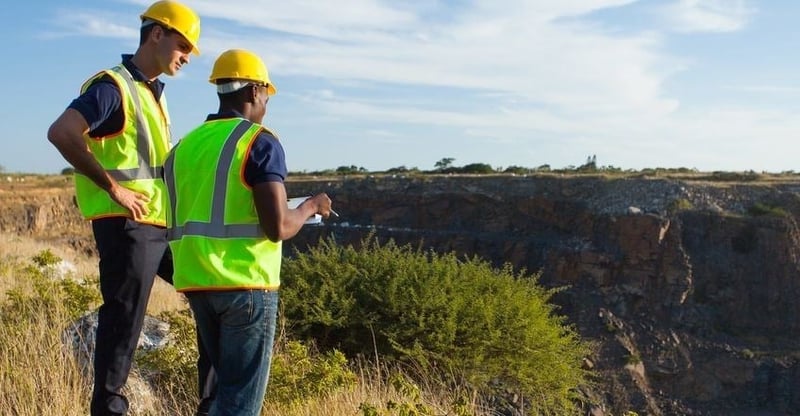
Data and mining partners Saroj Chiba and David Nel at iqbusiness look at the disjuncture between what’s possible in mining in Africa, and what actually takes place on the ground (Image source: © 123rf 123rf)
As 2030 looms, it is becoming increasingly clear that digital transformation isn’t a product that miners can procure. Rather, it’s becoming evident that digital transformation is a practice to be cultivated.
If mining in Africa is to successfully pivot towards a sustainable, tech-driven model that can balance high resource demand for the energy transition with strict environmental, social, and governance (ESG) standards, much more work needs to be done.
This will require a shift from seeing AI as something that must be installed, to an understanding that the real change will only come when mining operations are properly trained, and its leaders are properly interrogative.
Much like a recruit isn't sent underground without a rigorous induction, technology cannot truly add value until it helps to understand the specific, messy fundamentals of a particular site. Here, the paradigm shift is less about the AI and tech tools themselves and more about how the mine, business and boardroom learns to use them in their context.
4 ways to train your mine
There are four ways to train your mine for that shift:
- Work with what you have
One of the most significant hurdles to delivering and sustaining a trained mine is the physical reality of the continent. Africa holds less than 2% of global data centre capacity, with many operations located hundreds of kilometres away from reliable fibre and related data infrastructure.
You’d be forgiven for thinking this means remote mines must remain just that, both physically and digitally. But an assumption that intelligence requires constant cloud connectivity is proving to be incorrect.
Mines can and are solving for poor or unreliable connectivity by moving to a hybrid approach using edge computing, a decentralised IT architecture that can process data near its source.
Instead of relying solely on the cloud or a central data centre, the mine uses local servers and IoT devices to manage, store and process its data.
These mines are capacitated to think at the literal or proverbial coal face for real-time safety and production, while the cloud is reserved for longer-term model training and enterprise reporting.
It’s not a perfect system, but it can work to deliver results despite very real infrastructure and connectivity constraints.
- Work with what you have
- Move from bloat to agility
Many traditional and mega miners remain afflicted by what could be critiqued as ‘legacy bloat’. This is when decades of systems are layered on top of vendor-specific tools that have been incrementally procured and simply cannot speak the same language or deliver coherent, iterative data.
Every day, we see these giants being challenged by a new wave of miners in Africa.
These miners have a fundamentally different relationship with data. No longer merely a byproduct of mechanical operations, data is seen as a productive asset that informs their next agile step across the value chain.
Once a mine can make the switch from a reactive to a proactive relationship with its data, it can make quicker decisions and better anticipate problems before they arise.
- Move from bloat to agility
- Escape the insight trap
It’s trite that large organisations like mines are ‘data rich but insight poor’. We know that the data is there, but too often it is trapped in vendor platforms, the operational tech network, or disparate Excel-bound workflows in separate departments.
We also know that unlocking this data isn't about collecting more of it, but about enabling data mobility and, ultimately, true data utility.
Once siloes are broken down, the stories that the data tells can change. A truck fleet that looks unreliable to the maintenance department might actually be a recurring victim of road conditions or dispatch decisions.
This is just one example of how a trained mine can learn - not just from or within departments - but across the entire value chain, and then go on to add meaningful value.
No mine needs another layer of complexity, but sensible interventions that open communication channels between the data and the people responsible for executing better decisions can make all the difference.
- Escape the insight trap
- Shifting the boardroom conversation
Of course, even once technical roadblocks are removed, and the data can start to talk properly, the true proof of a mine’s intelligence will be evident in the questions asked in the boardroom.
Beyond ‘are we using AI?’, the focus must shift to more nuanced enquiries.
Which operational decisions are being made without a multiplicity of trusted data? How are we getting ahead of unplanned downtime? If our CIO left tomorrow, would the mine still learn? How are we maximising the value we could get from our data investments? Where might value still be trapped?
The reality
If we really want to train a mine, we need to confront the reality that the intelligent mine of the future won’t be a locally patched copy of a legacy operation.
It will be shaped by the specific infrastructure, labour, and safety imperatives of Africa as told by the data.
Success won't be achieved by buying intelligence, but by the slow, deliberate work of training: training systems to learn locally, organisations to trust data, and leadership to ask better questions.
The mine that thrives won't be the one with the most data, but the one that learns best.
Get new press articles by email
We submit and automate press releases distribution for a range of clients. Our platform brings in automation to 5 social media platforms with engaging hashtags. Our new platform The Pulse, allows premium PR Agencies to have access to our newsletter subscribers.
Latest from
- Tesla Brand Value Hit As Sustainability Influence Declines Across Global Sectors In 2026
- Google Maps AI Update Transforms Search Into Conversational Discovery For Brands And Consumers
- Education Built For The Industrial Age Struggles To Prepare Students For An AI Future
- CCP Positions Precast Concrete Solutions To Support South Africa’s Water Infrastructure Renewal
- The Bar Code By Makro Brings Interactive Liquor Tastings And Social Retail To South Africa
- SABC Confirms Dee Uren As News Head Following Proven Leadership In Acting Role
- Why Experiential Marketing Must Evolve As Consumers Recalibrate Spending In Cost Pressured Markets
- Breakthrough Trial Uses Beneficial Bacteria To Tackle Bacterial Vaginosis Beyond Antibiotics
- Africa’s Top Entrepreneurs Shine As Business Heroes Summit Awards $300000 Grand Prize
- Why Modern CMOs Must Reclaim Marketing Leadership From Procurement Driven Cost Cutting
- President Ramaphosa To Deliver Keynote At 2026 Human Rights Day Commemoration In Kimberley
- 278 Finalists From 78 Countries Shortlisted For Global Digital Media Awards Ahead Of June Announcement
- Saftas 2026 Celebrates 50 Years Of South African Television As Afda Alumni Shine Across Awards
- Ellie Bamford Heads Global Jury As NYF Spotlights Power Of Strategy In Creative Effectiveness
- South Africa Mourns Passing Of Nicholas Fink Haysom, Esteemed Diplomat And Legal Pioneer Aged 73
The Pulse Latest Articles
- Why Hr Dashboards Are Now A Compliance Imperative — Not A “nice To Have” (March 20, 2026)
- The Truck Driver Who Turns Overnight Stops Into A Living Archive Of Namibia (March 18, 2026)
- “hisense Celebrates 30 Years In Sa, Highlighting Local Manufacturing At Buy Local Summit & Expo (March 18, 2026)
- Steinmüller Africa Opens Registration For 2026 Boiler Technology Course (March 17, 2026)
- Smart Mobility, Smarter Growth: Reimagining African Supply Chains For A Digital Decade (March 17, 2026)